Craig Morton, the Gunslinger Who Led Denver Broncos to First Super Bowl, Dies at 83
The football world lost a true pioneer this weekend. Craig Morton, the quarterback who engineered the Denver Broncos’ first-ever playoff run and delivered the franchise to Super Bowl XII, passed away on Saturday at the age of 83. His death marks the end of an era for a generation of Broncos fans who remember the “Orange Crush” defense and the steady, veteran hand that guided them to glory.
Morton’s legacy is often overshadowed by the modern quarterbacking titans, but his impact on the Broncos franchise is immeasurable. He wasn’t just a passer; he was the catalyst that transformed a perennial loser into a legitimate contender. But as we mourn Morton, a fascinating parallel emerges in the modern game: the ongoing debate about referee accountability. While the UFL is experimenting with post-game referee interviews, the question remains whether the NFL or college football could ever handle that level of transparency.
Let’s break down the life of a legend, and why the gridiron’s officiating culture remains stuck in the past.
The Architect of Denver’s First Super Bowl Run
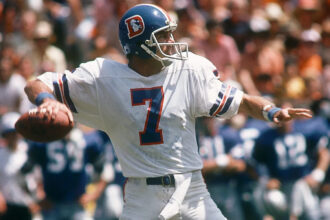
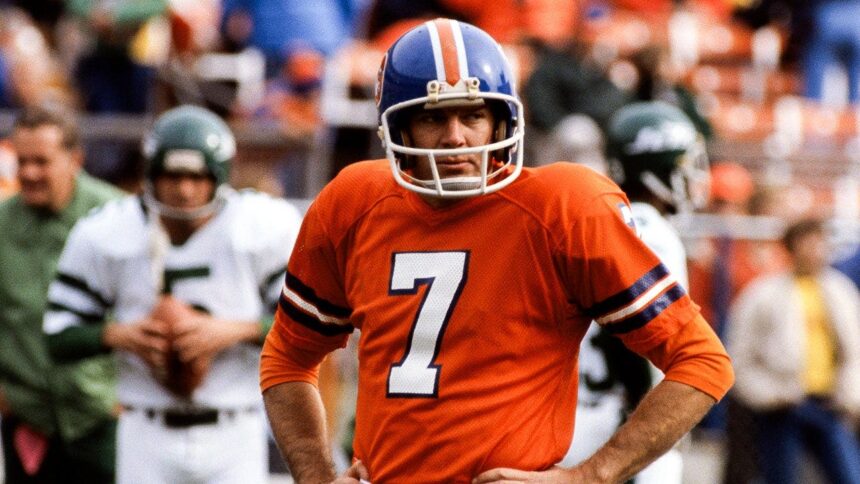
Before John Elway, before Peyton Manning, there was Craig Morton. Acquired in a trade with the New York Giants in 1977, Morton was seen as a stopgap, a 34-year-old journeyman whose best years were supposedly behind him. Instead, he authored one of the most remarkable single-season turnarounds in NFL history.
During the 1977 campaign, Morton was nothing short of brilliant. He led the Broncos to a stunning 12-2 regular-season record, a mark that still stands as one of the best in franchise history. His leadership was the glue that held together a ferocious defense known as the “Orange Crush.”
Key highlights of Morton’s 1977 season include:
- AFC Offensive Player of the Year: Morton was awarded this prestigious honor, beating out younger, flashier stars.
- First Playoff Victory: He dismantled the defending champion Pittsburgh Steelers in the divisional round, throwing for over 200 yards and a touchdown.
- AFC Championship Game: Morton outdueled the Oakland Raiders in a brutal, cold-weather battle to secure Denver’s first Super Bowl berth.
Morton’s style was not about scrambling or cannon-armed throws. It was about pocket presence, reading defenses, and delivering the ball with surgical precision. He was the perfect veteran for a team that needed a calm, calculating leader to complement its violent defense.
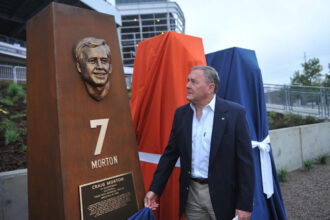
While the Super Bowl XII loss to the Dallas Cowboys (Morton’s former team) was painful—he threw four interceptions—it doesn’t diminish his achievement. He took a franchise that had been a laughingstock for 17 years and made it a winner. He was rightfully inducted into the Denver Broncos Ring of Fame, a permanent monument to his transformative impact.
The UFL Referee Interview Experiment: Could Morton Have Handled It?
In an ironic twist of timing, the United Football League (UFL) is currently implementing a radical new policy: post-game interviews with referees. The idea is to bring transparency to controversial calls, allowing officials to explain their reasoning in real-time. It’s a bold move, and one that has sports media buzzing.
Dan, a veteran football analyst, recently questioned whether the NFL could ever adopt such a policy. His skepticism is well-founded. The NFL and college football operate under a code of near-total secrecy. Officials rarely speak publicly, and when they do, it’s through carefully scripted statements.
The core issue, as Dan points out, is accountability. In the NFL and NCAA, referees are protected by a thick layer of bureaucracy. Mistakes are acknowledged internally, but never in the public square. The UFL’s approach would force officials to own their errors immediately.
Could Craig Morton, a quarterback known for his accountability on the field, have appreciated that? Absolutely. Morton was a player who took responsibility for his interceptions and his team’s failures. He never blamed the refs. The contrast is stark: a player who owned his mistakes versus a league that hides its officials from scrutiny.
The UFL experiment is a fascinating test case. If it works, it could pressure the NFL to modernize. But the NFL’s powerful union of officials and its institutional resistance to change make it a long shot. For now, the UFL is the only place where you’ll hear a referee say, “I missed that call,” immediately after the game.
Expert Analysis: Why the NFL and College Refs Would Reject Accountability
Let’s be blunt: the NFL and college football are not built for referee interviews. Here is the cold, hard analysis of why this experiment will likely stay in the UFL for the foreseeable future.
- The Power of the Union: The NFL Referees Association is one of the strongest unions in sports. They have negotiated a system where officials are shielded from public criticism. A post-game interview would violate that protection.
- Legal Liability: If a referee admits a mistake that directly impacted a game’s outcome, it opens the door to litigation. The NFL avoids this at all costs. Silence is their shield.
- College Football’s Amateur Myth: The NCAA still clings to the idea that its officials are “educators.” Putting them on a podium to explain a pass interference call would shatter that facade. They prefer to hide behind press releases.
- Ego and Culture: Referees in the NFL are often former players or coaches. They have a culture of “we don’t answer to the media.” It’s an old-school, stubborn mentality that resists transparency.
Dan’s assessment is accurate: the NFL and college refs would not take the accountability. They would rather face a week of angry tweets than stand at a microphone and admit they blew a call. The UFL, by contrast, has nothing to lose. It’s a developmental league trying to innovate. It can afford to be bold.
For a player like Craig Morton, who faced the media after every crushing defeat and every Super Bowl loss, the idea of a referee hiding from the same scrutiny would seem absurd. Morton stood in the pocket, took the hit, and answered the questions. He earned his respect the hard way.
Predictions: What the Future Holds for Officiating and Morton’s Legacy
Looking ahead, I predict two distinct trajectories.
First, regarding officiating: The UFL’s referee interviews will become a modest success, but they will not force the NFL to change. Instead, the NFL will adopt a watered-down version—perhaps a weekly video segment on NFL Network where a “head of officiating” explains a few controversial calls without naming the individual referee. This is the NFL’s trademark move: incremental change that looks like progress but maintains control. The college game will follow suit, but only after the SEC and Big Ten lose a few high-profile lawsuits over missed calls.
Second, regarding Craig Morton’s legacy: His passing will reignite appreciation for the pre-Elway era. Expect the Broncos to honor him in a major way during the 2025 season. His No. 7 jersey, already iconic, will be worn by players in practice. More importantly, his story will be retold: a quarterback who was written off, traded for a song, and then became the face of a franchise’s rebirth. He is the prototype for the “bridge quarterback” who changes a team’s culture forever.
Morton’s career numbers (18,000+ yards, 156 touchdowns) are modest by today’s standards, but his impact was monumental. He proved that a quarterback doesn’t need to be a superstar athlete to win big; he just needs to be a leader of men.
Strong Conclusion: Remembering a Titan
Craig Morton’s death is a somber reminder that the pioneers of the modern NFL are leaving us. He was a gunslinger in the truest sense—a man who threw the ball downfield, took the hits, and never complained. He helped build the foundation for the Broncos’ later dynasties under Elway and Manning.
As we debate the future of referee accountability in the UFL, NFL, and college football, let’s remember that the game is ultimately about the players. Morton gave everything he had to the game, and he did it without excuses. He would have respected a referee who stood up and admitted a mistake, because he respected anyone who took responsibility.
Rest in peace, Craig Morton. You will forever be the quarterback who brought the Broncos to the mountain top for the first time.
For more in-depth analysis, historical retrospectives, and breaking sports news, CLICK HERE FOR MORE SPORTS COVERAGE ON FOXNEWS.COM.
Source: Based on news from Fox Sports.