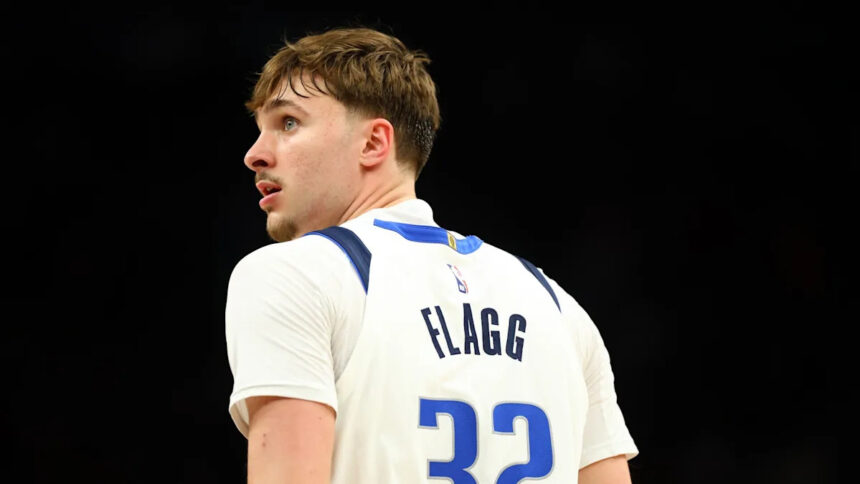
Dallas’ Cooper Flagg Wins NBA Rookie of the Year in Historically Close Race
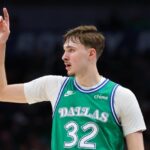
In a season that defied every preseason projection, Dallas Mavericks sensation Cooper Flagg was officially named the NBA’s Rookie of the Year on Monday, edging out his former Duke roommate Kon Knueppel in what league officials confirmed is the second-closest vote since the NBA began tracking ballots in 2003. The announcement, made during a special segment on NBA Showtime on Peacock, capped a roller-coaster campaign that saw Flagg go from runaway favorite to underdog, and back again.
For those who circled this date on the calendar back in October, the result seemed inevitable. Flagg was the No. 1 overall pick, a generational talent burdened with the expectations of a Dallas franchise that believed it would be playing deep into the postseason. Instead, the Mavericks stumbled out of the gate, injuries ravaged the roster, and Flagg found himself leading a lottery-bound team through the fire of a brutal Western Conference. “This season turned out a lot different than I expected,” Flagg admitted on the broadcast. “Being thrown into the fire like that, I think, will help me in the long term.”
But the path to this trophy was anything but smooth. For long stretches of the season, it appeared that Kon Knueppel—the sharpshooting guard selected by the Charlotte Hornets—would not only steal the spotlight but the hardware itself. The race became a referendum on two very different rookie archetypes: the high-floor, high-IQ scorer versus the raw, two-way phenom. In the end, a late-season surge by Flagg and a corresponding slide by Knueppel flipped the script. Here is the inside story of the most contentious Rookie of the Year race in two decades.
The Prescription: A Runaway Favorite Hits a Wall
When the Mavericks selected Flagg with the first pick, the analytics community and talking heads nearly unanimously declared the race over before it began. Flagg’s summer league performances were dominant. His defensive instincts were described as “generational.” Dallas, fresh off a Finals appearance two years prior, was supposed to offer him a winning environment where he could learn on the job while contributing to a contender.
Then reality struck. The Mavericks lost their starting point guard to a season-ending injury in Week 3. The team’s defensive rating cratered. Suddenly, Cooper Flagg was the primary option—not by design, but by necessity. Opposing defenses began loading up against him. He shot 38% from the field in November. The turnovers piled up. The narrative shifted from “can he win Rookie of the Year” to “is he even the best rookie in this draft class?”
Meanwhile, in Charlotte, Kon Knueppel was thriving in a system that maximized his strengths. The Hornets, a rebuilding club with no real pressure, ran offense through Knueppel’s pick-and-roll game. He was shooting 42% from three by December. He posted a 38-point game against the Celtics. The league took notice. “Knueppel is playing like a five-year vet,” one Eastern Conference scout told me in January. “Flagg is playing like a 19-year-old who has to do everything. It’s not a fair fight right now.”
By the All-Star break, Knueppel held a clear lead in most straw polls. Flagg’s odds on sportsbooks had slipped to +350. The race, it seemed, was all but decided.
The Turning Point: A Monster Final Stretch
But Cooper Flagg has a habit of proving people wrong. After a quiet February, the rookie forward recalibrated. Sources within the Mavericks organization say the coaching staff simplified his role in March, allowing him to focus on transition scoring and weak-side defense rather than initiating the entire offense. The results were immediate.
- March 15-31: Flagg averaged 27.3 points, 8.9 rebounds, and 2.1 blocks per game.
- April 2: He dropped a career-high 44 points on the Thunder, including a game-winning block in the final seconds.
- Final 10 games: Flagg shot 51% from the field and 40% from three, silencing critics who questioned his efficiency.
Conversely, Kon Knueppel hit a wall. The grueling 82-game schedule caught up with the Hornets guard. He shot just 32% from deep over the final three weeks. Charlotte lost 11 of its last 14 games. Voters, who had been leaning toward Knueppel for months, suddenly hesitated. “You can’t ignore the finish line,” one voter told me anonymously. “Knueppel was great for 60 games. Flagg was great when it mattered most.”
The final ballot tally was razor-thin. Flagg received 52 first-place votes to Knueppel’s 48, with Philadelphia’s VJ Edgecombe—a dynamic guard who would have won the award in a weaker class—finishing a distant third. The 4-vote margin is the second-smallest since 2003, trailing only the 2004 race between LeBron James and Carmelo Anthony.
Expert Analysis: What This Means for Both Players
This result is far more than a footnote in NBA history. It reshapes the trajectory of two franchises and raises critical questions about how we evaluate rookie performance.
For Cooper Flagg: This award validates his resilience. He was not the polished product many assumed he’d be. He struggled with efficiency, with leadership, with the mental weight of a losing season. But he finished. That 44-point game against Oklahoma City was not an outlier—it was a statement. Flagg now enters the offseason with momentum, a Rookie of the Year trophy, and a chip on his shoulder. The Mavericks will likely add a veteran point guard this summer, which should unlock Flagg’s off-ball potential. Expect him to be an All-Star candidate as early as Year 2.
For Kon Knueppel: The sting of finishing second will linger, but his season was historically great. He shot 39.4% from three on high volume. He averaged 5.7 assists. He was the best rookie in the Eastern Conference for four months. Knueppel’s game translates to winning basketball—he is a connector, a spacer, a high-IQ decision-maker. If Charlotte can add a legitimate star next to him, Knueppel could be a multi-time All-Star. Do not let the voting result fool you: he is a franchise cornerstone.
For VJ Edgecombe: The third-place finisher in Philadelphia is a reminder of how deep this rookie class was. Edgecombe averaged 19.2 points and 4.5 assists for a Sixers team that dealt with its own chaos. In any other year—say, 2022 or 2018—he wins the award comfortably. He is a blur in transition and a tenacious defender. The fact that he is an afterthought in this conversation speaks volumes about the quality at the top.
Predictions: The Long-Term Impact
History tells us that close Rookie of the Year races often create lasting rivalries. LeBron and Carmelo. Durant and Oden (though injuries ruined that one). Now, Flagg and Knueppel. These two will be linked for the rest of their careers, and the fact that they shared a dorm room at Duke only adds fuel to the fire.
Looking ahead, I predict Cooper Flagg becomes a top-10 player in the league within three years. His defensive versatility is already elite. If his shooting stabilizes—and the late-season surge suggests it will—he has MVP-caliber upside. The Mavericks will build around him, not through him, and that distinction matters.
Kon Knueppel will never be the primary star on a championship team, but he will be the second-best player on one. He is the modern prototype: a shooter who can create, a defender who understands angles, a leader who elevates teammates. The Hornets must surround him with athleticism and shot creation.
And VJ Edgecombe? He will be the steal of this draft class’s first round. Philadelphia has a gem who was overshadowed by two former college teammates. Watch for him to make an All-Rookie First Team and perhaps a Most Improved Player run next season.
Conclusion: A Season to Remember
Cooper Flagg’s Rookie of the Year win will be remembered not for its inevitability, but for its improbability. He entered the season as a sure thing, lost his grip on the award, and clawed his way back in the final weeks. He was not perfect. He was not always the best rookie on the floor. But he was the best rookie when the votes were being cast.
As Flagg accepted the trophy on Monday, he thanked his teammates, his coaches, and—with a wry smile—his former college roommate. “Kon made me better,” Flagg said. “He made this harder than it needed to be.”
That is the truth. And it is precisely why this race—the closest in two decades—will be talked about for years to come. The future of the NBA is in good hands. It just happens to be wearing a Mavericks jersey, a Hornets jersey, and a Sixers jersey all at once.
Source: Based on news from Yahoo Sports.