Davies at the Double: Veteran Scrum-Half’s Masterclass Extends Scarlets’ Arms Park Hoodoo
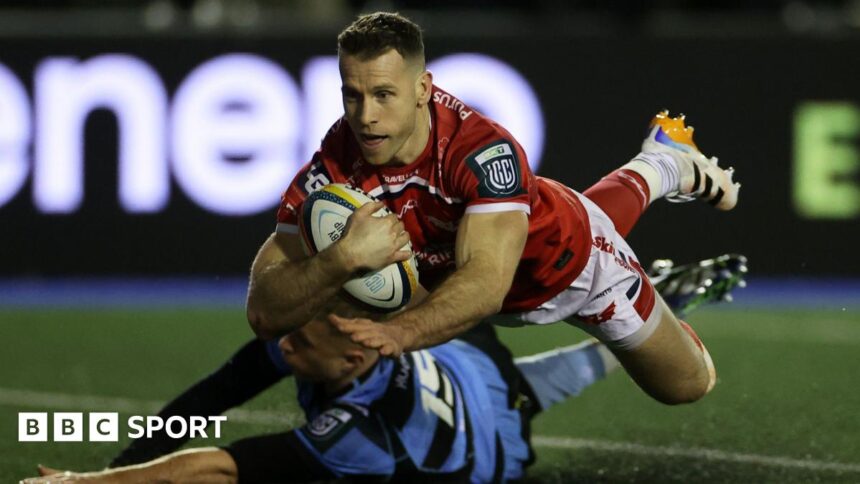
The narrative was familiar, the protagonist evergreen. In the cauldron of the Arms Park, where history weighs heavy on every pass and tackle, Gareth Davies authored yet another compelling chapter in his long-running rivalry with Cardiff. Just weeks after announcing his retirement from international rugby, the Scarlets scrum-half delivered a vintage, match-defining performance, scoring two tries to spearhead a 21-14 victory and reinforce his region’s recent dominance on this hallowed turf.
A Script Written in Stars: Davies’ Personal Arms Park Playground
Some players have bogey teams; Gareth Davies has a bogey stadium. The statistics border on the surreal. The 35-year-old’s double on Saturday marked the third successive match at the Arms Park where he has crossed the whitewash twice. It is a remarkable personal streak that underscores his big-game temperament and innate understanding of how to puncture Cardiff’s defenses. His first try was a classic snipe, spotting a sliver of space around a ruck near the line to dive over. The second, the clinching score, showcased his enduring support lines, as he appeared on the shoulder of a break to canter under the posts.
This was not the performance of a player winding down his career. It was a statement from a competitor who, freed from the international treadmill, is channeling all his experience and competitive fire into the Scarlets cause. “He’s a warrior,” said Scarlets head coach Dwayne Peel post-match. “His game management was excellent, but it’s those moments of sheer quality that change games. He’s done it for us time and again here.”
Match Breakdown: Control, Chaos, and Clinical Edge
While Davies provided the finishing flourishes, this was a victory built on a resilient and disciplined Scarlets framework. Cardiff, buoyed by the returning Josh Adams who scored a try, and the boot of Callum Sheedy, enjoyed periods of dominance, particularly in the first half. Their powerful carries from the likes of James Botham and Seb Davies asked serious questions of the Scarlets’ defensive line.
- Cardiff Scoring: Tries from Mason Grady and Josh Adams. Two conversions and two penalties from Callum Sheedy.
- Scarlets Scoring: A try from Tom James and the crucial double from Gareth Davies. Three assured conversions from Ioan Hawkins.
The pivotal period came either side of halftime. Having absorbed significant pressure, Scarlets struck through Tom James against the run of play. Then, with Cardiff threatening to regain control, Davies produced his first intervention. The Scarlets’ defensive maul was immense, repeatedly stifling Cardiff’s driving lineout—a key source of their tries this season. In the final quarter, as Cardiff chased the game, Scarlets’ game management, led by the wily Davies, squeezed the life out of the contest, culminating in his decisive second score.
Expert Analysis: The Davies Effect and Playoff Implications
From a tactical standpoint, Davies’ performance highlighted the irreplaceable value of a world-class scrum-half. His service was crisp, but it was his decision-making at the base of the ruck that truly differentiated the sides. He consistently challenged Cardiff’s fringe defenders, keeping them honest and creating space for his outside backs. In contrast, Cardiff’s attack, while physically potent, often lacked the same incisive tempo in the pivotal 9 channel.
The victory carries significant weight in the United Rugby Championship (URC) playoff race. For Scarlets, it is a monumental away win that injects belief and momentum into their campaign, proving they can grind out results in hostile environments. For Cardiff, it’s a frustrating setback in a season of near misses. The inability to convert territory and possession into points against a savvy opponent will be a key focus for coach Matt Sherratt.
Key tactical battles that defined the match:
- Breakdown Battle: Scarlets’ jackalers, led by Vaea Fifita, slowed Cardiff ball effectively.
- Kicking Duel: Both Sheedy and Hawkins managed territory well, but Scarlets’ back-field coverage was superior.
- Set-Piece Stability: A largely even contest, but Scarlets’ maul defense was a critical winning factor.
Looking Ahead: Legacy Building and Regional Resurgence
For Gareth Davies, this season has transformed into a legacy-defining campaign with his region. Unburdened by Wales duties, he has become the undisputed on-field leader for the Scarlets. His form poses an interesting question for Welsh rugby: can the new “Gatland’s Law” or similar succession policies retain such experienced quality within the regional game, to the benefit of both club and country’s long-term development?
Predictions for the rest of the season must now be recalibrated. Scarlets, with this blueprint of defensive grit and clinical finishing, have announced themselves as genuine playoff contenders. Their confidence on the road will be sky-high. Cardiff, meanwhile, must find a way to win these tight, high-pressure derbies. Their squad has the talent, but converting 50-50 moments into match-winning plays remains the final hurdle.
Conclusion: The Old Master Schools the Rivals Once More
At the final whistle, as the Scarlets players celebrated in front of a traveling contingent, it was Gareth Davies who received the loudest ovation. In a sport increasingly dominated by power and structure, his performance was a glorious reminder of the individual brilliance that can decide the fiercest of derbies. His try double for Scarlets in Cardiff was more than just five points; it was a masterclass in game intelligence, a testament to enduring class, and a continuation of a personal love affair with the Arms Park turf.
This victory was stamped with his identity. While the future of Welsh rugby looks to a new generation, on a crisp night in the capital, the old master proved he still has the pages—and the tries—to write his own story. For Scarlets, the road to the playoffs looks brighter. For Cardiff, the Arms Park hoodoo, personified by one man, continues.
Source: Based on news from BBC Sport.