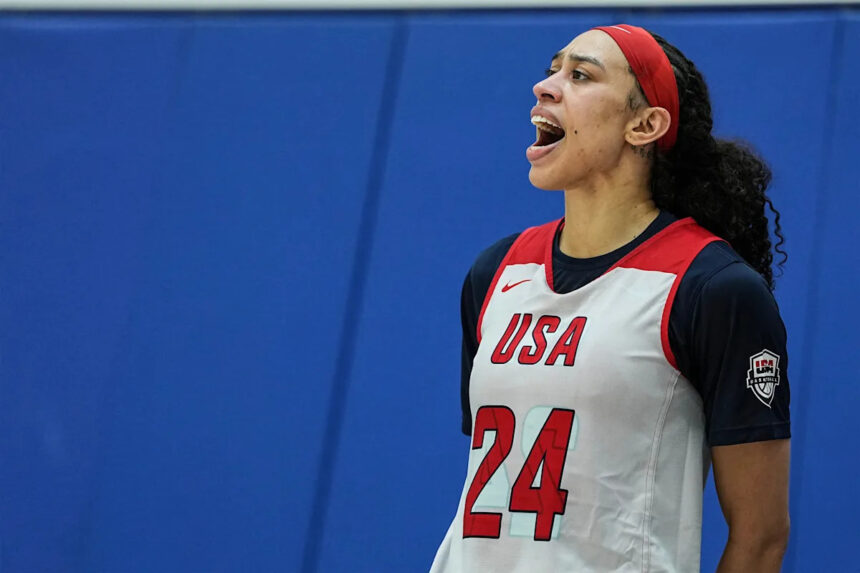
Dearica Hamby and Las Vegas Aces Drop Lawsuit: A Pivotal Moment for Women’s Sports
The legal battle that sent shockwaves through the WNBA has reached an abrupt and quiet conclusion. In a joint filing to a Nevada federal court, Dearica Hamby and the Las Vegas Aces moved to dismiss her high-profile pregnancy discrimination lawsuit “with prejudice,” bringing a definitive end to the contentious case. This resolution, arriving just months before the 2025 season, closes a legal chapter but leaves the broader conversation about athlete protections, workplace culture, and the economics of women’s sports wide open. The dismissal is not an admission of guilt nor a retraction of claims, but a strategic closure that allows both parties to move forward while the league grapples with the underlying issues it exposed.
- The Core of the Controversy: Allegations That Rocked the WNBA
- Analyzing the “Dismissal with Prejudice”: What It Really Means
- The Ripple Effects: League Policy, Player Agency, and Cultural Change
- Looking Ahead: Predictions for the WNBA and Women’s Sports
- Conclusion: A Landmark Case Even in Its Conclusion
The Core of the Controversy: Allegations That Rocked the WNBA
Dearica Hamby’s lawsuit, filed in August 2024, was more than a legal document; it was a stark accusation against a dynasty. A key member of the Aces’ 2022 championship team, Hamby alleged she was discriminated against and retaliated against after informing the team of her pregnancy in 2022. The suit claimed she was verbally abused by head coach Becky Hammon, accused of getting pregnant “on purpose,” and told her performance was slipping—all while she was playing through the pregnancy and earning All-Defensive honors.
The most consequential allegation was that this treatment culminated in her January 2023 trade to the Los Angeles Sparks while she was still postpartum, a move she framed as direct retaliation. For fans and observers, the case presented a disturbing paradox: a league that celebrates motherhood and female empowerment in its marketing was facing a lawsuit alleging the very opposite in its boardrooms. The Aces and the WNBA had previously filed motions to dismiss, arguing the claims lacked merit. Earlier in May 2024, a federal judge did dismiss Hamby’s claims against the WNBA itself, stating she failed to prove the league didn’t properly investigate. That ruling set the stage for the final act with the franchise.
Analyzing the “Dismissal with Prejudice”: What It Really Means
The legal term “with prejudice” is the critical detail in this resolution. It means the case cannot be refiled against the Aces on these grounds, providing finality. Crucially, the filing states each side will cover its own attorneys’ fees, a common indicator of a mutual settlement agreement reached outside of court. This is distinct from a court ruling in favor of one party. Legal experts suggest this path is often chosen to avoid the discovery process—the potentially messy public airing of emails, texts, and testimony—and to mitigate further reputational damage for all involved.
Hamby’s brief statement to Front Office Sports speaks volumes: while declining to discuss the outcome, she firmly stated she stands “by what I said” in her lawsuit. This indicates the dismissal is a procedural conclusion, not a recantation. For the Aces, it removes a looming distraction as they prepare to defend their three-peat aspirations. The resolution allows the organization to sidestep a protracted legal fight that could have overshadowed on-court success and impacted sponsor relations.
- Finality: The case is permanently closed against the Aces.
- No Financial Award: No monetary judgment was announced, suggesting a settlement without admission of liability.
- Protected Narratives: Both parties avoid the discovery process, controlling their public narratives.
- Moving On: Hamby continues her career in LA; the Aces focus on basketball.
The Ripple Effects: League Policy, Player Agency, and Cultural Change
Regardless of the legal outcome, Hamby’s lawsuit has already forced tangible change and intense scrutiny. In 2023, following initial allegations, the WNBA suspended Becky Hammon for two games and stripped the Aces of a 2025 first-round draft pick for violating league rules regarding “respect in the workplace” and impermissible player promises. The case became a catalyst for examining the WNBA’s 2020 Collective Bargaining Agreement (CBA) protections, which are among the most progressive in professional sports regarding maternity leave, salary continuation, and childcare.
The paradox highlighted is whether robust CBA language translates to day-to-day cultural compliance. Did the Aces, under immense pressure to build a dynasty and manage a tight salary cap, view a pregnant star as a logistical and financial complication rather than a protected employee? This case has undoubtedly empowered other players to understand their rights. It has also put front offices on notice that player well-being and legal compliance cannot be secondary to roster construction, even in a hard-capped league.
Furthermore, the saga underscores the tension between individual athlete rights and team control in the era of player empowerment. Hamby’s willingness to sue her former championship team signals a new level of player advocacy and agency, showing that stars will use all available tools, including litigation, to challenge perceived injustices.
Looking Ahead: Predictions for the WNBA and Women’s Sports
The dismissal of Hamby v. Aces is not the end of this story; it’s an inflection point. The implications will reverberate for seasons to come.
First, expect the WNBA to strengthen its investigative and enforcement mechanisms. The league’s initial penalty against the Aces and the subsequent lawsuit reveal potential gaps between policy and practice. We may see more explicit training for front offices, clearer reporting channels, and possibly even independent oversight for sensitive discrimination claims.
Second, this case will be a cornerstone in the next CBA negotiations. The current agreement expires in 2027, and the players’ union, led by stars like Nneka Ogwumike, will undoubtedly seek even stronger anti-retaliation clauses, more granular protections for pregnant players, and potentially revisions to salary cap rules to disincentivize the trading of players due to pregnancy. The “Dearica Hamby Rule” could become a tangible part of the league’s governing documents.
Finally, for the Aces and Sparks, the basketball narrative resumes with added layers. Hamby will face her former team with personal history fueling her motivation. The Aces, while legally cleared, will operate under a microscope, where every transaction involving a player starting a family will be scrutinized. Their legacy will now be a blend of on-court dominance and this off-court controversy.
Conclusion: A Landmark Case Even in Its Conclusion
The mutual dismissal of Dearica Hamby’s lawsuit against the Las Vegas Aces provides a legal conclusion but fails to deliver moral absolution for either side. In many ways, the case achieved its most important goal long before the court filing: it ignited an unavoidable and necessary firestorm about how professional women athletes are treated when they choose to become mothers. It tested the WNBA’s commitment to its stated values and revealed the complex realities of operating a team within a restrictive salary cap.
Hamby’s courage in filing the suit, and her resolve in standing by her words, has already altered the landscape. The precedent is set: allegations of pregnancy discrimination will be met with severe public and league scrutiny. As the WNBA’s popularity and financial stakes skyrocket, this episode serves as a critical lesson. True progress requires more than groundbreaking CBAs and marketing campaigns; it requires a culture shift where supporting motherhood is ingrained in every team’s operational DNA, not seen as a competitive disadvantage. The final whistle has blown on this lawsuit, but the game for equity in women’s sports continues.
Source: Based on news from Yahoo Sports.