DeMarcus Lawrence’s Ultimate Vindication: From Dallas Diss to Seattle’s Super Bowl Glory
The confetti had barely settled on the field at Super Bowl LX, the echoes of the final whistle still ringing in the ears of a stunned New England Patriots squad. As the Seattle Seahawks hoisted the Lombardi Trophy, one player’s journey to that pinnacle felt like a narrative ripped from a Hollywood script. For defensive lineman DeMarcus Lawrence, the moment was more than a championship; it was the ultimate, in-your-face validation of a bold prophecy he uttered just one year prior. The man who declared he would “for sure” never win a Super Bowl with the Dallas Cowboys had just proven himself spectacularly, devastatingly right with the Seattle Seahawks.
The Dallas Departure: A Bold Prophecy and a Fractured Legacy
For eleven grueling seasons, DeMarcus Lawrence was the heart and soul of the Dallas Cowboys’ defensive line. A two-time Pro Bowler and the franchise’s all-time leader in tackles for loss, he embodied the “War Daddy” mentality the team craved. Yet, for all his individual accolades and massive contracts, the ultimate team success remained elusive. The Cowboys’ postseason runs were defined by heartbreak and underachievement, a cycle of hope and disappointment that wore thin.
When his contract expired last offseason, the divorce was surprisingly public and pointed. In a candid free-agency interview, Lawrence didn’t mince words. “I love the guys in that locker room, I love the Jones family for the opportunity,” he began, before delivering the line that would ignite a firestorm across Texas. “But to win a championship? To get a ring? I knew for sure that wasn’t happening in Dallas. Not with how things were built.”
The statement was a grenade lobbed at “America’s Team.” Cowboys fans and media dissected it for days. Was it bitterness? Blame? Or simply a veteran’s cold, hard assessment? The backlash was swift, labeling him a malcontent who couldn’t get the job done. But Lawrence wasn’t finished. He sought a new home, a culture built not on glittering promise, but on gritty, defensive-minded proof. He found it in the Pacific Northwest.
Seattle’s Symphony: Lawrence Finds His Perfect Defensive Fit
The Seattle Seahawks, under head coach Mike Macdonald, had quietly assembled a defensive juggernaut reminiscent of the legendary “Legion of Boom” days. They didn’t need a star; they needed the final, perfect piece—a versatile, high-motor veteran who could set the edge against the run and collapse the pocket in critical passing situations. Lawrence was that piece.
His impact was immediate and profound. Freed from being the sole focal point of an opposing offensive line, and inserted into a scheme that prized disciplined aggression, Lawrence flourished. He wasn’t just a player; he was a tone-setter. His leadership in the locker room and his relentless play on the field became infectious. Key elements of his success in Seattle included:
- Scheme Versatility: Macdonald used Lawrence everywhere from a 5-technique end to a 3-technique interior rusher, creating constant mismatches.
- Reduced Double-Teams: With other threats like Boye Mafe and Dre’Mont Jones on the line, Lawrence saw more one-on-one blocks, which he exploited mercilessly.
- Championship Pedigree: His veteran savvy and playoff experience became a guiding light for younger players during Seattle’s tense postseason run.
The regular season was strong, but the playoffs were where Lawrence’s prophecy began its march toward reality. He was a force of nature, a disruptive presence that stats alone couldn’t fully capture.
Super Bowl Domination: The Prophecy Fulfilled on the Biggest Stage
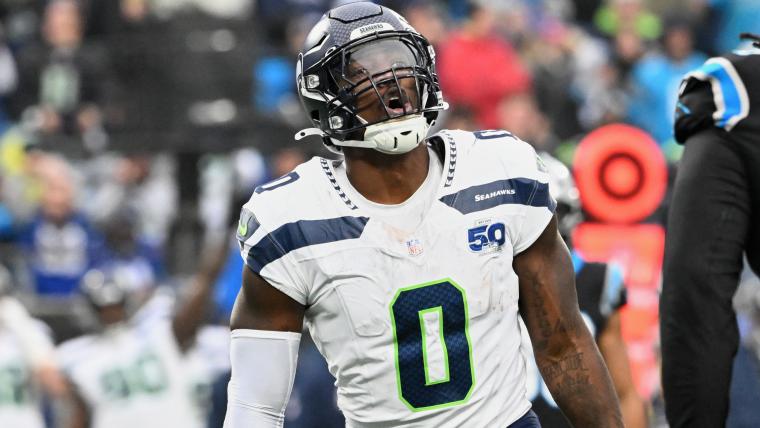
Super Bowl LX against the New England Patriots was a defensive masterclass, and DeMarcus Lawrence was its conductor. Tasked with containing a methodical Patriots offense, the Seahawks’ defense delivered one of the most dominant performances in the big game’s history. And at the center of it all was number 90 in blue and green.
Lawrence’s stat line—1.5 sacks, 3 tackles for loss, 5 quarterback hits—only tells part of the story. His constant pressure on Patriots QB Drake Maye disrupted the timing of every play. He was immovable against the run, forcing New England into long, untenable second and third downs. On the game’s defining drive, with the Patriots threatening late, it was Lawrence who exploded past the guard and hit Maye as he threw, resulting in a game-sealing interception.
As the clock hit zero, the cameras found Lawrence. He didn’t scream or cry immediately; he simply looked around, a slow, satisfied smile spreading across his face. It was the look of a man whose truth had been validated on the grandest possible stage. The diss wasn’t just a soundbite anymore; it was a chapter in NFL history. Eleven years in Dallas yielded zero Super Bowl appearances. One year in Seattle yielded a ring. The contrast couldn’t have been more stark, or more personally vindicating.
Legacy and Fallout: What Lawrence’s Win Means for the NFL Landscape
DeMarcus Lawrence’s story is more than a juicy footnote. It’s a case study in organizational culture, player empowerment, and the pursuit of legacy. His success sends ripples across the league that will be felt for some time.
For the Dallas Cowboys, this is a brutal mirror held up to their entire operation. The “always a bridesmaid” narrative gains crushing weight when a respected veteran leaves and immediately wins it all. It will intensify the scrutiny on owner Jerry Jones and the front office, forcing hard questions about whether the organization’s philosophy is fundamentally flawed when it comes to constructing a championship-caliber team, not just a popular one.
For veteran players, Lawrence’s path is a beacon. It underscores that it’s never too late to chase a ring, and that a strategic change of scenery—even after a decade with one team—can unlock a career’s ultimate achievement. It empowers stars on stagnant teams to prioritize their legacy and make tough business and personal decisions.
For the Seattle Seahawks, it reaffirms the brilliance of their identity. They remain the destination for defensive players who want to be part of something greater than themselves. General Manager John Schneider’s gamble on Lawrence’s talent and mindset is now the stuff of front-office legend.
Looking ahead, the pressure in Dallas is now thermonuclear. Every move will be judged against the backdrop of Lawrence holding the Lombardi Trophy. In Seattle, the challenge becomes repeating the feat, with Lawrence now as the elder statesman of a defense that has reclaimed its fearsome reputation.
In the end, DeMarcus Lawrence’s journey is the ultimate sports revenge story, but not one born of petty malice. It was a prophecy of frustration, a quest for a winning culture, and a testament to self-belief. He didn’t just leave Dallas; he authored a definitive epilogue to his time there. With a Super Bowl ring now gleaming on his finger, his diss wasn’t just proven right—it was etched into the annals of the sport, a permanent reminder that in the NFL, sometimes the truest words are spoken on the way out the door.
Source: Based on news from Yahoo Sports.