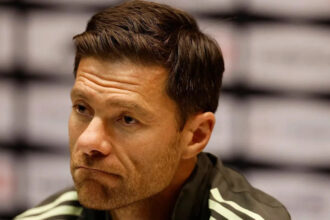
Ousmane Dembele Completes Historic Double, Crowned FIFA Best Men’s Player of the Year
The narrative of unfulfilled potential has been irrevocably shattered. In a ceremony in Qatar that felt less like a coronation and more like a validation, Paris Saint-Germain’s Ousmane Dembele ascended to the pinnacle of individual football honors, securing the FIFA Best Men’s Player of the Year award for 2025. This victory, coming just months after his Ballon d’Or triumph, completes an unprecedented personal double for the French winger, cementing his journey from mercurial talent to the game’s most decisive force.
Dembele’s win over formidable finalists—Barcelona’s teenage sensation Lamine Yamal and Real Madrid’s iconic Kylian Mbappe—signals a seismic shift in football’s hierarchy. It is a testament not to fleeting brilliance, but to a season of sustained, match-winning excellence that propelled his club to historic heights. At 28, Dembele has transformed from a player defined by flashes of genius into the relentless engine of a conquering side.
The Metamorphosis: From Fragile Talent to Unstoppable Force
For years, the footballing world spoke of Ousmane Dembele in terms of “what if.” His spell at Barcelona was a rollercoaster of breathtaking dribbles, crucial goals, and frustrating spells sidelined by injury. The raw materials—blistering pace, two-footed sorcery, and visionary passing—were never in doubt. The consistency and durability were.
His 2023 move to Paris Saint-Germain, reuniting with former Barcelona teammate Kylian Mbappe, was seen as a gamble. Yet, under the meticulous management of Luis Enrique, Dembele underwent a physical and tactical renaissance. The 2024-25 season became his masterpiece. Dembele managed a staggering 51 goal contributions (goals and assists) in just 53 appearances, a statistic that transcends mere productivity. These were not padded numbers; they were decisive interventions in the biggest games, on the grandest stages.
This transformation was built on a foundation of resilience. Dembele’s physical conditioning reached new peaks, allowing his technical gifts to flourish week-in, week-out. The narrative was rewritten: the fragile talent was now football’s most robust and reliable weapon.
The Campaign That Sealed the Award: A Season for the Ages
Individual awards in football are almost always won on the back of collective success, and Dembele’s 2024-25 campaign with PSG was the stuff of legend. His season was a highlight reel of clutch performances that delivered a historic quadruple:
- UEFA Champions League Triumph: The crowning achievement. Dembele was omnipresent in PSG’s charge to their first-ever European Cup, terrorizing defenses with his direct running and providing key goals and assists throughout the knockout stages.
- Domestic Dominance: He was the heartbeat of a PSG side that swept Ligue 1, adding the Coupe de France and Trophee des Champions to complete a clean sweep of French honors.
- Statistical Supremacy: Beyond the 51 goal contributions, his metrics for chance creation, successful dribbles, and progressive carries placed him in the 99th percentile of attacking players globally.
When the votes were cast, the evidence was overwhelming. While Lamine Yamal represented a dazzling future and Kylian Mbappe a perennial contender, Dembele’s role as the catalyst for a historic, trophy-laden season made him the undeniable choice. He didn’t just play well; he defined a winning era for his club.
Analysis: What Dembele’s Victory Tells Us About Modern Football
Dembele’s FIFA Best win is symbolic of a broader evolution in how the game’s elite performers are judged. It is no longer sufficient to be a prolific goal scorer or a social media highlight. The modern “best player” must be a comprehensive attacking system in himself.
Dembele’s dual-threat capability is his superpower. Defenders cannot show him onto his “weaker” foot—he doesn’t have one. He is as likely to shred a defense with a whipped cross from the right as he is to cut inside and unleash a ferocious left-footed strike. This unpredictability, combined with his enhanced decision-making under Luis Enrique, makes him a nightmare to game-plan against.
Furthermore, his victory emphasizes the value of peak performance arriving at prime age. At 28, Dembele combines the explosive physical attributes of his youth with the hardened wisdom and tactical understanding of a veteran. He is in the perfect window of his career, and this award recognizes that sublime intersection of skill, physique, and footballing IQ.
The Road Ahead: Can Dembele Define an Era?
Winning the award is one challenge; defining an era is another. The question now is whether Dembele can use this platform to establish a period of sustained dominance. The pressures of being the reigning FIFA Best and Ballon d’Or holder are immense. Every touch, every quiet game, will be hyper-analyzed.
However, his trajectory suggests this is not a peak, but a plateau he can maintain. Key factors for his continued reign include:
- Maintaining Physical Prime: His continued partnership with PSG’s performance staff will be crucial to avoiding the injury troubles of his past.
- Evolving His Game: As pace eventually wanes, his playmaking and finishing intelligence will need to become even sharper.
- Leading France to Glory: With the 2026 FIFA World Cup on the horizon, leading Les Bleus to success would solidify his legacy as an all-time great.
The chasing pack, including the phenomenal Yamal and a surely motivated Mbappe, will not relent. But Dembele now possesses the confidence and proven pedigree of a champion.
Conclusion: The Ultimate Validation of Perseverance
Ousmane Dembele’s FIFA Best Men’s Player of the Year award is more than a golden trophy; it is the ultimate redemption story. It is a victory for perseverance over doubt, for refined talent over raw hype, and for transformative impact over individual spectacle. By powering Paris Saint-Germain to a historic first Champions League title and a domestic clean sweep, he authored the perfect script for individual recognition.
As he stood on the stage in Qatar, the same player once labeled inconsistent and injury-prone had achieved a feat that eludes most legends: securing football’s two most prestigious individual honors in the same cycle. Dembele’s journey reminds us that a player’s story is not written in their early chapters. It is written in moments of decisive brilliance on the biggest nights, and in 2024-25, no one wrote them more authoritatively than Ousmane Dembele. The era of “what if” is over. The era of “he did” has emphatically begun.
Source: Based on news from BBC Sport.