Deontay Wilder Beat Derek Chisora, But Won Back Something Far More Valuable
The narrative was written, the obituary for his career all but published. Deontay Wilder, the once-terrifying “Bronze Bomber,” was a ghost in the ring. His legendary right hand, that instrument of instant chaos, had lost its GPS. After listless, trigger-shy losses to Joseph Parker and Zhilei Zhang, the diagnosis from the boxing world was unanimous: the killer instinct was gone. The final chapter of his storied career, against the durable but faded Derek Chisora, was seen as a sad formality, a pension-securing payday before the curtain fell. Then the bell rang.
The Redemption of a Right Hand: More Than Just a Win
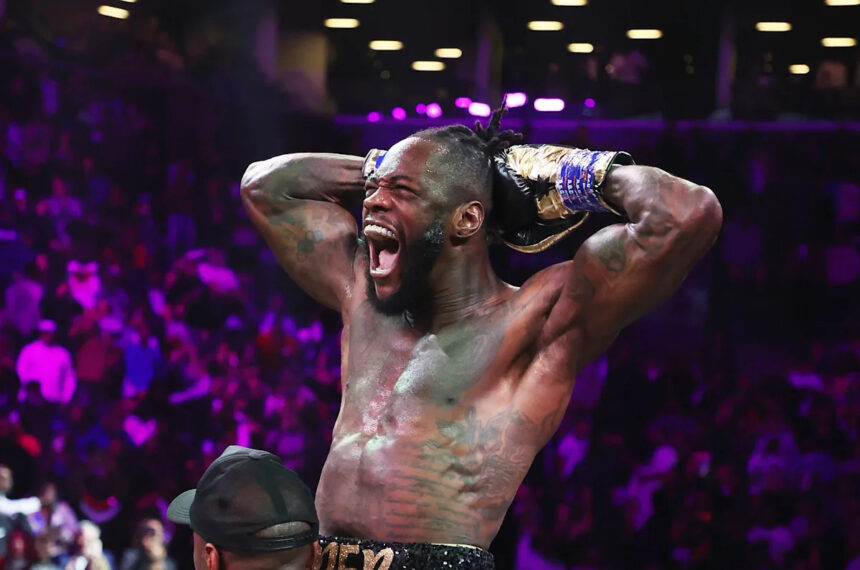
Wilder’s eighth-round stoppage of Chisora was decisive, a clinical display of the very power that made him a champion. He hurt Chisora early, controlled the distance, and finished the fight with a vintage, concussive right hand that sent “Del Boy” stumbling into the ropes, forcing the referee’s intervention. The victory itself was significant, halting a three-fight winless skid and keeping his name in the heavyweight conversation. But the W wasn’t the headline. The real story was the reclamation of an identity. For the first time in years, Wilder looked like Deontay Wilder. Not a hesitant impersonator, but the fighter who grew a fanbase on electric, terrifying, fight-finishing violence. The right hand, that so-called “touch of death,” was back online.
This was never just about technique. Wilder’s style has always been an athletic paradox—a one-dimensional arsenal built on a multi-dimensional threat. For years, critics lambasted his crude boxing fundamentals, his over-reliance on that apocalyptic right. Yet, it was enough to floor every single opponent he ever faced. Until it wasn’t. The Parker and Zhang fights created a crisis of confidence so profound that many wondered if the weapon was permanently jammed. Against Chisora, he didn’t just fire it; he aimed with conviction. He pulled the trigger. And in that simple, violent act, he won back the single most important asset for any fighter: belief.
The Unteachable Heart: A Legacy Forged in Defeat
To understand the magnitude of this moment, you must look past the Chisora fight and into the heart of Wilder’s true legacy. His championship reign was built on power, but his legend was cemented in spectacular defeat. This is the core of Wilder’s story that often gets overshadowed by highlight-reel knockouts. It’s the attribute no trainer can instill: an indomitable, almost frightening will.
This was crystallized in his epic trilogy with Tyson Fury. While Fury rightly gets credit for his tactical genius and resilience, those fights are immortalized because of Wilder’s inhuman heart. He was outboxed, outmaneuvered, and brutally knocked down multiple times. Yet, his fight-or-flight response was always set to “fight.”
- In the first fight, he rose from what looked like a fight-ending knockdown in the 12th to nearly finish Fury with a seismic punch moments later.
- In the brutal third fight, he was knocked down repeatedly, out on his feet, but kept surging forward, even flooring Fury twice in return.
He didn’t just take punches; he absorbed catastrophe and tried to give it back. That trilogy isn’t revered because of Fury’s wins alone; it’s revered because of the testicular fortitude Wilder displayed, getting up until his body literally would not let him. That’s not a skill. That’s character. And it’s the same core of steel he had to tap into to silence the doubts and step into the ring with Chisora when the world had written him off.
What the Comeback Reveals About Wilder’s Future
So, where does the “Bronze Bomber” go from here? The Chisora victory doesn’t erase the questions about his age (40) or his mileage from those wars. But it completely reshapes the narrative. He is no longer a shot fighter, but a dangerous, renewed gatekeeper to the elite. The win proves the power hasn’t evaporated; the connection between mind and missile has been restored.
This resurgence opens up fascinating possibilities:
- A Final Title Run? It seems a long shot, but in the turbulent heavyweight landscape, a few more explosive wins could position him for one last major payday against a champion.
- The Ultimate Style Clash: A fight against Anthony Joshua, the long-dreamed mega-fight, instantly regains its sizzle. A confident Wilder with live power is the most dangerous stylistic puzzle for AJ.
- The Veteran Attraction: He becomes the premier name for rising contenders and fellow veterans, guaranteeing dramatic, high-stakes fights.
The key will be activity. Wilder has always fought infrequently. Now, he must build on this momentum. Another long layoff could see the doubts—and the hesitation—creep back in. But if he can stay active, the warrior instinct he rediscovered against Chisora will only sharpen.
Conclusion: A Victory for the Soul
Deontay Wilder’s record will show a win over Derek Chisora in his 50th professional fight. But the history books will miss the point if that’s all they record. On Saturday night, Wilder didn’t just beat an opponent; he defeated the specter of his own decline. He conquered the paralysis that had gripped him, the fear that the gift had abandoned him. He won back his belief, and in doing so, he reclaimed the essence of what made him a must-watch phenomenon.
His legacy was never solely the knockouts or the championship belt. It was always the heart—the willingness to walk through hellfire to land one fight-altering punch. For a while, it seemed that heart was buried under hesitation. The victory over Chisora proved it was merely lying in wait, ready to beat again. Deontay Wilder didn’t just win a fight. He won back his soul. And in the brutal, psychological theater of heavyweight boxing, that is a triumph more valuable than any temporary title.
Source: Based on news from Yahoo Sports.