Hearts’ Premiership Pinnacle: A Mirage or Merely a Misfire?
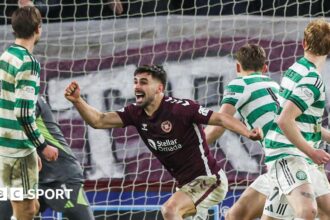
Little over a month ago, the view from the summit of the Scottish Premiership was bathed in maroon. Hearts, having delivered a seismic statement 3-1 win over Celtic, weren’t just leading the pack; they were dictating the narrative of the entire season. An eight-point lead had observers far beyond Scotland’s borders peering in, wondering if a storybook challenge for the title was being penned at Tynecastle. Today, that lead has evaporated entirely. The cold reality of a relentless chase has set in, with Celtic now holding the cards and a game in hand. The question now echoing from Gorgie to Glasgow is unavoidable: did we, and perhaps they, get too excited, too soon?
The Anatomy of a Vanishing Lead
The collapse of an eight-point cushion in the space of six games is a statistical anomaly that demands forensic examination. This wasn’t a case of a single, catastrophic defeat. Instead, it has been a slow leak of points, a series of stumbles that have revealed the fine margins between a sustained challenge and the chasing pack.
The initial Hearts v Kilmarnock encounter, a 2-1 defeat at Rugby Park, was the first major crack. It was a classic post-Celtic hangover, a failure to match the intensity of a well-drilled opponent. This set a troubling pattern. Draws against St Johnstone and Ross County—teams Hearts would need to dismantle to be true contenders—highlighted a growing issue: breaking down deep-lying, resilient defences.
Key factors in the downturn include:
- Injury Cascade: The loss of pivotal midfielder Beni Baningime to a season-ending injury was a brutal blow. His defensive shield and ball progression have been irreplaceable.
- Attacking Stagnation: Lawrence Shankland’s goals have dried up from open play, and the creative burden on Jorge Grant and Alan Forrest has intensified without consistent output.
- Tactical Rigidity: Opponents have successfully nullified Hearts’ preferred patterns, and adaptations have been slow, raising questions about in-game management.
The psychological weight of leading, of being the hunted for the first time in a generation, cannot be underestimated. The swagger from the Celtic win seemed to dissipate, replaced by a palpable tension in performances.
The Celtic Juggernaut and the Reality of the Race
While Hearts have faltered, it is critical to contextualize their slump with the inevitable response from Glasgow. Celtic, stung by that Tynecastle defeat, have clicked into the remorseless gear that has defined their domestic dominance for over a decade. They have won every league game since, scoring freely and conceding rarely.
This is the unspoken truth of the Scottish Premiership summit: building a lead is one thing, maintaining it while a financial and squad-depth behemoth like Celtic breathes down your neck is another entirely. Brendan Rodgers’ side possesses a squad built for a 38-game marathon, with quality in every position to rotate and refresh. Hearts’ squad, while improved, is being tested to its absolute limits, and the strain is showing.
The looming trip to Parkhead on Sunday now feels less like a title six-pointer and more like a daunting examination of Hearts’ resilience. A defeat would likely see Celtic disappear over the horizon. Even a draw, while a creditable result, would likely leave Hearts playing for pride and a cemented third place, given Rangers’ concurrent resurgence.
Re-calibrating Expectations: What Constitutes Success?
This period of adversity is not a failure; it is a reality check. The initial excitement was not manufactured—it was a genuine reaction to exceptional football and a tangible points gap. However, it may have skewed the realistic objectives for Steven Naismith’s project in its first full season.
The true measure of Hearts’ season was, and should remain:
- Consistent European Qualification: Finishing a clear third, well ahead of Kilmarnock and St Mirren.
- Deep Cup Runs: Challenging for silverware, as they continue to do in the Scottish Cup.
- Style and Identity: Establishing a clear, progressive playing philosophy under Naismith.
On these metrics, the campaign remains a resounding success. They have broken the cycle of yo-yoing between third and fourth. They have produced memorable, high-level performances. The disappointment stems not from falling short of their goals, but from a tantalizing glimpse of something even greater that proved, for now, out of reach.
Looking Ahead: Foundation or Folly?
The final quarter of the season is now about response. How Hearts navigate this psychological and physical setback will define the trajectory of Naismith’s tenure more than the dizzying highs of October.
Key predictions and watchpoints for the run-in:
First, the battle for third is now the immediate focus. Hearts must rediscover their winning formula quickly to fend off a resurgent Dundee and a stubborn Kilmarnock. Secondly, the Scottish Cup represents a glorious opportunity to salvage a tangible, storybook ending. A cup win and third place would be a phenomenal season by any historical measure at Tynecastle.
Finally, the summer transfer window becomes critical. The board must back Naismith to address the clear lack of depth and specific quality in forward areas and midfield dynamism. This squad needs additions that can sustain a challenge, not just spark one.
Conclusion: A Necessary Lesson, Not a Lost Dream
So, were we too excited, too soon? Perhaps. But the excitement was real, and it was earned. Hearts provided a scintillating reminder that competition, however fleeting, is possible. Their mistake, and ours, was in mistaking a brilliant beginning for a finished story.
The vanishing lead is a harsh lesson in the relentless demands of a title race, especially one involving Celtic. It has exposed the squad’s limitations but also highlighted the monumental progress made. The dream of a sustained challenge has faded for this season, but the foundation for a stronger, wiser Hearts has been stress-tested and, in many ways, solidified. The task now is not to mourn a lost lead, but to build from its lessons, ensuring that the next time maroon tints the summit, they are equipped to stay there much, much longer.
Source: Based on news from BBC Sport.
Image: Source – Original Article