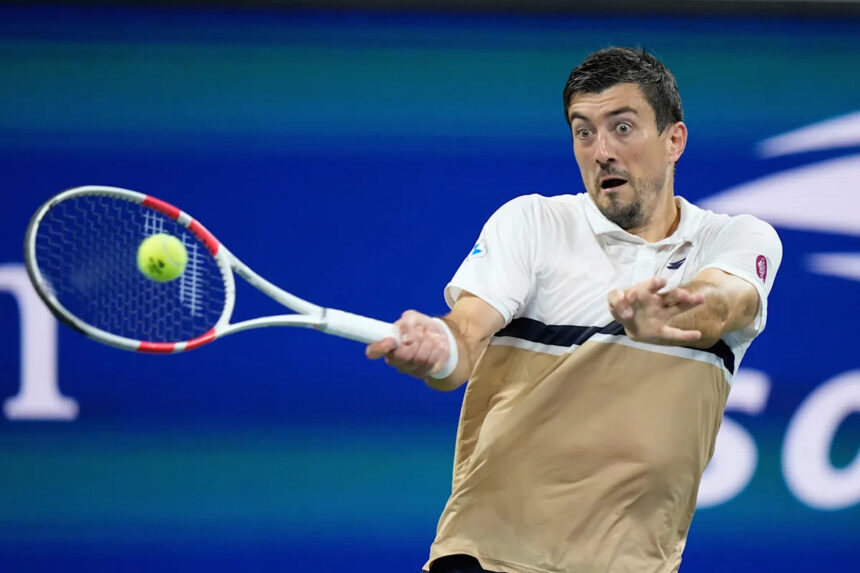
The Agony of Premature Celebration: Sebastian Ofner’s Costly Australian Open Mistake
The line between triumph and despair in professional tennis is razor-thin, often measured in millimeters and milliseconds. But in a stunning moment at Australian Open qualifying, Austrian veteran Sebastian Ofner discovered a new, uniquely cruel dimension to that line: the mental chasm that opens when you believe you have already crossed it. In a scene that will be etched in Grand Slam lore as a cautionary tale, Ofner’s premature victory celebration turned a near-certain win into a devastating, self-inflicted defeat against American youngster Nishesh Basavareddy. This wasn’t just a loss; it was a masterclass in psychological unraveling, a dramatic case study in why the final point is the only one that truly matters.
A Tiebreaker Turned Twilight Zone
The match itself was a gritty, three-set battle typical of the high-stakes pressure cooker that is qualifying. Ofner, the 29-year-old with more tour experience, claimed the first set. Basavareddy, the 20-year-old Stanford product, fired back to take the second. The decisive third set marched inexorably to a tiebreaker. Here, Ofner seemed to seize control, racing to a commanding 7-1 lead. In the standard best-of-seven-points tiebreaker used in every set but the final one, the match would have been over. But in Grand Slam qualifying, the final-set tiebreaker is a 10-point super tiebreaker, a detail that vanished from Ofner’s mind in the heat of battle.
Convinced he had won, Ofner raised his arms in victory, a wide smile breaking across his face, and began walking to the net to shake hands. The crowd murmured in confusion. The chair umpire’s voice cut through the moment, instructing him to return to the baseline. The match was not over; he needed 10 points and a two-point margin. The psychological whiplash was instant and visible. The Austrian’s shoulders slumped, his confident gait turned heavy. He had to mentally re-engage in a battle he believed he had already won.
The Psychological Unraveling: From Victor to Vulnerable
What followed was a textbook example of momentum evaporating under the heat of mental distraction. Ofner had not one, but two match points later in the extended tiebreaker but failed to convert either. Basavareddy, sensing a profound shift, clawed back.
Key Factors in Ofner’s Collapse:
- Cognitive Dissonance: The brain must switch from a state of post-victory relaxation back to extreme competitive focus, a nearly impossible task.
- Pressure Inversion: The “free roll” feeling for Basavareddy contrasted with the crushing weight of squandered opportunity now on Ofner.
- Loss of Rhythm: The flow of the match was completely disrupted, favoring the player who had been moments from defeat.
Basavareddy’s post-match analysis was piercingly accurate. “I saw him tense up a little bit,” the American said. “Generally when that happens, you start overthinking like, ‘Oh, I thought I already won the match, through to the next round.’ So, yeah, that definitely gave me a little bit of hope.” That sliver of hope was all the talented junior needed. He sealed an improbable 4-6, 6-4, 7-6(11) victory, and his subtle choking gesture at the net—hands on his own neck—spoke volumes. It was a gesture not of mockery, but of stark symbolism: he had felt the pressure, recognized it had transferred to his opponent, and strangled the life out of the comeback.
Historical Context: A Recurring Nightmare in Sports
While uniquely dramatic, Ofner’s plight is not unprecedented in the annals of sport. It touches on the universal theme of “snatching defeat from the jaws of victory.”
Famous Precedent: The 1999 French Open
The most direct parallel in tennis is the 1999 French Open final, where Martina Hingis infamously crossed the net to shake Steffi Graf’s hand after wrongly believing she had won a point on a Graf shot called out. The ball was ruled good, Hingis lost her composure, and Graf stormed back to win. The psychological shock is identical.
Beyond tennis, football players dropping the ball before crossing the goal line or sprinters easing up before the finish tape live in the same realm of infamy. These moments are so compelling because they reveal a fundamental human flaw: the desire to taste victory before the work is complete. They underscore that elite sport is contested as much between the ears as it is on the court or field.
Lessons Learned and Future Implications
For Sebastian Ofner, this will be a scarring but potentially formative moment. The road back from such a public mental lapse is arduous. He must answer questions about it for the rest of his career. However, if he can process it correctly, it could forge a tougher competitive mindset. He has been given the hardest possible lesson in situational awareness.
For Nishesh Basavareddy, this is a career-launching victory. Winning in such circumstances demonstrates a mental fortitude that belies his age. He didn’t just win a match; he won a psychological duel. He kept his head while his opponent, momentarily, lost his. This experience, navigating chaos and capitalizing on an opponent’s catastrophic error, is invaluable. It will make him a feared competitor in future tight matches.
Prediction for Basavareddy: This win could be the catalyst that accelerates his transition from promising junior to tour threat. The confidence gained from such a resilient victory, especially in a Grand Slam environment, is immeasurable. Watch for him to carry this momentum, not just through the rest of qualifying, but into the early stages of his professional career. He has proven he can thrive in chaos.
Prediction for The “Ofner Effect”: This incident will instantly become a reference point for coaches and commentators. We will hear “don’t pull an Ofner” in junior tennis and training sessions for years. It will be a staple in highlight reels of sports blunders and a mandatory study point in sports psychology classes on maintaining focus.
The Final Point: A Haunting Reminder
The cruel beauty of sport lies in its absolute, unforgiving finality. The scoreboard is the only truth that matters. Sebastian Ofner’s painful experience in Melbourne is a stark, almost Shakespearian reminder of that truth. It underscores that in tennis, and in all endeavors, premature celebration is more than just bad form; it is a critical failure of process. It is a abandonment of the discipline required to see a task through to its genuine conclusion.
As Basavareddy moves on, forever linked to this bizarre twist of fate, and Ofner licks his wounds, the lesson echoes far beyond Court 3 at Melbourne Park: play until the umpire calls the score. Compete until the final point is won. Never, ever celebrate a victory you have not officially been awarded. In the gladiatorial arena of professional tennis, the mind is the ultimate weapon, and for one devastating moment, Sebastian Ofner allowed his to betray him completely.
Source: Based on news from Yahoo Sports.