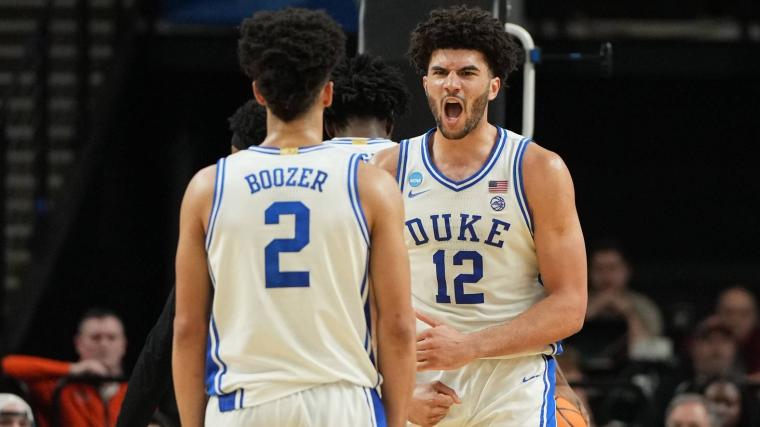
Duke vs. St. John’s Box Score: A Sweet 16 Masterpiece Unpacked
The 2026 NCAA Tournament’s Sweet 16 delivered a clash dripping with narrative, pitting blue-blood pedigree against a resurgent legend. The box score from Duke’s showdown with St. John’s is more than just numbers; it’s a forensic document of a tactical battle, individual brilliance, and the precise moment a championship contender stamped its authority on March. While the final score tells one story, the full statistical ledger reveals the how and why behind a modern tournament classic.
Beyond the Final Score: A Tale of Two Halves
At first glance, Duke’s 78-65 victory suggests a comfortable Blue Devil march. However, the play-by-play data and half-time breakdown reveal a game of starkly contrasting chapters. The first half was a gritty, defensive struggle emblematic of Rick Pitino’s coaching genius. St. John’s, leveraging their physical backcourt and the interior presence of Zuby Ejiofor, disrupted Duke’s rhythm, forcing 9 first-half turnovers and holding the nation’s most efficient offense to just 32 points.
The second half, however, became a showcase for Duke’s elite talent and adaptability. The Blue Devils exploded for 46 points, shooting a blistering 68% from the field. This dramatic shift is the central story of the game. The adjustment wasn’t mystical; it’s visible in the assist-to-turnover ratio column. After halftime, Duke recorded 12 assists against only 2 turnovers, a masterclass in poise under pressure that dismantled St. John’s defensive schemes.
Key Player Performances: Stars and Stoics
The individual matchups promised fireworks, and the box score stats confirm they delivered.
- Cam Boozer (Duke): The freshman phenom lived up to his billing, but his line was a study in all-around impact. He finished with 22 points, 14 rebounds, and 4 assists. Crucially, 16 of his points came in the second half, many during Duke’s decisive 18-4 run. His duel with Ejiofor was a physical war, but Boozer’s versatility ultimately tipped the scales.
- Zuby Ejiofor (St. John’s): The Big East Player of the Year was magnificent in defeat. He posted a monstrous 19-point, 17-rebound double-double and blocked 3 shots. His first-half dominance kept the Red Storm ahead. His final stat line is a testament to his effort, but also highlights how Duke eventually forced other players to beat them.
- The X-Factor: Duke’s guard play proved the difference. While St. John’s focused on Boozer, sophomore point guard Jalen Haralson controlled the tempo, finishing with 18 points, 8 assists, and 0 turnovers in the final 20 minutes. His command in the pick-and-roll operation silenced the St. John’s pressure.
For St. John’s, the supporting cast couldn’t provide enough firepower. Beyond Ejiofor, only one other player scored in double figures, and the team’s 8-for-25 shooting from three-point range (32%) allowed Duke’s defense to collapse inside as the game wore on.
Decisive Statistical Battles: Where the Game Was Won
Victory in March is often found in the margins. Several key team statistics jump off the page to explain the outcome.
Points in the Paint: Duke won this critical battle 42-30. Their second-half barrage was fueled by relentless drives and high-percentage looks at the rim, a credit to their ball movement breaking down a previously stalwart defense.
Transition Opportunities: Duke’s 14 fast-break points to St. John’s 4 was a silent killer. While not a track meet, the Blue Devils capitalized on every St. John’s miss or turnover with urgent, organized breaks, preventing Pitino’s squad from setting their formidable half-court defense.
Free Throw Disparity: Duke’s aggressive second-half play earned them 18 free throw attempts, making 14. St. John’s, by contrast, attempted only 9 for the entire game. This highlights Duke’s offensive assertiveness and the foul trouble that began to plague St. John’s key players down the stretch.
Looking Ahead: What the Box Score Tells Us About the Elite Eight
For Duke, this box score is a blueprint and a warning. Their second-half performance is what makes them the top overall seed—a combination of transcendent talent, elite coaching adjustments, and unflappable poise. However, the first-half struggles prove they are not invincible. Their Elite Eight opponent will study how St. John’s disrupted their flow, seeking to replicate that pressure for a full 40 minutes. The continued health and foul management of Cam Boozer remains paramount.
For St. John’s and Rick Pitino, the numbers signify a program restored to relevance. They took the nation’s best team to the brink for a half through sheer will and tactical grit. The offseason focus will be on developing more consistent perimeter scoring to complement an interior force like Ejiofor. This was not a failure, but a foundation.
The final analysis from this Sweet 16 game box score is clear: Duke weathered an early storm from a proud and brilliantly coached opponent by leveraging their superior depth and star power in the game’s crucial moments. They didn’t just beat St. John’s; they solved them. In doing so, they sent a resounding message to the rest of the bracket. The path to the 2026 national championship still runs through Durham, and this collection of stats is the latest evidence of why.
Source: Based on news from Yahoo Sports.