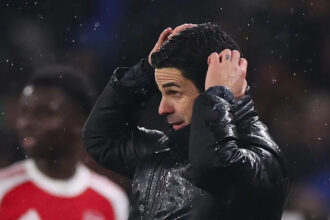
Rob Edwards on the Wolves Call: “This Isn’t a Rebuild, It’s a Reawakening”
The phone call that changed Rob Edwards’s trajectory came not during a crisis, but at a career peak. His Middlesbrough side, playing a vibrant, attacking brand of football, sat comfortably in the Championship playoff places, dreaming of Premier League promotion. The call was from Wolverhampton Wanderers, a historic club in freefall, winless and rooted to the foot of the Premier League, seven points from safety. To the outside world, his decision to swap a project on the rise for one in apparent ruin was managerial madness. But football managers are human beings too, and Edwards saw not a poisoned chalice, but a profound homecoming.
The Pull of Molineux: More Than a Job
Edwards doesn’t shy away from the perceived insanity of the move. In an exclusive interview, he leans forward, his tone shifting from analytical to deeply personal. “I know what it looked like,” he admits. “From the outside, it was a puzzle. But this isn’t just any club to me. This is the club where I grew up, where I learned my trade as a coach in the academy. I know these streets, I know these fans, I feel the weight of this history in my bones.”
For Edwards, the decision was a collision of cold strategy and warm sentiment. While the league table screamed danger, his analysis of the Wolves squad revealed a different story—one of underperformance, fractured confidence, but undeniable quality. He saw a core of international players who had simply lost their way. His mission, as he defines it, is not a complex tactical overhaul, but something more fundamental.
“The first and most critical job,” Edwards states, “is to restore belief. Not just in a system, but in themselves as a group. They stopped being a pack. My job is to remind them of their collective strength.”
The Edwards Blueprint: Identity Over Chaos
Thrown into a relegation dogfight, the easy move would be to park the proverbial bus, to coach for gritty, desperate points. Edwards is having none of it. His philosophy is non-negotiable. “We must be proactive. We must try to own the game,” he insists. The plan is built on a few core, unwavering principles:
- Aggressive Organisation: “We will be structured and hard to play through, but our defensive line starts from the front. It’s about intelligent pressure, not passive defending.”
- Verticality with Purpose: “I want us to play forward, with speed and intent. Not hopeful long balls, but rapid, incisive transitions that exploit the pace we have in this squad.”
- Emotional Connection: “The fans need to see a team that fights. That runs harder, that cares more. If we give them that, they will be our fuel. Molineux has to become a fortress of noise and intimidation again.”
This approach carries risk. A team opening up at the bottom can be picked off. But Edwards believes the greater risk is in perpetuating the fearful, passive football that contributed to Wolves’ dire position. “We have to be brave enough to be us, to impose our game. That is the only way we climb out of this.”
Expert Analysis: The Logic in the “Leap of Faith”
While the emotional pull is clear, is there a tactical logic to Edwards’ appointment? We asked former Premier League defender and pundit, Claire Rafferty, for her take.
“On paper, it’s a huge gamble,” Rafferty notes. “But dig deeper, and it’s a fascinating appointment. Edwards’ work at Middlesbrough was highly regarded; he built a cohesive, modern side. Wolves’ squad, with players like Matheus Cunha, Pedro Neto, and a solid defensive base, is far too good to be where they are. They lack identity and confidence, which is exactly what a coach like Edwards specializes in building.”
Rafferty highlights a key tactical fit: “Edwards’ preference for a dynamic 4-3-3 or 3-4-3 can slot Wolves’ best players into their natural roles. It gets runners in behind, utilizes wing-backs, and provides a platform for their technically gifted forwards. The question isn’t about quality; it’s about how quickly he can install his mindset. The January window will be crucial—he needs his own characters in the dressing room.”
Predictions and the Road Ahead: Survival is Just the Start
The immediate objective is stark: achieve the great escape. Edwards is under no illusions. “We are in a fight. Every training session, every minute of every match is a battle we must win. The gap is significant, but not insurmountable.”
Looking beyond this season, however, Edwards’ vision expands. This is not a short-term firefighting mission. He speaks of a long-term project rooted in the club’s academy, a return to a distinct Wolves identity that marries grit with flair. He references the successful eras in the club’s recent and distant past, not to live in them, but to channel their spirit.
“This isn’t a rebuild, it’s a reawakening,” he says, his voice firm. “We have everything here: incredible supporters, a fantastic stadium, a talented squad. It has just gone to sleep. My plan is to build a hungry, young, aggressive Wolves team that this city can be proud of for years to come. The first step is staying up. The next is to build something that lasts.”
Conclusion: A Gamble of Heart and Head
Rob Edwards’ move to Wolves will be ultimately judged by cold, hard results. The Premier League is merciless. Yet, his appointment represents something increasingly rare in modern football: a decision made with both heart and head. It is a romantic homecoming fused with a clear-eyed tactical project.
He has walked away from a safer bet for a love story with immense risk. In doing so, he has embraced the pressure, the history, and the desperate hope of a fanbase. The task is herculean, but in Edwards, Wolves have not just hired a manager; they have hired a believer. The revival of Wolverhampton Wanderers begins not with a major signing, but with a manager who looked at a club in ruins and saw, unmistakably, home. The football world will be watching to see if that faith can move a mountain—or at least, lift a team off the bottom of the table.
Source: Based on news from Sky Sports.