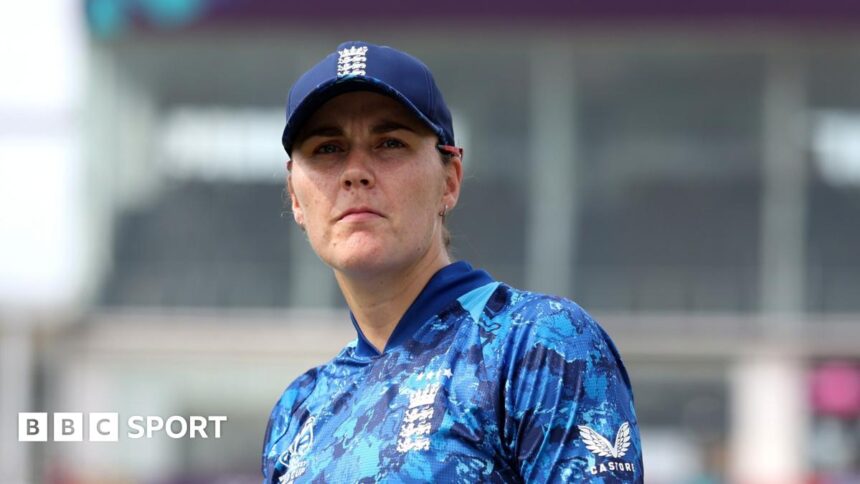
England Have Underachieved Since 2017 Win – Sciver-Brunt: The Reckoning for a Golden Generation
The echo of Anya Shrubsole’s triumphant roar at Lord’s in 2017 still reverberates through English cricket. That sun-drenched July day, when England stormed to a dramatic Women’s World Cup victory over India, was supposed to be a watershed moment. It was the catalyst that launched a professional era, filled stadiums, and inspired a generation of young girls to pick up a bat. Yet, nearly a decade later, the trophy cabinet has gathered dust. Captain Nat Sciver-Brunt has delivered a stark, honest assessment: England have underachieved since that iconic win.
Ahead of the home T20 World Cup, which begins on 12 June, Sciver-Brunt’s admission is not a sign of weakness, but a rallying cry. “The T20 World Cup win could change women’s cricket in England,” she stated, acknowledging the immense weight of expectation. The reality is brutal: when England step onto the field this summer, they will be staring at a potential nine-year drought without a major trophy or an Ashes series victory. For a nation that considers itself a powerhouse of the women’s game, that statistic is a damning indictment.
To play this video you need to enable JavaScript in your browser—but the message is clear. The captain is not hiding from the past. She is confronting it head-on. This article dissects the reasons behind England’s stagnation, the leadership of Sciver-Brunt, and what it will take to finally turn potential into silverware.
The Brutal Reality: A Decade of Near Misses
Since that glorious 2017 triumph, England’s journey has been a painful cycle of “almost.” They have been perennial semi-finalists, regular finalists, and perpetual favourites. But winning—the only currency that matters in elite sport—has eluded them. Let’s look at the cold, hard facts:
- 2022 50-over World Cup: Reached the final in New Zealand, only to be dismantled by a clinical Australia.
- 2023 T20 World Cup: Knocked out in the semi-finals by South Africa, a match where they simply did not turn up.
- 2024 T20 World Cup: Another semi-final exit, this time to a ruthless West Indies side.
- Ashes Series (multiple): Since 2017, England have not held the Ashes. Australia have dominated, winning series after series, often with multi-format dominance.
This pattern is not just about losing to a superior Australian side. It is about failing to close out games against other top-tier nations. The underachievement is relative to the immense talent pool England possesses. When you have players of the calibre of Nat Sciver-Brunt, Sophie Ecclestone, and Heather Knight (now retired from internationals), reaching semi-finals should be a minimum, not a peak.
The captain herself has been a constant, a world-class all-rounder who has carried the batting lineup on her shoulders for years. But leadership is a different beast. Taking over at the start of last summer, Sciver-Brunt immediately oversaw a semi-final exit at the 50-over World Cup. While she was not to blame for the result, it added to the narrative of a team that freezes on the biggest stage. The question now is: can she be the one to break the cycle?
Why the Drought? Tactical Rigidity and Mental Blocks
To understand why England have underachieved, we must look beyond individual brilliance and examine the system. Several key factors have contributed to this prolonged dry spell:
1. Tactical Conservatism: For years, England’s approach in the powerplay and middle overs has felt predictable. While Australia has innovated with aggressive batting from ball one and relentless bowling changes, England often defaulted to a safety-first approach. In T20 cricket, this is a death sentence. The team has been guilty of not reading the game state quickly enough, losing crucial momentum in the middle overs.
2. The “Australia Problem”: This is the elephant in the room. The Southern Stars have set a benchmark that no other team has matched. Their domestic system, the WBBL, is deeper and more competitive. They produce players who are not just skilled, but mentally ruthless. England have had to play catch-up, and while they have closed the gap, they have not been able to bridge the final psychological chasm. The Ashes drought is the most painful symptom of this.
3. Inconsistency from the Top Order: While Sciver-Brunt has been a rock, the supporting cast has often flattered to deceive. Openers have struggled to provide the explosive starts needed to set a platform. The middle order has been prone to collapses under pressure. In the last two T20 World Cups, England posted below-par totals in the semi-finals, directly leading to their exit.
4. The Mental Game: Perhaps the most critical factor. This England team has a habit of losing the big moments. Whether it’s a dropped catch in a final or a run-out at a crucial juncture, the composure that defines champions has been missing. Sciver-Brunt’s honesty in admitting the underachievement is a step towards addressing this, but actions on the field will speak louder than words.
Sciver-Brunt’s Leadership: The Captain’s Burden
Taking the captaincy is a heavy burden for a player who is arguably England’s best batter and a reliable bowler. Sciver-Brunt is not a loud, rah-rah leader. She leads by example, with a steely determination and a quiet intensity. This style can be effective, but it requires the team to buy into a culture of calm under fire.
Her key challenge is to instil a ruthless winning mentality that has been lacking. She needs to empower her players to take risks. She needs to create an environment where failure in pursuit of aggression is accepted, but passive failure is not. The semi-final exits have been characterised by caution. Under her captaincy, we must see a shift towards attacking cricket, especially in the powerplay.
The captain’s statement that the home T20 World Cup “could change women’s cricket in England” is not hyperbole. A victory on home soil, with a passionate crowd behind them, would reignite the buzz of 2017. It would validate the professional structures and give the players the belief that they are not just bridesmaids. For Sciver-Brunt personally, winning a World Cup as captain would cement her legacy as one of the all-time greats.
However, the pressure is immense. She must manage her own workload as a premier all-rounder while making tactical decisions under the microscope. She will need her senior players—like Sophie Ecclestone, who is the world’s best bowler—to step up in the clutch moments. The semi-final loss under her watch last year was a learning curve. This summer, it must be a launching pad.
Expert Analysis: What England Must Do to Win the T20 World Cup
To end the nine-year drought, England cannot simply hope to be better. They must be different. Here is a tactical blueprint for success in the home T20 World Cup:
- Aggressive Powerplay: England must target 45-55 runs in the first six overs without losing more than one wicket. This means promoting hitters like Alice Capsey or Danni Wyatt-Hodge to open and backing them to clear the infield.
- Bowling with Control: Sophie Ecclestone is the key. She must bowl her four overs in the middle phase to strangle the run rate. England need to use their seamers (Lauren Bell, Kate Cross) to take wickets with the new ball, not just contain.
- Fielding Excellence: In knockout matches, one misfield can cost a title. England have been guilty of sloppy ground fielding. They must be the best fielding unit in the tournament.
- Mental Fortitude: The team needs a sports psychologist embedded in the dressing room. The semi-final jitters must be exorcised. They need to practice high-pressure scenarios in training until they become routine.
My prediction? If England can win their group and avoid Australia until the final, they have a genuine chance. The home crowd at the Rose Bowl and Edgbaston will be a huge advantage. However, the underachievement tag will only be shed if they can beat a top-tier opponent in a knockout match. I expect them to reach the final, where they will face Australia. The result will hinge on whether Sciver-Brunt’s team can finally conquer their inner demons.
Conclusion: The Time for Talk is Over
Nat Sciver-Brunt has done what great leaders do: she has told the truth. England have underachieved since 2017. There are no more excuses. The infrastructure is world-class. The players are world-class. The home World Cup is a golden opportunity to write a new chapter.
The legacy of the 2017 generation is at a crossroads. They can either be remembered as the team that lit the fuse but never won the war, or as the team that finally delivered on the promise of that glorious day at Lord’s. The T20 World Cup starting on 12 June is not just another tournament. It is a reckoning.
For Sciver-Brunt, for her teammates, and for English women’s cricket, the time for talking about potential is over. It is time to win. The nation is watching, and the demand is simple: bring the trophy home.
Source: Based on news from BBC Sport.