England in Tatters After Dismal Day in Brisbane Leaves Ashes Hopes in Ruins
The Gabba, bathed in the harsh glow of the floodlights, has once again proven to be a house of horrors for England. A day that began with a flicker of resistance ended in utter capitulation, leaving Joe Root’s tourists in tatters and staring down the barrel of a humiliating 2-0 series deficit. After a fighting first-innings 138 from their captain had offered a semblance of hope, England’s batting lineup disintegrated under the pink-ball pressure, their techniques and temperaments brutally exposed on a dismal day three in Brisbane.
A Collapse of Character and Technique
England’s second innings was a masterclass in self-destruction. Chasing Australia’s formidable 511, built on lower-order resistance from Mitchell Starc (77) and a solid top-order foundation, the tourists needed grit, patience, and clarity. What they delivered was a chaotic procession of poor shots and psychological surrender. The tone was set early when Haseeb Hameed fell cheaply, but the session after dusk truly encapsulated England’s crisis.
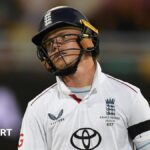
The nightmare scenario unfolded in the space of a few devastating overs. Zak Crawley, who had looked relatively composed for his 44, played a loose drive straight back to part-time bowler Marnus Labuschagne. It was a gift, a caught and bowled that shattered any momentum. In the very next over, the calamity doubled. Ollie Pope, on 12, replicated the error with shocking symmetry, chipping a simple return catch to Michael Neser. Two batsmen, dismissed in identical, soft fashion in consecutive overs. The commentary box summed it up for a stunned audience: ‘It’s a shocker!’
This wasn’t high-quality seam bowling on a green top; this was a failure of basic batting principle and mental fortitude. The middle order, supposedly England’s engine room, spluttered and died:
- Ben Stokes, the hero of 2019, looked a shadow of himself, scratching around before edging behind.
- Jos Buttler played an airy, reckless drive to be caught at cover.
- Joe Root himself, perhaps burdened by the weight of the innings and the captaincy, fell to a brilliant Neser delivery, but the damage was already done.
From 61-1, they crumbled to 134-6, a lead of just 157. The Second Ashes Test was slipping through their fingers at a terrifying rate.
Australia’s Relentless Pressure and Tactical Mastery
While England floundered, Australia executed their plan with ruthless efficiency. Pat Cummins’s leadership was proactive, his field placements aggressive and suffocating. The bowling attack, even without the injured Josh Hazlewood, showcased its formidable depth. Mitchell Starc, fresh from his first-innings heroics with the ball (6-75), provided a telling lower-order rally with the bat, extending Australia’s lead beyond 150 and breaking English spirits.
With the ball under lights, the hosts turned the screw. Neser, on debut, and the ever-consistent Scott Boland (2-33) were phenomenal, hitting demanding lengths and exploiting any hint of uncertainty. They understood the Gabba, Brisbane conditions under lights are a batter’s purgatory, and they preyed on England’s palpable anxiety. Every dot ball built pressure, every play-and-miss sowed doubt, until the inevitable mistakes arrived. Australia didn’t just bowl; they conducted a sustained psychological operation, and England failed at every test.
Root’s Lone Stand Cannot Mask Systemic Failure
The shining, solitary beacon in England’s gloom remains Joe Root’s first-innings 138. It was a masterpiece of concentration, skill, and determination, a knock that single-handedly dragged England to a semi-respectable 334. Yet, its very brilliance underscores the team’s catastrophic failing. Root’s 138 accounted for over 41% of England’s total runs. The next highest score was 38.
This isn’t a blip; it’s a chronic condition. The reliance on Root is now pathological. The batting lineup, from top to bottom, lacks the fundamental discipline required to compete in Australian conditions. The technical flaws against pace—stiff front legs, hard hands, uncertain footwork—are being exploited mercilessly. The management’s decision-making, from selection to preparation, is under a microscope so intense it’s beginning to burn.
The Inevitable Conclusion and a Long Road Ahead
Barring a meteorological miracle or one of the great rearguard actions in Test history, this match is over. England will be bowled out quickly on day four, setting Australia a trivial target. The Ashes urn, for all practical purposes, is already being polished on Australian soil. The question is no longer about winning the series, but about salvaging pride.
Predictions for the remainder of the tour are bleak. Confidence is shattered, methods are broken, and the schedule offers no respite. The batting unit requires not minor tweaks but a fundamental overhaul—a process that takes years, not days between Tests. Can Stokes find his all-round magic? Can any opener provide a foundation? The answers, currently, point to a resounding no.
For Australia, the path is clear: maintain this intensity, continue to hunt as a pack, and secure the series in Perth. Their depth, strategy, and execution have been superior in every department.
A Day That Defined a Series
Day three at the Gabba was more than just a bad session; it was a diagnosis. It revealed the vast gulf in resilience, skill, and mindset between these two sides. England are not just losing cricket matches; they are losing their way, their identity, and their belief. The sight of Pope and Crawley offering tame return catches will be the enduring image of this tour’s collapse—a perfect metaphor for a team handing back the initiative, and likely the Ashes, through sheer carelessness.
As the Brisbane sun sets on this contest, England’s campaign lies in tatters. The rebuild, once more, must begin from the rubble of a heavy defeat in Australia. The inquest will be long, and the solutions painfully elusive. For now, they are a team trapped in a nightmare, with the brightest lights in the country showing up their flaws for all the world to see.
Source: Based on news from BBC Sport.
Image: CC licensed via commons.wikimedia.org