England’s Feyi-Waboso a Major Doubt for Wales Clash After Training Scare
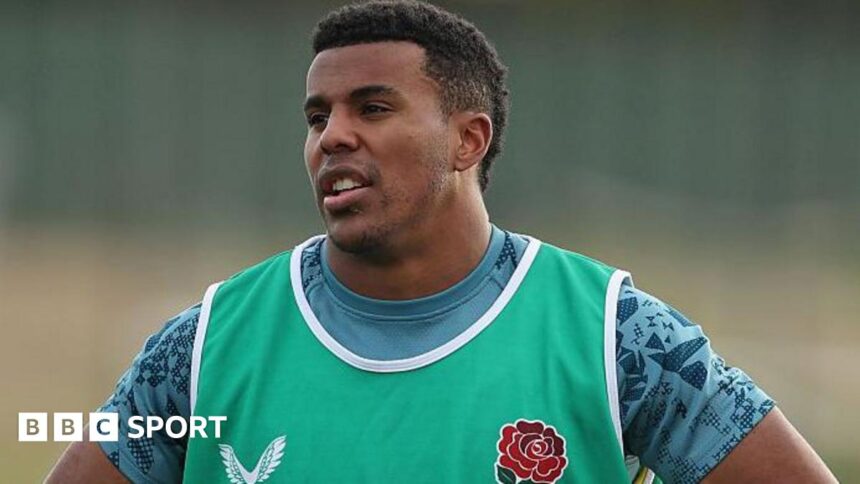
The anticipation for England’s Six Nations opener against Wales at Twickenham has been jolted by the news that breakout star Immanuel Feyi-Waboso is a significant injury doubt. The electric Exeter Chiefs wing, a revelation for Steve Borthwick’s side, pulled up at the very end of Thursday’s crucial training session, casting a shadow over his potential first senior Test against the nation of his birth.
A Late Training Scare Threatens Narrative-Fueled Debut
Defence coach Richard Wigglesworth confirmed the worrying development to the BBC’s Rugby Union Weekly podcast, stating, “Manny just pulled up at the very end. His leg’s sore. There was nothing specific and he walked off, there was nothing much to it, but he did miss the last 60 seconds of training so we’re just waiting to investigate that a little bit more.” This seemingly innocuous detail—missing the final minute—is often the tell-tale sign of a genuine concern in elite sport, where players are managed with minute-by-minute precision. The timing could not be more poignant. Born in Cardiff and a former Wales age-grade international, Feyi-Waboso’s decision to pledge his senior allegiance to England was one of the major talking points of the 2024 championship build-up. A showdown laden with personal narrative now hangs in the balance.
The 21-year-old has rapidly become indispensable to England’s new-look attack. His raw statistics are impressive—seven tries in 13 Tests—but they only tell half the story. It is the nature of his scores and his overall impact that has made him a fan favourite and a tactical lynchpin. His direct, powerful running, intelligent support lines, and surprising strength in contact have given England a potent, gain-line breaking threat out wide that they have often lacked.
Analysing the Tactical Void: What England Would Lose
If Feyi-Waboso is ruled out, Steve Borthwick faces a substantial tactical recalibration. The winger is not a conventional finisher stationed on the touchline; he is increasingly used as a secondary strike runner, coming off his wing to punch holes in disorganised defensive lines. His absence would force a reshuffle, with several contenders waiting in the wings, but none offering the same unique blend of attributes.
Let’s consider what makes Feyi-Waboso so critical:
- Metres After Contact: He consistently drives through tackles, turning half-breaks into significant territorial gains.
- Try-Scoring Instinct: With seven tries in 13 Tests, his strike rate is exceptional for a player of his experience level.
- Dual Threat: He is comfortable on either wing, offering Borthwick flexibility in his back three combinations.
- Psychological Edge: Facing Wales, his personal storyline would have added a layer of motivation, something opponents are acutely aware of.
Potential replacements include the experienced Tommy Freeman, whose aerial game and work rate are superb, or the raw pace of Ollie Hassell-Collins. Alternatively, Borthwick could shift full-back Freddie Steward to the wing and bring in George Furbank at 15. Each option changes the attacking profile. Freeman is more of a traditional, high-ball winger, while a Steward shift prioritises defensive solidity and kick reception over the explosive, line-breaking threat Feyi-Waboso provides.
Wales’ Perspective: A Reprieve or a Misdirection?
From a Welsh viewpoint, the potential absence of Feyi-Waboso removes a specific and worrying threat from their defensive plans. Warren Gatland’s young side, brimming with new faces themselves, would have been targeting the England wing’s channel, knowing his propensity to look for work. His unavailability simplifies one part of their defensive puzzle. However, seasoned campaigner Gatland will be the first to warn against any complacency. England’s depth is formidable, and a reshuffled back three could present different, but equally complex, challenges. Furthermore, the “wounded animal” scenario—where England rally around the loss of a key man—is a classic trope in Test rugby. The news could inadvertently unite the home side and add a layer of determination to their performance.
The subplot of his non-selection for Wales and subsequent choice of England would have been a media frenzy all week. Without that narrative, the focus shifts purely to the rugby, which may, in a strange way, ease external pressure on both camps. Yet, for Wales’s players, especially those who came through the age-grade system with him, there will undoubtedly be a tinge of disappointment mixed with relief at not having to tackle their former teammate.
Predictions and Potential Fallout for the Six Nations Campaign
As of Friday morning, the situation remains unclear. The “waiting to investigate” comment from Wigglesworth suggests scans or further medical assessment. The likelihood of him starting now seems very slim; even if the injury is minor, the conservative nature of modern sports medicine makes risking a player who “pulled up” in training just two days before a Test highly improbable.
Prediction: We expect to see Immanuel Feyi-Waboso either ruled out entirely or named on the bench as an emergency option only. Tommy Freeman is the most like-for-like replacement in terms of current form and is our pick to start on the wing.
The longer-term implications for England’s Six Nations campaign are significant. The opener against Wales is crucial for setting a tone under the revamped attacking philosophy promised by new coach Felix Wigglesworth. Losing their most potent attacking weapon for that fixture is a severe blow. His potential return for the subsequent trip to Scotland at Murrayfield would become a major priority. England’s strength in depth will be tested immediately, and how they adapt their game plan without their try-scoring wing will be a fascinating insight into Borthwick’s strategic flexibility.
Conclusion: A Championship Clouded in Early Uncertainty
The potential loss of Immanuel Feyi-Waboso for the Wales clash is more than a simple team selection headache. It robs the tournament of a compelling human story, deprives England of their most dynamic attacking asset, and forces a strategic rethink on the eve of battle. While England have the resources to cope, his unique skill set is not easily replicated. This late training scare is a stark reminder of the fine margins and brutal unpredictability of elite sport. The Six Nations often turns on such moments—a tweak, a pull, a doubt. All eyes will now be on the England medical team’s assessment and Steve Borthwick’s subsequent selection, as the build-up to a fiery Twickenham encounter takes an unexpected and worrying turn for the home nation. Whether watching from the pitch or the stands, Feyi-Waboso’s personal saga with Wales will have to wait for another chapter.
Source: Based on news from BBC Sport.