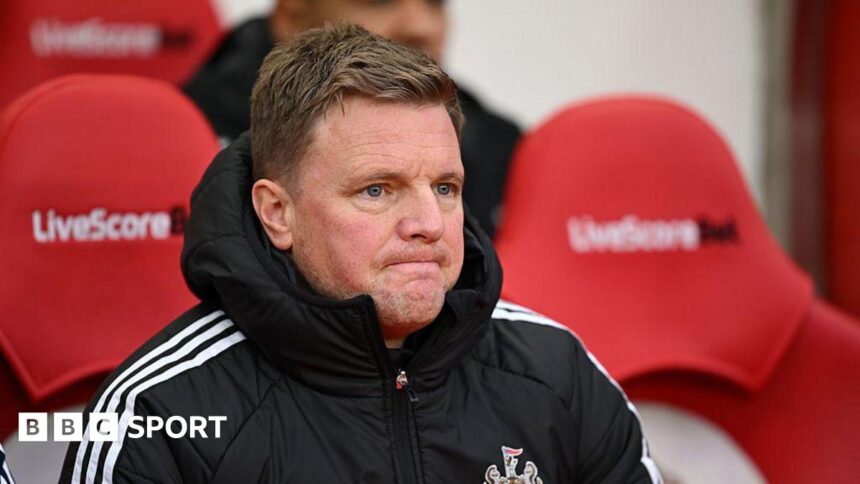
Erratic Newcastle United Leave Eddie Howe with a ‘Horrible Feeling’
The euphoria of a Champions League night at St. James’ Park feels a distant memory for Eddie Howe. Just months after guiding Newcastle United to a top-four finish, the head coach is grappling with a profound and unsettling reality: he no longer knows which version of his team will turn up on match day. In the wake of a gut-wrenching FA Cup defeat to arch-rivals Sunderland, Howe’s candid admission of a “horrible feeling” cuts to the core of the Magpies’ alarming regression this season. This isn’t just a dip in form; it’s an identity crisis.
The Sunderland Defeat: A Jolt to the System
Newcastle’s performance at the Stadium of Light was not merely a loss; it was a surrender of principles. Tasked with facing a Championship side in the heat of a Tyne-Wear derby, Howe opted for a cautious, compact approach—a stark departure from the high-pressing, bold football that became his trademark. The result was a limp, creatively bankrupt display, culminating in a 1-0 defeat that has sent seismic shockwaves through the club’s fanbase.
This was meant to be the stage for a statement. Instead, it became a symbol of confusion. Howe’s tactical shift, perhaps born from a desire to stem an away-day rot, backfired spectacularly. The players looked unsure, disconnected, and devoid of the intensity that once made them the Premier League’s most feared pressers. The defeat exposed a critical flaw: when stripped of their aggressive identity, this Newcastle side lacks a convincing Plan B.
From Corner-Turning to Spinning Wheels
What makes this inconsistency so galling for Howe is the flickering promise shown just weeks prior. The landmark victory over Manchester City in the Carabao Cup in November, followed by a four-game unbeaten Premier League run in December, appeared to signal a corner had been turned. The energy was back, the key players were returning from injury, and the trajectory pointed upwards.
The Sunderland loss has violently halted that momentum, proving those results to be a false dawn rather than a foundation. It has brutally highlighted the team’s Jekyll and Hyde nature this campaign. One week, they can dismantle Chelsea; the next, they can fold without a fight at Everton. This erratic form is the defining characteristic of their season and the root of Howe’s frustration.
The statistics paint a damning picture of their troubles, particularly away from home:
- Just one away league win since mid-April 2023.
- A porous defense that has kept only a handful of clean sheets all season.
- Heavy reliance on a small core of players, with squad depth exposed.
- A midfield that too often loses the battle for control and intensity.
Dissecting the Roots of Inconsistency
Several intertwined factors have conspired to create this volatile version of Newcastle United. Expert analysis points to a perfect storm of physical, tactical, and psychological elements.
First, the injury crisis cannot be overstated. Losing key pillars like Nick Pope, Sven Botman, and Joelinton for extended periods shattered the team’s structural integrity. The constant chopping and changing prevented any defensive cohesion or midfield rhythm from developing. While players have returned, match sharpness and understanding take time to rebuild.
Secondly, there is the weight of expectation. The meteoric rise from relegation battlers to Champions League qualifiers happened at breakneck speed. This season, teams no longer see Newcastle as a surprise package; they are a prized scalp. Howe’s men are facing more defensive, deep-lying opponents and have, until recently, struggled to break them down. The added pressure of being “the hunted” has revealed a psychological fragility on the road.
Finally, questions are now being asked of the tactical approach. Has the Premier League adapted to Newcastle’s once-novel press? Does Howe have the strategic variety to counter different challenges? The cautious setup at Sunderland suggests he is searching for answers, but the execution was deeply flawed.
What Comes Next for Howe and Newcastle?
Sat in 12th in the Premier League, the immediate future is fraught with pressure. The FA Cup was a glaring opportunity for silverware and a positive season narrative. Now, the focus narrows drastically to league performance, with the specter of a mid-table finish looming if form does not improve.
Predicting this team’s next move is a fool’s errand, but the path forward is clear. Howe must:
- Re-establish the non-negotiable intensity that defines his best teams, starting with the next fixture.
- Simplify the message and rebuild confidence from the back, likely welcoming the imminent return of goalkeeper Nick Pope.
- Address the away form with a back-to-basics mentality, prioritizing resilience and fight.
The January transfer window offers a chance for reinforcement, but no quick fix will solve what appears to be a systemic issue of application. The ownership group, known for their long-term vision, will likely maintain support for Howe, who has immense credit in the bank. However, the modern football landscape is ruthless, and the “horrible feeling” of unpredictability cannot linger indefinitely.
Conclusion: A Critical Juncture on Tyneside
Eddie Howe’s “horrible feeling” is the sound of a manager confronting the most difficult phase of his Newcastle tenure. The project has moved past the initial adrenaline rush of a takeover and the joy of overachievement. It is now in the grueling, unglamorous phase of consolidation and proving last season was no fluke. The defeat to Sunderland is a landmark low, a result that will be referenced for years to come unless it becomes a catalyst for change.
For Newcastle United, the choice is stark: allow this erratic, identity-less pattern to define their season, or use the humiliation at the hands of their oldest foe as a burning point of reference. They must rediscover their fury, their unity, and their fearless approach. If not, the horrible feeling of not knowing what comes next will soon be replaced by something far more concrete and damaging: the cold, hard reality of stagnation.
Source: Based on news from BBC Sport.