ESPN Predicts Clemson’s Next Man Up: Life After an Historic NFL Draft Exodus
The 2024 NFL Draft was a watershed moment for Clemson football. The Tigers saw a historic run of talent leave for the professional ranks, with multiple first-round picks and a slew of early-round selections departing the program. For head coach Dabo Swinney, the challenge isn’t just about replacing production—it’s about replacing pedigree. ESPN recently weighed in on the “next man up” narrative for the Tigers, identifying two critical positions where the departure of stars leaves the biggest void: left tackle and defensive tackle. As the 2025 season looms, the question isn’t whether Clemson has talent, but whether that talent is ready to step into the spotlight.
This isn’t a rebuild in the traditional sense. Clemson has recruited at an elite level for years, and the depth chart is stocked with four- and five-star prospects. But the transition from potential to proven is the hardest leap in college football. Let’s break down ESPN’s analysis, the internal solutions Swinney is trusting, and what fans should expect when the Tigers take the field.
The Offensive Line Challenge: Brayden Jacobs Steps Into the Void at Left Tackle
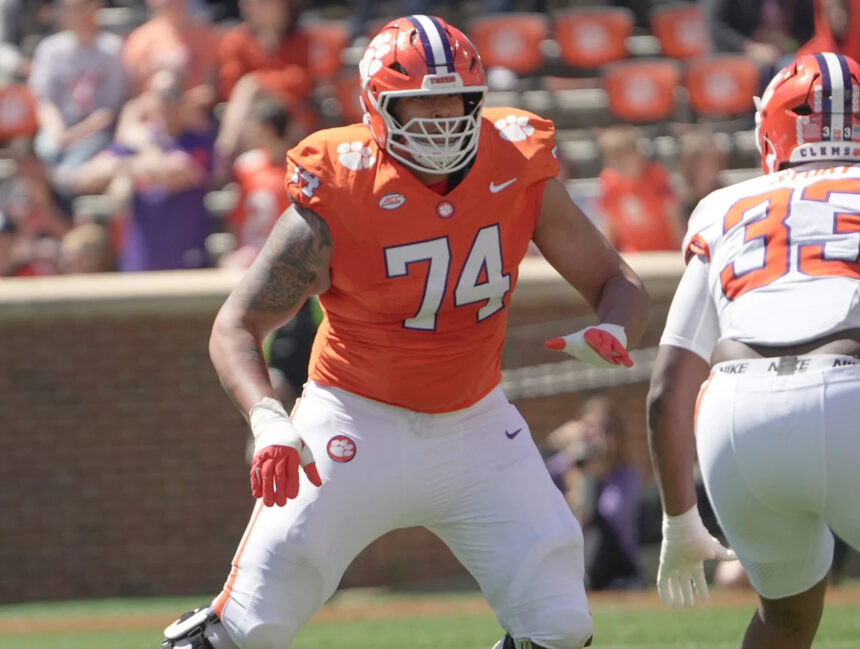
The most glaring hole on offense is at left tackle, a position that has been a bedrock of Clemson’s line for years. With Blake Miller moving on to the NFL, the Tigers lose a player who started 37 consecutive games and provided stability on the blindside. In today’s transfer portal era, many programs would scramble for a veteran plug-and-play option. But Swinney, true to his philosophy, is looking inward. ESPN highlighted that the Tigers are not hitting the portal for a quick fix. Instead, all eyes are on Brayden Jacobs.
Jacobs isn’t a complete unknown. The massive offensive lineman—listed at 6-foot-6 and over 330 pounds—has already seen limited action. He started four games last season, filling in admirably when Miller was banged up. In those starts, Jacobs showed flashes of the raw power and footwork that made him a highly-touted recruit. He didn’t look lost. He looked like a player who needed reps. Now, he’ll get a full offseason as the presumed starter.
Key factors in Jacobs’ favor:
- Experience in the system: He already knows the playbook and the communication required on the line.
- Physical tools: His size and length are NFL-caliber. He can engulf edge rushers in the run game.
- Internal development: Clemson’s strength and conditioning program has a track record of turning raw linemen into starters.
The concern, however, isn’t just Jacobs. The entire offensive line is undergoing a facelift. The Tigers are expected to roll out multiple new starters across the front five. Center, guard, and the other tackle spot could all see new faces. The chemistry of this unit will be tested early, especially against a non-conference schedule that includes some formidable defensive lines. How quickly this group jells will determine whether Clemson’s offense can return to its explosive form.
Expert prediction: Jacobs will have a solid, if not spectacular, season. He will allow some sacks early due to inexperience, but his run-blocking will be a strength. By midseason, he could be one of the most improved linemen in the ACC. The bigger risk is the collective unit, not just the left tackle spot.
Defensive Tackle: Replacing the Irreplaceable Peter Woods
If the offensive line question is about development, the defensive tackle situation is about presence. ESPN’s analysis zeroed in on Peter Woods, a player whose impact went far beyond the stat sheet. Woods was the kind of disruptive force that offensive coordinators had to scheme around. He drew double teams, collapsed pockets, and freed up linebackers to make plays. His loss, combined with the departure of DeMonte Capehart, leaves Clemson with an entirely new interior defensive line.
This is a different kind of challenge. Woods was a vocal leader and a tone-setter. His motor never stopped. Replacing that energy is as important as replacing his tackles for loss. The Tigers have recruited well at the position, but the new faces are largely unproven in high-leverage situations.
Who steps up?
- Tre Williams: A junior who has flashed in rotational snaps. He has the quickness to penetrate gaps but needs to hold the point of attack against the run.
- Stephiylan Green: A former top-100 recruit with elite burst. He’s a candidate to be the next star if he can stay healthy and consistent.
- Transfer or true freshman? Clemson did add a veteran portal option, but the bulk of the snaps will go to homegrown talent.
The biggest worry is run defense. Woods and Capehart were excellent at occupying blockers and allowing Clemson’s linebackers to flow to the ball. If the new interior gets pushed around, the entire defense could become vulnerable to power running schemes. The Tigers’ defensive ends are talented, but they need the interior to command attention.
Expert prediction: Expect a drop-off in interior pressure early in the season. Clemson will rely more on blitzing linebackers and stunts to create disruption. By November, the new starters will have grown, but the unit will lack the consistent dominance Woods provided. This is the position group that will keep defensive coordinator Wes Goodwin up at night.
Dabo Swinney’s Philosophy: Trusting the Process Over the Portal
ESPN’s discussion naturally touched on the broader philosophy of Dabo Swinney. In an era where the transfer portal is the default move for many power programs, Swinney has doubled down on internal development. The decision to not pursue a veteran left tackle in the portal is a statement. It says that Clemson believes in its recruiting and its coaching staff to mold the next wave of talent.
This approach has worked before. Clemson has a history of replacing NFL-caliber players with unheralded recruits who blossom into stars. But the margin for error is thinner than ever. The ACC has gotten deeper. Rivals like Florida State and Miami are loading up via the portal. If Clemson’s internal solutions struggle, the Tigers could slip from the top of the conference.
Why this approach might work:
- Culture continuity: Players developed in the system know the expectations and the standard.
- Recruiting momentum: Clemson has recruited the offensive and defensive lines at a high level for three straight cycles.
- Coaching stability: The position coaches have long tenures and proven track records of development.
Why it might backfire:
- Lack of veteran depth: If injuries hit, the Tigers will be relying on true freshmen or converted players.
- Immediate pressure: The schedule includes early-season tests that could expose a raw line.
Swinney is betting that the sum of his parts is greater than a quick portal fix. It’s a high-risk, high-reward strategy that will define the 2025 season.
What the 2025 Season Looks Like for Clemson
Taking all of ESPN’s analysis into account, the 2025 Clemson Tigers will be a team in transition—but not a team in trouble. The skill positions on offense are loaded. The secondary is deep and experienced. The quarterback room is talented. The question marks are all in the trenches.
Best-case scenario: Brayden Jacobs becomes a reliable blindside protector. The new defensive tackles mature quickly, and Clemson’s line play is good enough to let the skill talent shine. The Tigers win 10 games and compete for an ACC title.
Worst-case scenario: The offensive line struggles with communication and pass protection. The defensive interior gets gashed in the run game. Clemson drops two or three games in the regular season and misses the conference championship.
Most likely outcome: The Tigers will be a 9- or 10-win team. The lines will be inconsistent early but improve as the season progresses. Clemson will be in the mix for the ACC title, but they won’t be the clear favorite. The “next man up” narrative will be tested, but the talent is there to survive.
Conclusion: The Foundation Is Still Strong
ESPN’s predictions for Clemson’s next man up highlight the reality of college football: even the best programs face turnover. The historic NFL Draft run is a testament to the talent Swinney and his staff have cultivated. Now, the focus shifts to the players who have been waiting in the wings. Brayden Jacobs has the physical tools to be a standout left tackle. The new defensive tackles have the pedigree to become disruptive forces. The question is time.
Clemson football is not entering a rebuild. It is entering a reload. And if history is any guide, Dabo Swinney’s trust in his program will be rewarded. The Tigers may not be perfect in September, but by November, the “next men up” could be household names. The standard in Clemson has not changed. The names on the jerseys have. And that is exactly how this program has always operated.
Source: Based on news from Yahoo Sports.