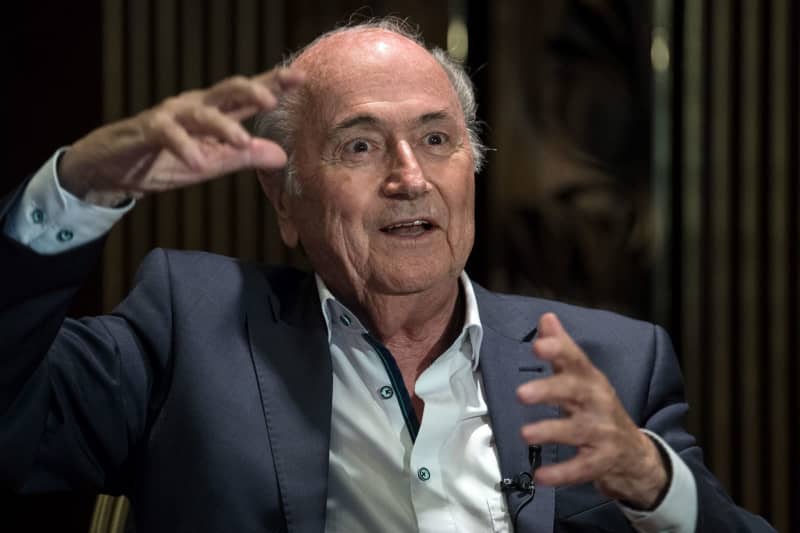
Ex-FIFA Chief’s Explosive Warning: Blatter Tells Fans to Boycott 2026 World Cup in USA
The 2026 FIFA World Cup, poised to be the largest and most lucrative in history, has been thrust into a political maelstrom before a single ball is kicked. In a stunning intervention, former FIFA President Joseph “Sepp” Blatter has issued a direct and controversial recommendation to global football fans: stay away from the tournament. Citing the volatile political climate in the United States, a co-host alongside Mexico and Canada, Blatter’s warning ignites a fierce debate that sits at the combustible intersection of sport, politics, and international travel.
A Warning from the Shadows: Blatter Amplifies Fears of Fan Exclusion
Blatter, the embattled former architect of modern FIFA who is serving a suspension from football-related activities, took to social media to amplify concerns raised by Swiss anti-corruption expert Mark Pieth. Pieth, in a recent interview, painted a grim picture for prospective travelers, pointing to the potential for strict U.S. immigration policies under a possible second administration of Donald Trump to create a hostile and unpredictable environment for international fans.
“‘For the fans, there’s only one piece of advice: stay away from the USA!’ I think Mark Pieth is right to question this World Cup,” Blatter stated. Pieth’s original comments were even more stark, suggesting fans could be turned away at the border on a whim and sent home “on the next flight. If they’re lucky.” This alarmist view, while extreme, taps into a genuine undercurrent of anxiety about travel to the U.S. for citizens from many nations, particularly those from the Global South.
The core concerns highlighted include:
- Unpredictable Entry Procedures: Fears that visa applications could be denied or entry refused at ports of entry based on heightened political scrutiny.
- Political Climate: Apprehension about navigating a socially and politically divided host nation during a major event.
- Fan Experience vs. TV Viewing: The blunt suggestion that the television experience might be “better” than risking a costly and potentially fraught in-person trip.
Beyond the Headlines: Analyzing the Practical and Political Realities
While Blatter’s and Pieth’s comments are deliberately provocative, they force a necessary conversation about the logistical and diplomatic tightrope FIFA and the host nations must walk. The 2026 World Cup is unprecedented in scale: 48 teams, 16 host cities, and an expected record-breaking number of international visitors. The operational success of the tournament hinges on smooth cross-border movement.
Expert analysis suggests a more nuanced reality. Firstly, FIFA wields significant leverage. The organization has historically negotiated special entry protocols with host nations, including streamlined visa processes and dedicated lanes for ticket-holding fans. The U.S., Canada, and Mexico have already committed to a unified visa policy for the event, a logistical necessity. However, the ultimate authority at the border remains with sovereign nations. The potential for a change in U.S. political leadership in late 2024, just 18 months before kick-off, introduces a layer of profound uncertainty that no amount of FIFA negotiation can completely erase.
Secondly, the warning exposes a deeper tension in modern mega-event hosting. Nations are chosen for their infrastructure and commercial potential, but their political landscapes are fluid. The “beautiful game” promises unity, but the practicalities of global event security and immigration often emphasize division and control. Blatter, himself a polarizing figure, is effectively weaponizing this inherent contradiction.
Predictions for 2026: Will Fans Heed the Call?
The impact of Blatter’s boycott call is difficult to quantify but will manifest in several key areas:
1. Diplomatic and Operational Pressure: FIFA and the host associations will now be under intensified scrutiny to publicly guarantee fan access. Expect detailed, reassuring announcements on visa procedures well in advance, likely by early 2025. Silence or ambiguity will be seen as confirmation of the warnings.
2. A Chilling Effect on Certain Demographics: While fans from visa-waiver countries (like much of Europe) may shrug off the advice, those from Africa, the Middle East, and parts of Asia and South America—whose teams will be well-represented in a 48-team field—may think twice. The fear of a humiliating and expensive rejection at a U.S. airport could steer them toward matches in Canada or Mexico, or indeed, toward their living rooms.
3. A Political Lightning Rod: The comments guarantee that the 2026 World Cup will be framed through a political lens from day one. Every immigration incident involving a fan, no matter how minor, will be amplified as evidence supporting Blatter’s and Pieth’s position. The tournament’s narrative is now vulnerable to being hijacked by border politics.
4. Commercial Ripples: A significant dip in projected travel from key international markets would affect airlines, hotels, and local businesses in U.S. host cities. This economic pressure may, in turn, spur local governments to lobby for the most fan-friendly federal policies possible.
The Final Whistle: A Tournament at a Crossroads
Joseph Blatter’s intervention is more than a rant from a disgraced former executive; it is a canary in the coal mine for the most complex World Cup ever staged. His call for a fan boycott leverages legitimate, widespread concerns about access and inclusivity. The 2026 World Cup was conceived as a celebration of football’s growth in North America, but it now risks becoming a global referendum on American hospitality and political stability.
The responsibility now lies squarely with FIFA and the tri-national host committee. They must move beyond stadium construction and sponsorship announcements to provide ironclad, transparent travel guarantees. They must prove that the “FIFA Fan ID” will be a more powerful document than a passport at the border. If they cannot, Blatter’s cynical advice may resonate with a segment of the global football family, not out of spite for the sport, but out of a rational calculation of risk.
The ultimate success of the 2026 World Cup may not be measured only in goals scored or tickets sold, but in the diversity of faces in the stands. If fans from every qualifying nation feel truly welcome, the tournament can fulfill its unifying promise. If not, the most lasting image of 2026 may not be a triumphant lift of the trophy, but a line of dejected supporters at an immigration desk, their dreams of a World Cup experience denied—exactly the scenario Blatter has, with characteristic controversy, forewarned.
Source: Based on news from Yahoo Sports.