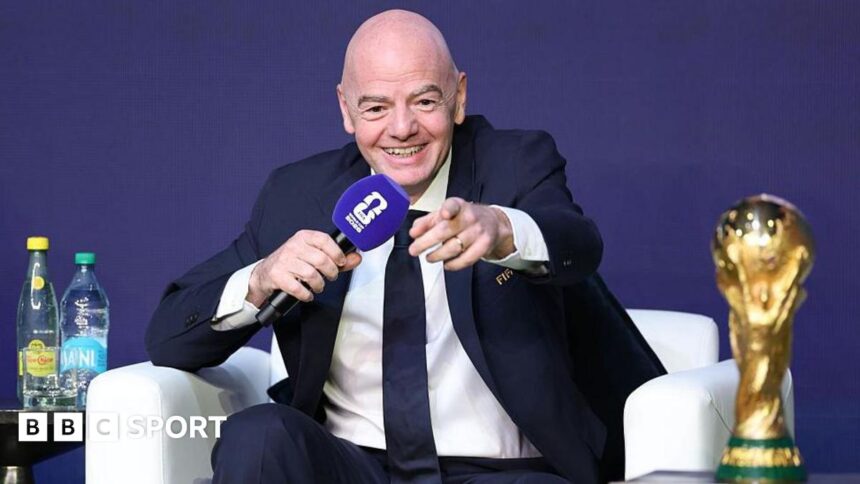
Expansion, Reform, and Controversy: A Decade of Gianni Infantino’s FIFA
On February 26, 2016, Gianni Infantino stepped onto the stage not as the favorite, but as the last man standing. Elected FIFA president in the turbulent wake of Sepp Blatter’s resignation and a sprawling corruption scandal, the Swiss-Italian lawyer inherited a poisoned chalice. The world’s most popular sport was governed by an organization synonymous with graft, its finances reportedly hemorrhaging over half a billion dollars as sponsors fled. A decade later, Infantino’s tenure is a tale of two distinct halves: a period of aggressive financial reform and global expansion, now increasingly overshadowed by a new era of political controversy and profound questions about the sport’s soul. As he marks ten years in power, the legacy of Gianni Infantino is as complex and contested as the beautiful game itself.
The Firefighter: Stabilizing a Broken Institution
Infantino’s initial mandate was unambiguous: save FIFA from itself. The organization was under FBI and Swiss investigation, its credibility in tatters. His early years were defined by a technocratic approach focused on crisis management and institutional survival.
Financial Resurrection was the immediate priority. Infantino, leveraging his experience as UEFA’s Secretary General, implemented strict governance reforms and cost controls. The commercial engine was reignited, with a focus on long-term partnership deals. The results, on paper, are staggering. FIFA’s reserves ballooned from near-zero to over $4 billion, fueled by record revenues from the 2018 and 2022 World Cups. This financial fortress became the foundation for everything that followed.
Key early reforms included:
- Term Limits: Instituting 12-year maximum terms for the President and Council members.
- Financial Transparency: Publishing the compensation of the President and senior management.
- Commercial Overhaul: Securing major, multi-tournament sponsorship deals to ensure stability.
This phase cast Infantino as the competent firefighter, dousing the flames of the past. Yet, this necessary stabilization also centralized power, a theme that would define the next chapter.
The Expansionist: Reshaping Football’s Geography
With the books balanced, Infantino embarked on an audacious project of global football expansion. His slogan, “making football truly global,” translated into a clear strategy: grow the game in new markets and, crucially, grow FIFA’s flagship tournaments.
The most tangible symbols of this era are the enlarged World Cups. The 2026 edition in North America will feature 48 teams, up from 32, a move promising more inclusion but also diluting the elite quality of the group stage. More revolutionary was the announcement of a 32-team Club World Cup, launching in 2025, a direct challenge to UEFA’s Champions League hegemony and a potential cash cow.
Infantino’s expansion wasn’t just about teams; it was about continents. He cultivated strong relationships in Africa, Asia, and CONCACAF, federations whose votes are crucial. Initiatives like the FIFA Forward programme, which funnels millions directly to member associations for development, cemented loyalty. This “development through cash” model empowered smaller nations but also drew criticism for fostering a dependency culture and consolidating Infantino’s political base.
The Women’s World Cup also saw unprecedented investment and profile under his watch, though not without fights over prize money equality. This expansionist drive fundamentally altered FIFA’s footprint, making it wealthier and more influential than ever.
The Controversialist: Power, Politics, and Polarization
The latter half of Infantino’s decade has been dominated by escalating controversy. The statesman-like reformer has been eclipsed by a figure increasingly comfortable with political combat and unilateral decision-making.
The 2022 Qatar World Cup became a crucible. While commercially successful, Infantino’s fierce, last-minute defense of the host nation—culminating in his extraordinary “Today I feel Qatari” speech—was seen by many as a dismissal of legitimate human rights and migrant worker concerns. It highlighted a presidency willing to prioritize geopolitical and commercial alliances above ethical stances.
This tendency reached a new peak with his “Today I feel African” speech ahead of the 2023 Women’s World Cup, attacking Western “hypocrisy” on migration. Such rhetoric, while playing well to specific audiences, has polarized the global football community and drawn accusations of leveraging identity politics for political gain.
Further controversies include:
- Secretive Deal-Making: The surprise announcement of a new World Cup of Clubs and the 2034 Saudi Arabia World Cup bid, fast-tracked without a competitive bidding process.
- Legal Battles: Ongoing Swiss criminal proceedings investigating undisclosed meetings with former Swiss Attorney General Michael Lauber.
- Calendar Congestion: Relentless tournament expansion, blamed for exhausting players and threatening domestic leagues.
The narrative has shifted from reform to control, from saving FIFA to reshaping world football in its image, with diminishing apparent regard for consensus.
The Legacy and the Road to 2031
Assessing Infantino’s decade requires a dual lens. Financially and structurally, he saved FIFA from insolvency and scandal. Geographically, he has pushed a more inclusive vision, however commercially motivated. Yet, the cost has been high: a deepening cynicism about FIFA’s motives, a perceived erosion of its moral authority, and a sport pushed to its physical limit.
Looking ahead, several predictions define the path to a potential third term ending in 2031:
Commercial Supremacy: The 2025 Club World Cup and 2026 Men’s World Cup will likely break all revenue records, further inflating FIFA’s war chest and its power to dictate terms.
Governance Tensions: Conflicts with UEFA, major leagues, and player unions will intensify over calendar and control. The threat of a super-league or player strikes looms larger.
The Saudi Era: The likely 2034 World Cup in Saudi Arabia will anchor FIFA’s strategic pivot to the Middle East, inviting relentless scrutiny on sportswashing and human rights.
Legacy Defining: Infantino will aim to cement his legacy through a successful 2030 tri-continental World Cup and a transformative impact on women’s football, hoping these achievements overshadow the controversies.
Gianni Infantino’s first decade was about rescuing FIFA. His next act is about cementing its—and his—dominance. He has built an institution that is financially unassailable and politically potent, but one that stands at a moral crossroads. The beautiful game is now bigger, richer, and more global. Whether it is better, fairer, or still truly belongs to the fans and players, remains the most contentious question of all. The final whistle on his presidency is still years away, but the match is being played on a field of his own design.
Source: Based on news from BBC Sport.