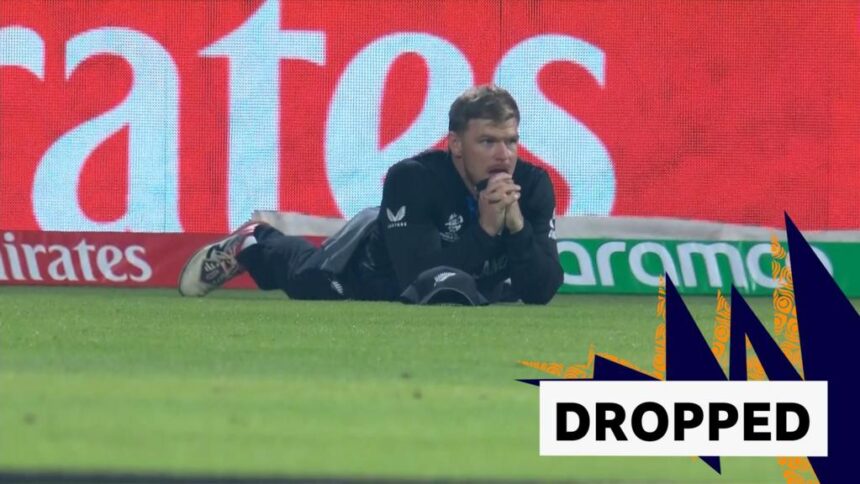
Extraordinary Drop! Glenn Phillips’ Costly Blunder Shakes New Zealand’s Hopes
In the high-stakes theater of international cricket, where matches are often decided by moments of individual brilliance or despair, New Zealand’s Glenn Phillips authored a chapter of the latter in stunning fashion. During a critical juncture of their clash with South Africa, Phillips, one of the world’s premier fielders, committed an error so basic, so utterly unexpected, that it sent shockwaves through the stadium and left viewers worldwide in disbelief. A routine catch off the dangerous David Miller, a chance to swing momentum decisively, was inexplicably spilled. This wasn’t a diving, boundary-robbing spectacle gone wrong; it was a simple chance gone begging, a moment that may well define the outcome of the contest and linger in the memory of this fierce rivalry.
The Moment That Stunned a Stadium
The context is everything. South Africa, building a formidable total or chasing a tricky target (depending on the match format), needed a catalyst. David Miller, the powerhouse known for his destructive finishing, was at the crease. A New Zealand bowler, perhaps sensing the need for a wicket, delivered a tempting length ball. Miller didn’t middle it, instead skying a straightforward chance towards the deep mid-wicket or long-on region. The camera panned to Glenn Phillips, stationed perfectly under it. This was his bread and butter. The crowd held its breath, expecting the familiar sight of safe hands and a relieved celebration.
What followed was pure cricketing agony for New Zealand. Phillips settled under the ball, shaped to take it comfortably at chest height, and then… it popped out. The ball seemed to kiss his palms before defying gravity and falling to the turf. The silence from the Black Caps supporters was deafening, replaced instantly by the roar of South African fans and Miller’s grateful look. The catastrophic fielding error was complete. In a split second, a potential match-turning wicket became a life granted, and the psychological balance of the game shifted seismically.
Expert Analysis: From G.O.A.T. Fielder to Costly Goat
Glenn Phillips is not just a good fielder; he is routinely placed in the pantheon of the modern game’s greats. His highlights reel is a collection of athleticism, anticipation, and jaw-dropping catches. This makes the drop not just a mistake, but a profound anomaly. So, what happened? Our analysis points to a confluence of factors beyond mere technical failure.
- Pressure of the Occasion: High-profile matches amplify every action. The knowledge that Miller’s wicket is golden can create a micro-second of tension, causing hands to stiffen when silky softness is required.
- Underestimation of the Simple: Ironically, the most difficult catches often seem easier because the fielder is purely reactive. A routine chance like Phillips’ drop allows time for thought—and doubt—to creep in. The mind can become the enemy.
- Environmental Factors: A swirling wind, sun glare, or even a dewy outfield can play a treacherous role. Even the best can be deceived by a last-second dip or wobble.
- The Momentum Shift: This single moment is a textbook case of a psychological turning point. For South Africa and Miller, it was an enormous boost, a sign of fortune smiling. For New Zealand, it was a draining, energy-sapping event that can sow seeds of frustration and collective doubt.
The true cost will be measured in runs. A reprieved Miller is a predator unleashed. The potential 20-30 extra runs he scores, or the partnership he extends, could be the exact difference between victory and defeat.
Predictions: The Ripple Effect on the Game and Beyond
This drop is not an isolated incident; it will cast a long shadow. Immediately, the match dynamics favor South Africa immensely. Miller, gifted a second life, will likely play with even more freedom and aggression, aiming to punish New Zealand mercilessly. The Black Caps’ bowlers, despite their professionalism, will feel a sense of injustice and may try to force another chance, potentially leaking runs in the process.
Looking broader, this moment could have tournament or series implications. In tight group stages or knockout matches, net run rate or head-to-head results can hinge on such events. Furthermore, the mental scar on Phillips and the team must be managed. Can Phillips, known for his positive energy, shake it off immediately, or will it affect his batting and future fielding? The team’s leadership will be tested in rallying the side, emphasizing the “next moment” philosophy, but the “what if” will undoubtedly haunt them if the result goes south.
For Phillips’ personal brand, it’s a stark reminder of the fickle nature of sport. Years of spectacular work can be, unfairly or not, temporarily overshadowed by one glaring mistake in the public eye. His response, both in the remainder of this game and in future series, will be closely watched.
A Lesson in Cricket’s Cruel and Unforgiving Nature
The story of Glenn Phillips’ extraordinary drop is a powerful encapsulation of why cricket captivates and crushes in equal measure. It is a sport where human error is not just a possibility but a central, dramatic theme. It underscores that no player, regardless of their skill or past heroics, is immune to a lapse. This incident will be replayed in highlight packages for years, not to mock, but to illustrate the immense pressure these athletes operate under and the fine margins that separate glory from despair.
For New Zealand, the path forward is clear but challenging: they must absorb the blow, tighten their discipline, and create another chance. For South Africa, it is a lesson in capitalizing on fortune. And for fans, it is a stark, unforgettable reminder that in cricket, the simplest moments can often be the most catastrophic fielding errors, and a game can turn not on a breathtaking six, but on a catch that should have been. The live scorecard will tell the statistical tale, but this moment will forever be the emotional heartbeat of this particular clash between two titans.
Source: Based on news from BBC Sport.