F1’s 2026 Revolution Ignites: Red Bull and Mercedes Signal Early Intent in Barcelona Shakedown
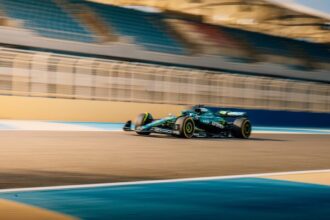
The silence was broken. After months of digital simulations, wind tunnel whispers, and clandestine factory builds, the thunder of a new Formula 1 era finally echoed across the Circuit de Barcelona-Catalunya. The sport’s seismic 2026 technical revolution—centered on radically new aerodynamic regulations, lighter cars, and a game-changing 50/50 power split between the internal combustion engine and battery—transitioned from theory to tangible, roaring reality. On the opening day of a closed-group shakedown, seven of the grid’s eleven teams rolled their prototypes into the Spanish sunlight, offering the first, fleeting glimpse of F1’s future. And in a telling early narrative, the sport’s modern titans, Red Bull and Mercedes, appeared to signal that their transition into this brave new world has begun on solid ground.
Beyond the Camouflage: Decoding the First Day’s Vital Signs
While strict filming day regulations and heavy camouflage livery obscure true performance, the “shakedown” is about far more than lap times. It is a critical systems check for machines of unprecedented complexity. The primary objectives for teams were starkly non-glamorous but utterly vital: engine fire-up and installation laps, basic systems functionality, and initial driver feedback on the new car’s fundamental characteristics.
Early reports and observed running from the circuit perimeter suggested a notably smooth start for both Red Bull and Mercedes. Their 2026 challengers, cloaked in testing wraps, completed their scheduled installation programs without major incident. For Red Bull, the debut of their first fully in-house manufactured engine, a project years in the making dubbed the Red Bull Powertrains leap, was under the microscope. A clean first day is a massive psychological and technical win for the Milton Keynes squad, assuaging immediate fears about reliability for their bold vertical integration model.
Mercedes, armed with a reportedly aggressive and innovative engine design from their High-Performance Powertrains division in Brixworth, also enjoyed a productive start. After the volatile “zero-sidepod” era and subsequent recalibration, the team’s focus is on a stable platform from which to develop. The WIP car’s uneventful laps will be seen as mission accomplished in Brackley, allowing them to begin the immense task of understanding a completely new aerodynamic concept.
The 2026 Rulebook: A Blueprint for Racing’s Rebirth
The cars testing in Barcelona are the first physical manifestations of F1’s most aggressive regulatory shift in a generation. The 2026 rules are a deliberate attempt to reset the competitive order and address core sporting challenges. The key pillars include:
- Active Aerodynamics & Manual Override: Cars feature front and rear wings with movable flaps, switching between a “Z-Mode” for high downforce in corners and a “X-Mode” for low drag on straights. Crucially, drivers will have a manual override, adding a strategic skill element.
- 50/50 Power Unit Split: The hybrid energy recovery systems become the star, with electrical power output matching the internal combustion engine. This mandates a significant shift in how drivers and engineers manage race energy.
- Lighter, Nimble Machines: A 30kg weight reduction and a shorter wheelbase aim to produce more agile cars, potentially improving wheel-to-wheel racing and reducing tire wear.
- Sustainable Fuel & Safety: The introduction of 100% sustainable fuels and enhanced safety structures, including improved roll hoops, underline the sport’s forward-looking ethos.
These changes are so profound that past performance is considered a weak indicator of future success. This reset is the opportunity every team, especially those who have struggled in the recent past, has craved.
Early Movers and the Chasing Pack: Who Gained on Day One?
While the spotlight naturally falls on the reigning giants, the shakedown week is a crucial equalizer. For the teams present—including Ferrari, McLaren, Aston Martin, Williams, and Sauber—a trouble-free day is a victory. Ferrari’s program, focusing on their new power unit architecture, was reportedly comprehensive. McLaren, with their new technical leadership team now fully embedded, sought early correlation between track data and their simulation models, a critical step for any new cycle.
The pressure, however, carries a different weight for the four teams absent from this initial running. Haas, RB, Alpine, and the incoming Audi works team (currently the Sauber outfit) are utilizing their allocated filming days later. While this is a planned logistical decision, in a development race measured in milliseconds, every lap of understanding counts. The risk of falling behind in the foundational “understanding phase” is real, even if their cars are theoretically ready. The positive starts for those on track, therefore, apply a subtle but immediate form of pressure.
Predictions: The Long Road from Shakedown to Supremacy
Drawing conclusions from filming days is a fool’s errand, but we can forecast the coming months’ battle lines based on this initial activity. Red Bull’s apparent reliability is a ominous sign for rivals who hoped their engine project would stumble from the gates. If they have achieved a stable base, Adrian Newey’s final conceptual legacy and the design team he leaves behind can focus on unlocking performance, not fixing faults.
Mercedes’ quiet confidence is equally noteworthy. Their entire organizational reset was built for this moment: to attack a new rule set with clarity and purpose. A clean shakedown validates their more structured approach. The early prediction is that these two powerhouses, with their immense resources and now-proven initial packages, will likely emerge as the early pace-setters when pre-season testing begins in earnest.
However, the 2026 story is a marathon, not a sprint. The development curve for these complex machines will be incredibly steep. Key questions that will define the season include:
- Which team’s active aero philosophy yields the best drivability and strategic flexibility?
- Whose power unit manages the brutal 50/50 energy deployment most efficiently and powerfully?
- Can a team like Ferrari or McLaren, with strong manufacturer backing, exploit the reset to leapfrog the established order?
Conclusion: The Genesis of a New F1 Dynasty
The first day of the 2026 shakedown in Barcelona was not about glory laps or pole positions. It was about genesis. The successful ignition of these revolutionary machines marks the true start of a journey that will redefine teams’ fortunes for years to come. While the long-term competitive picture remains a beautifully complex mystery, the early returns suggest that Red Bull and Mercedes have navigated the first, critical hurdle with the professionalism and precision befitting their champion pedigrees. They have turned their theoretical 2026 projects into functioning reality. In doing so, they have served the first notice that while the rulebook has been rewritten, their ambition to lead the sport has not. The revolution is live, the cars are running, and the battle for the soul of F1’s next era is officially underway.
Source: Based on news from Sky Sports.
Image: CC licensed via www.hippopx.com