Fan Denies Using Slur in Sideline Confrontation with Seahawks’ DK Metcalf
The fiery conclusion to the Seattle Seahawks’ 30-23 loss to the Pittsburgh Steelers was overshadowed by a heated sideline exchange between star receiver DK Metcalf and a fan at Acrisure Stadium. While video of the incident spread rapidly, showing Metcalf shouting toward the stands and needing to be restrained, the central allegation—that a racial slur sparked the confrontation—has been formally denied by the fan involved, setting the stage for a complex “he said, they said” controversy that touches on fan conduct, player agency, and the limits of stadium security.
The Incident and the Immediate Fallout
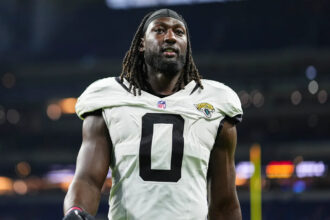
With seconds remaining in the game, DK Metcalf, after a failed final Seahawks drive, walked toward the tunnel. Cell phone video captured the moment he suddenly turned, gestured, and began yelling aggressively toward a fan in the front row. Teammates and staff quickly intervened, physically pulling the visibly upset Metcalf away from the stands. In post-game comments, Metcalf was unequivocal about the cause, stating he was called a slur. “I’m not going to repeat it,” Metcalf told reporters, framing his reaction as a human response to unacceptable provocation. The NFL and the Steelers swiftly announced they were investigating the serious allegation.
The narrative, however, took a sharp turn days later. A Michigan-based law firm, Marietti & Associates, issued a statement on behalf of the fan, identified only as a “lifelong Steelers supporter.” The statement categorically denied the use of any racial epithet. “Our client is heartbroken at being falsely accused of using a racial slur,” the statement read, emphasizing the fan’s respect for all players and the game. This denial creates a direct contradiction with Metcalf’s account, moving the controversy from the realm of public condemnation into a murkier, investigatory phase.
Expert Analysis: Navigating the Gray Zone of Stadium Accountability
This incident highlights the persistent and volatile intersection between athletes and spectators. We spoke to Dr. Alicia Monroe, a sports psychologist specializing in athlete-fan interactions, to break down the dynamics at play. “What we have here is a perfect storm of high emotion—a close, physical game ending in a loss—and the perceived anonymity of the crowd,” Dr. Monroe explains. “For the athlete, the sideline can feel like a fishbowl, where comments from the stands are intensely personal and inescapable. The immediate, visceral reaction from Metcalf is a fight-or-flight response, a feeling of being cornered and attacked.”
From a security and league operations standpoint, the challenge is evident. Stadium microphones and CCTV are not typically oriented to capture specific fan audio in dense, noisy environments. “Investigations often rely on witness accounts from nearby fans, which can be conflicting, and video that shows reaction but not causation,” notes a former NFL security consultant who spoke on condition of anonymity. “This creates a significant evidentiary hurdle. The league wants to support its players and maintain a family-friendly environment, but it also must operate on substantiated facts to levy permanent bans or other penalties against ticket holders.”
The key elements investigators will scrutinize include:
- Corroborating Witnesses: Did other fans, or even players and staff near Metcalf, hear the alleged slur?
- Fan History: Does the accused fan have any prior behavioral incidents reported in stadium databases?
- Audio Enhancement: Can any fan-submitted video provide clearer audio of the exchange leading up to Metcalf’s reaction?
- Metcalf’s Consistency: The player’s steadfast initial statement will be weighed against the fan’s denial.
Predictions: Ramifications for Players, Fans, and the League
The resolution of this case will have tangible consequences, regardless of the findings. If the investigation substantiates Metcalf’s claim, expect the NFL to issue a lifetime ban for the fan involved and potentially reinforce its code of conduct warnings during stadium broadcasts and on tickets. It would also likely amplify the ongoing conversation about equipping field-level personnel with bodycams or deploying more directed audio capture technology near team areas.
If the evidence remains inconclusive—the most likely outcome given the typical chaos of an NFL sideline—the fallout becomes more nuanced. The league may still ban the fan based on general abusive behavior, but the specific slur allegation will remain unresolved. This scenario poses a risk for player morale, as athletes may feel the league’s investigative tools are insufficient to protect them. For Metcalf, he could face a fine from the league for conduct detrimental to the game for his aggressive reaction, a move that would itself spark intense debate about the limits of player tolerance.
Furthermore, this incident will inevitably influence fan behavior policies across sports. Teams may experiment with:
- Enhanced “Fan Conduct” officers in sensitive seating areas.
- Clearer, more immediate reporting mechanisms via stadium apps.
- Stricter enforcement of alcohol sales cut-offs to mitigate volatile behavior.
A Watershed Moment for Sideline Culture
The confrontation between DK Metcalf and a Steelers fan is more than a fleeting news cycle; it is a symptom of the escalating tensions in modern sports arenas. The digital age ensures every player reaction is magnified, and every fan’s shout has the potential to go viral. While the truth of what was said may never be fully settled outside the parties directly involved, the incident’s impact is already clear.
It forces a critical examination of the unspoken contract between players and spectators. Players are paid entertainers, but they are not emotional punching bags. Fans have the right to be passionate and even critical, but that right does not extend to personal, hateful attacks. The burden of proof in these situations remains a colossal challenge, often leaving the public to choose sides based on preconceived loyalties rather than facts.
In the end, this episode should serve as a catalyst for a league-wide reckoning. The NFL must invest in better technology and protocols to protect its players from verifiable abuse. Conversely, players, as role models and professionals, must continue to seek out security as a first resort, even when provoked. The goal is not to sanitize the raw emotion of football, but to ensure that the line between spirited fandom and abusive harassment is not just drawn, but robustly enforced. The integrity of the game experience for everyone in the stadium—on the field and in the stands—depends on it.
Source: Based on news from ESPN.