Fan Safety or Political Theater? Supporters Voice Alarm Over ICE Raid Threats Ahead of World Cup
The 2026 FIFA World Cup, a celebration meant to unite the globe through sport on North American soil, is now shadowed by a deeply divisive political reality. As final preparations accelerate, a stark warning from Europe’s largest organized fan network is cutting through the pre-tournament excitement, raising urgent questions about safety, freedom, and the very spirit of the event. Football Supporters Europe (FSE), representing millions of fans, has expressed profound alarm over the potential for U.S. Immigration and Customs Enforcement (ICE) raids at or around World Cup venues, citing a “militarised” police environment and a lack of crucial guidance for traveling supporters. This concern transforms the tournament from a mere sporting spectacle into a high-stakes geopolitical stage, where the beautiful game collides with hardline immigration policy.
A Chilling Climate: From Peace Prize to Police Presence
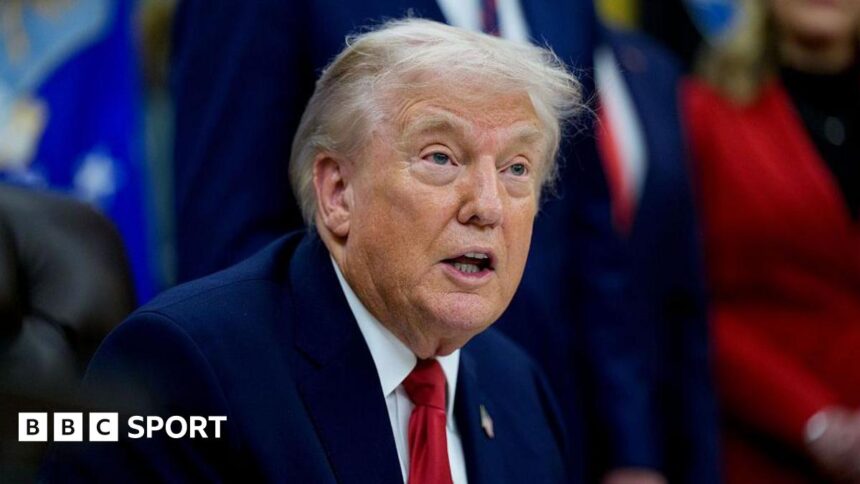
The backdrop to this controversy is uniquely charged. Last December, former President Donald Trump—whose administration’s policies heavily shaped the current immigration enforcement apparatus—accepted FIFA’s inaugural Peace Prize, declaring the United States “the hottest country in the world right now.” That “heat” now carries a double meaning for football fans. FSE’s concern is not abstract; it follows the fatal shooting of two U.S. citizens by federal agents during immigration enforcement operations in Minneapolis, incidents that have intensified scrutiny of ICE tactics.
Ronan Evain, FSE’s executive director, encapsulates the practical fear for ordinary fans: “At this stage, travelling fans are left with little to no information as to what will be allowed or not at FIFA venues, or what to expect from the police elsewhere in the country.” This information vacuum is fueling anxiety. Supporters accustomed to navigating matchday logistics now face a more sinister uncertainty: could a celebration of a goal be interrupted by an armed immigration raid? The potential for confusion, panic, or wrongful detention at crowded, high-energy venues is a scenario tournament organizers have yet to publicly address.
The Core Concerns: Militarization, Misidentification, and Moral Conflict
FSE’s statement points to a “militarisation of police forces,” a trend visible in many U.S. cities and particularly within federal agencies like ICE. For World Cup visitors, this could manifest as:
- Heavily Armed Patrols: The visible presence of tactical units and armed agents in and around stadiums and fan zones, creating an atmosphere of tension rather than festivity.
- Aggressive Checkpoint Operations: The expansion of immigration status checks beyond ports of entry to peripheral areas of World Cup events, ensnaring undocumented fans or even foreign supporters with proper visas caught in broad sweeps.
- Profiling and Misidentification: The significant risk that individuals, particularly those of Latin American, African, or Middle Eastern descent, could be wrongly targeted based on their appearance, leading to traumatic detainment and undermining FIFA’s anti-discrimination statutes.
This presents a profound moral and logistical conflict. FIFA’s statutes emphasize non-discrimination and the unifying power of football. A tournament operating under that banner while simultaneous, high-profile enforcement actions target specific ethnic communities would represent a catastrophic contradiction. The “World Cup experience” sold to fans globally includes safety and welcome; the threat of raids directly markets its opposite.
Expert Analysis: Legal Gray Zones and FIFA’s Dilemma
Legal and security experts highlight the unprecedented nature of this challenge. While host nations have sovereign rights to enforce immigration law, FIFA typically negotiates specific terms for event operations, often creating temporary “bubbles” of jurisdiction. The explicit suggestion that ICE might operate inside these FIFA-controlled venues pushes into a legal gray zone.
“FIFA has leverage, but it is political and financial, not legal,” notes Dr. Amanda Greene, a sports law professor. “They could pressure the U.S. government for assurances, but ultimately, federal agents can act on federal property. The real question is whether the political fallout of a raid during a globally televised match would be worth it for any administration.”
The analysis suggests a tense behind-the-scenes battle. FIFA and U.S. Soccer are likely engaged in urgent, high-level talks to establish clear protocols. However, the ambiguity of “not ruling out” raids serves a political purpose for some, projecting an image of strict enforcement. For fans and FIFA, it’s a destabilizing threat that could impact ticket sales, travel planning, and the tournament’s overall atmosphere.
Predictions: How the 2026 World Cup Unfolds Under This Shadow
Based on current tensions and historical precedent, several scenarios are plausible for the summer of 2026:
- The “Quiet Assurance” Scenario: Most likely, behind closed doors, FIFA secures a non-public guarantee that venues and official fan zones will be treated as sensitive, raid-free areas. Enforcement, if it occurs, will be deliberately displaced in time and geography from World Cup events. Public statements will emphasize general safety without mentioning ICE.
- The “Symbolic Show of Force” Scenario: Authorities may conduct highly visible patrols and vehicle checkpoints on major routes leading to stadiums, aiming to deter undocumented travel while technically avoiding the venues themselves. This creates a chilling effect without a direct stadium incident.
- The “Flashpoint” Scenario: In a lower-probability but high-impact event, an enforcement action in a host city—perhaps near a team hotel or popular fan plaza—sparks major protests, clashes, and a global media firestorm. This becomes the dominant story of the tournament’s first week, overshadowing the football.
Regardless, FSE and other groups will likely issue detailed fan guides focusing on “know your rights” information, creating a parallel, sobering narrative alongside official tournament publicity. The specter of enforcement will alter fan behavior, with some choosing to stay away entirely.
A Tournament at a Crossroads
The 2026 World Cup was envisioned as a milestone for the sport in North America, a legacy of packed stadiums and cultural exchange. Instead, it risks being defined by a political climate its organizers cannot control. The concerns raised by Football Supporters Europe are not hysterical; they are a rational response to a stated policy possibility. The tournament now stands at a crossroads between being a genuine festival of football and becoming a fortified showcase of sovereign power.
The beautiful game has often intersected with politics, but rarely has the collision been so explicitly telegraphed. The responsibility now falls on FIFA, U.S. Soccer, and the U.S. government to provide unambiguous safety guarantees to the millions of invited guests. If they cannot, the world will be watching more than just the matches. It will be watching to see if the universal language of football can still be spoken freely in a land where the rules of entry have become, for many, a subject of fear. The final whistle on this issue is far from blown.
Source: Based on news from BBC Sport.