Zverev’s Medical Time-Out Fury: Gamesmanship or Genuine Grievance in Australian Open Epic?
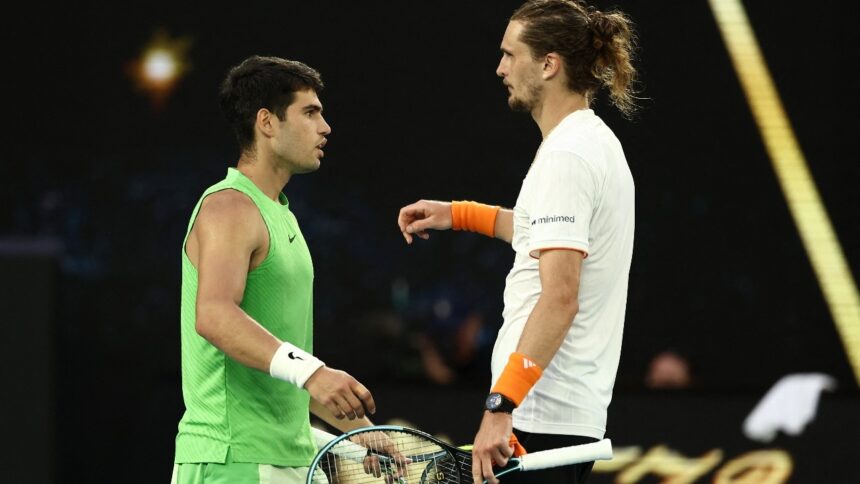
The Australian Open is no stranger to drama, but the 2024 men’s semi-final between Carlos Alcaraz and Alexander Zverev delivered a seismic clash that will be debated long after the final ball was struck. In a brutal five-hour, twenty-seven-minute war of attrition—the longest semi-final in the tournament’s history—Alcaraz emerged victorious 6-4, 7-6(5), 6-7(3), 6-7(4), 7-5. Yet, the defining narrative wasn’t just the Spaniard’s heroic resilience, but a controversial medical time-out that left Zverev seething and ignited a fierce conversation about the rules, gamesmanship, and the fine line between injury and fatigue in elite sport.
- The Crucible of Controversy: A Pivotal Medical Intervention
- Zverev’s Raw Post-Match Rebuke: A Champion Feeling Wronged
- Alcaraz’s Response and the Anatomy of a Comeback
- Expert Analysis: The Unenviable Role of Officials and the “Cramp” Conundrum
- Predictions and Ramifications: A Lasting Stain or a Learning Moment?
- Conclusion: A Classic Marred by Questions
The Crucible of Controversy: A Pivotal Medical Intervention
With the match poised at two sets to love for Alcaraz and 4-4 in the pivotal third set, the momentum shifted perceptibly. The typically explosive Alcaraz began to move with visible hesitation, his fluidity replaced by a labored gait. At the change of ends, he summoned the trainer. After a brief consultation, he was permitted a medical time-out for a right thigh issue, leaving Zverev to stew in his chair, his frustration palpable.
Zverev’s anger stemmed from a firm belief: he was convinced Alcaraz was suffering from cramp. Under the Grand Slam rules, medical time-outs are permitted for treatable medical conditions, such as a muscle tear or a blister. Cramping, however, is considered a form of fatigue and is not grounds for an off-court treatment stoppage. The German’s perspective was clear—this was not an injury but a physical deficit, and the rules, in his view, were being circumvented.
- Rulebook Reality: The Grand Slam rulebook states a player may receive treatment for a “medical condition.” The chair umpire and tournament doctor must determine if the condition is acute and treatable.
- The Gray Area: The distinction between a muscle cramp (fatigue-related) and a muscle strain (injury-related) can be subtle and is often a judgment call made in high-pressure moments.
- Strategic Impact: The timeout halted Zverev’s building momentum and gave Alcaraz crucial minutes of rest and treatment, regardless of the ailment’s true nature.
Zverev’s Raw Post-Match Rebuke: A Champion Feeling Wronged
In the emotionally raw aftermath of a devastating five-set loss, Zverev did not mince words. His criticism was directed not at his opponent, but squarely at the tournament officials. “At 4-4 in the third set, he started cramping,” Zverev stated bluntly in his press conference. “The rules are very clear. You cannot get medical time-out for cramping. That’s not a medical condition. It’s fatigue.”
This accusation strikes at the heart of tennis’s unwritten code and its written regulations. For Zverev, a player known for his powerful, baseline-hugging game that demands immense physical toll, the decision represented an inequity. He had battled through his own physical challenges without such an intervention, only to see his rival receive aid for what he perceived as a comparable struggle. The psychological blow of the medical time-out was arguably as significant as the physical respite it provided Alcaraz. It signaled a potential shift, a lifeline thrown to a drowning champion, and Zverev felt the match’s equilibrium had been artificially altered.
Alcaraz’s Response and the Anatomy of a Comeback
For his part, Carlos Alcaraz addressed the controversy with characteristic charm and a different diagnosis. He described a specific, acute pain in his leg. “I took the timeout because I believe it was necessary,” he explained, deferring to the officials’ judgment. The dramatic arc of the match post-timeout adds layers to the story. Alcaraz did not immediately improve; in fact, he lost the next two grueling sets in tiebreaks, appearing physically compromised throughout.
This sequence is crucial. If the timeout was a tactical masterstroke, its payoff was profoundly delayed. It was only in the fifth set, after nearly five hours of play, that Alcaraz miraculously rediscovered his spring and devastating power. This resurgence raises questions: Was it a miraculous recovery from a genuine strain? Or was it a testament to his supreme fitness and mental fortitude, overcoming fatigue that had been momentarily managed? The Spaniard’s five-set victory showcased his champion’s heart, but the controversy clouded the celebration for many observers.
Expert Analysis: The Unenviable Role of Officials and the “Cramp” Conundrum
This incident highlights the nearly impossible task facing chair umpires and tournament doctors. They must make a snap diagnosis in a high-stakes environment where players have every incentive to exaggerate discomfort. The line between a Grade I muscle strain and a severe cramp is clinically thin and impossible to verify without an MRI.
Tennis integrity hinges on consistent rule enforcement. If players believe the medical timeout rule can be manipulated for strategic recovery, it opens the door for gamesmanship that undermines the sport’s purity. Conversely, denying treatment to a player with a legitimate, treatable injury is a serious medical risk and a public relations disaster. The current system relies on trust and honor, commodities that can evaporate in the heat of a Grand Slam semi-final.
Potential solutions discussed by analysts include:
– Stricter, more transparent assessments: Requiring a more definitive demonstration of injury location and type.
– Penalizing “false” timeouts: Introducing harsher penalties if a player is deemed to have misrepresented their condition.
– A universal “physical condition” timeout: A separate, limited stoppage for non-acute issues like cramping, but with a clear point penalty to discourage overuse.
Predictions and Ramifications: A Lasting Stain or a Learning Moment?
The fallout from this match will extend beyond Melbourne Park. For Alexander Zverev, this loss—coupled with the perceived injustice—will fuel a ferocious fire. It adds a deeply personal edge to his burgeoning rivalry with Alcaraz. We can expect a more hardened, perhaps even more vocal Zverev on tour, one who will scrutinize every opponent’s medical request with intense skepticism.
For Carlos Alcaraz, the victory propels him to another final, cementing his status as the sport’s most electrifying talent. However, the whispers of controversy, however unfounded he believes them to be, represent a new challenge to his reputation. His undeniable sportsmanship and joyful demeanor will be tested as he navigates the increased scrutiny that comes with being the world’s best.
Most importantly, this match serves as a wake-up call for tennis governance. The Grand Slam Board and ATP must review the medical timeout protocol. Clarity and consistency are paramount to preserve the sport’s integrity. When the story of a historic, magnificent match is dominated not by the winner’s heroics but by a debate over the rules, the system has failed the players and the fans.
Conclusion: A Classic Marred by Questions
The 2024 Australian Open semi-final between Carlos Alcaraz and Alexander Zverev was an instant classic, a breathtaking display of skill, stamina, and sheer will. Carlos Alcaraz proved, once again, why he is a generational champion, digging unfathomably deep to secure his place in history. Yet, the shadow of that third-set medical time-out looms large. Whether it was a legitimate intervention for an injury or a contentious pause for fatigue, it irrevocably changed the match’s texture and sparked a necessary, if uncomfortable, conversation.
In the end, the scoreboard shows Alcaraz as the victor. But in the court of public opinion and within the locker room, the verdict on this match’s legacy is still out. It stands as a powerful reminder that in modern tennis, the battles are not only fought with forehands and backhands, but also in the gray areas of the rulebook, where gamesmanship and genuine need collide in a tense, controversial, and ultimately defining moment.
Source: Based on news from India Today Sport.