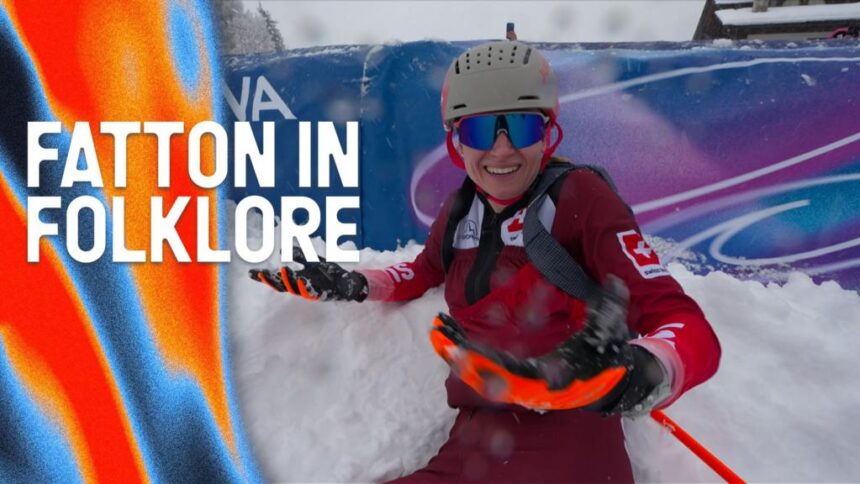
Marianne Fatton Etches Name in History as Inaugural Olympic Ski Mountaineering Champion
The thin, frigid air at altitude has witnessed countless moments of human triumph, but never one quite like this. On a pristine alpine course that demanded every ounce of athleticism, technical mastery, and sheer will, Switzerland’s Marianne Fatton carved her name into the annals of Olympic history. In the sport’s dramatic debut on the world’s grandest winter stage, Fatton didn’t just win a race; she became a permanent answer to a future trivia question: who was the first-ever Olympic gold medalist in ski mountaineering? Her victory was a masterclass in tactical patience and explosive power, a landmark moment that officially welcomes a sport born in the mountains into the Olympic family.
From Mountain Roots to Olympic Glory: The Birth of a New Discipline
For the uninitiated, ski mountaineering—or “skimo”—is far more than a simple ski tour. It is a grueling test of multifaceted endurance, blending the lung-busting ascent of cross-country skiing with the technical descent of alpine racing. Athletes must efficiently skin up steep slopes, navigate transitions, and then descend on lightweight equipment, all while racing against the clock and each other. Its inclusion in the Olympic program marks a significant shift, recognizing sports with deep roots in mountain culture and grassroots participation.
The inaugural women’s individual event was a spectacle of this unique challenge. The course, a serpentine ribbon of ascent and descent, tested every skill in the skimo arsenal. Competitors faced:
- Multiple grueling climbs totaling over 1100 meters of vertical gain.
- Technical boot-pack sections where athletes carry their skis and climb on foot.
- High-speed, technical descents on variable snow, requiring precision on minimal gear.
- Rapid transition zones where seconds gained or lost could decide the medal.
It was into this arena that Marianne Fatton, a consistent World Cup performer known for her strong climbing, stepped with quiet confidence.
Anatomy of a Historic Victory: Fatton’s Masterful Race
From the starter’s gun, the race unfolded as a strategic chess match on snow. A small group of favorites, including strong climbers from France and Italy, set a punishing pace on the initial ascent. Fatton, displaying remarkable race intelligence, did not panic. She stayed within contact of the leaders, managing her effort with the meticulous care of a veteran.
“The key was not to blow up on the first climb,” expert analyst and former skimo world champion Pierre Gignoux noted. “Fatton showed incredible discipline. She knew her strength—a powerful, sustained pace—and she trusted it while others may have gone into the red too early.”
The race’s pivotal moment came on the final major climb. As the gradient steepened and fatigue set in, Fatton shifted gears. Her relentless climbing tempo began to systematically dismantle the lead group. One by one, rivals faded as the Swiss athlete powered ahead, creating a decisive gap before the last descent. Holding a lead in skimo is a nerve-wracking proposition; a mistake on the downhill can erase minutes of hard-earned ascent. But Fatton’s composed and aggressive descent was flawless. She carried her speed, navigated the fall line with authority, and crossed the finish line not just as a winner, but as a pioneer.
Her victory was a testament to a complete skillset: aerobic endurance, technical skiing, and mental fortitude. In a sport of transitions, she transitioned from contender to champion to Olympic legend.
The Olympic Effect: What Fatton’s Gold Means for Ski Mountaineering
Marianne Fatton’s gold medal is more than a personal triumph; it is a catalyst for the entire sport. The Olympic spotlight provides unprecedented visibility, promising to transform skimo from a niche passion into a mainstream Olympic discipline. We can anticipate several immediate impacts:
- Surge in Youth Participation: Seeing an Olympic champion will inspire a new generation to take up the sport, boosting club programs and youth leagues globally.
- Increased Investment and Professionalism: National governing bodies and sponsors will now direct more funding toward athlete development, training facilities, and World Cup circuits.
- Evolution of Equipment and Technique: As competition intensifies, we will see even faster innovation in ski, binding, and boot design, pushing the boundaries of speed and efficiency.
- Broadened Geographic Reach: While traditionally strong in European alpine nations, the Olympic platform will accelerate the sport’s growth in North America, Asia, and South America.
Fatton, in one race, has become the global face of this transformation. Her historic win is the cornerstone upon which the sport’s Olympic future will be built.
Looking Ahead: The Future of Olympic Ski Mountaineering
With a thrilling debut in the books, the future of ski mountaineering at the Games looks exceptionally bright. The sport delivered everything the Olympics crave: drama, visible effort, and stunning backdrops. The International Olympic Committee’s decision to include it appears vindicated. So, what’s next?
Expect the competition level to skyrocket by the next Winter Games. Fatton’s gold will make her the target, and a wave of athletes will dedicate themselves to dethroning the pioneer. Nations will develop more sophisticated training programs, analyzing every climb, transition, and descent for marginal gains. The addition of team and sprint relay events in future Games will add another layer of thrilling team dynamics and tactical racing.
Furthermore, the sport’s emphasis on human-powered movement in the mountains resonates deeply with contemporary values of sustainability and connection with nature. It tells a powerful story of athletes engaging directly with the mountain environment, a narrative that will continue to captivate audiences worldwide.
Conclusion: A Legacy Forged in Snow and Thin Air
Marianne Fatton’s journey to the top of the Olympic podium was a climb years in the making, culminating in a perfect race on the perfect day. She did not just win a gold medal; she opened a door. For every young girl dreaming of Olympic glory, there is now a new path—one that winds up a sun-drenched ridge, transitions in a flurry of snow, and descends with the wind at her back.
Her victory is a historic bookmark, separating the era of ski mountaineering as a beloved mountain pursuit from its new reality as a premier Olympic spectacle. The mountains have always had their champions, but now, thanks to Marianne Fatton’s powerful legs, steady hands, and unwavering heart, they have their first Olympic queen. The legacy of her gold will echo in the mountains for generations, inspiring countless others to chase their own horizons, one climb at a time.
Source: Based on news from BBC Sport.