‘Felt Like Humiliation’: A Nation’s Fury and the Weight of 120 Million Hopes on Mohamed Salah
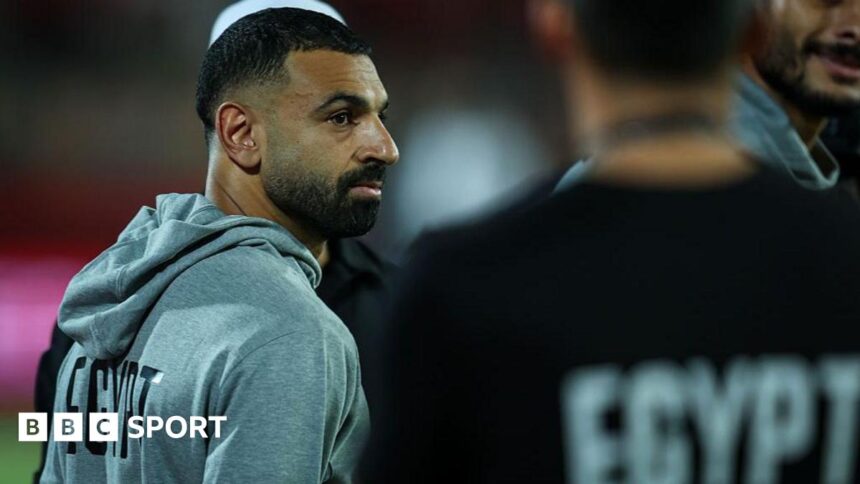
The first thing that strikes you in Cairo is the noise—a relentless, symphonic chaos of car horns, street vendors, and life. The second, more profound realization, is the sheer, overwhelming mass of humanity. Egypt is a nation of approximately 120 million souls, with nearly a quarter of them, around 23 million, teeming in its ancient capital. For context, the entire city of Liverpool, the club Mohamed Salah calls his European home, cradles just under one million. Hold these numbers in your mind. Feel the scale. Only then can you begin to fathom the depth of national emotion that erupted when Egypt’s modern pharaoh, their captain and undisputed icon, declared in an incendiary December interview that his club had “thrown him under the bus.” In Egypt, this wasn’t just a footballing spat. For many, it felt like a profound humiliation shared by a nation.
The Spark in Cairo: More Than a Club Row, A National Affront
On December 6th, as Salah prepared for the Africa Cup of Nations, his words to Egyptian media detonated far beyond the sports pages. His frustration with Liverpool’s handling of his contract situation and public narrative was palpable. But in the crowded cafes of Cairo, the packed trams of Alexandria, and the dusty pitches of Aswan, the translation was different. This was their Salah—the boy from Nagrig, the symbol of Egyptian excellence on the world’s most-watched sporting stage—being disrespected. The perceived slight wasn’t just against a player; it was against the pride of a nation that lives and breathes through his exploits.
For Egyptians, Salah transcends sport. He is a cultural icon, a philanthropic leader, and a rare point of unified national joy. When he scores, 120 million people cheer. When he is perceived to be wronged, 120 million people feel the sting. The reaction was a torrent of anger, disappointment, and protective fervor directed at Liverpool. Social media erupted with hashtags of support for Salah and condemnation of the club. Pundits on popular talk shows dissected the “insult” with the gravity of a geopolitical crisis. The sentiment was clear: if you disrespect our captain, you disrespect us all.
Scaling the Pyramid: Understanding the Pressure of a Nation
To view this incident through a purely British or European football lens is to miss the point entirely. The pressure on Salah is of a magnitude unfamiliar to most Western athletes.
- Demographic Weight: Every tweet, every interview, every missed penalty is absorbed and analyzed by a population larger than that of the United Kingdom and the Netherlands combined.
- Symbolic Burden: He carries not just the hopes for a trophy, but the aspiration of a nation yearning for positive global recognition.
- The Afcon Obsession: Winning the Africa Cup of Nations is the ultimate, career-defining goal for Salah. It is the missing piece in his legendary legacy at home, a prize more coveted than any Premier League or Champions League title by his compatriots.
When Salah spoke of being “thrown under the bus,” it resonated because many Egyptians feel their nation is often sidelined or misunderstood on the global stage. His struggle became a metaphor for a broader sentiment. The club versus country tension was amplified into a West versus Egypt narrative, whether Salah intended it or not. The emotional calculus in Cairo is simple: Liverpool will have many heroes; Egypt has only one Mohamed Salah.
Expert Analysis: Navigating the Tightrope Between Club and Country
From a sporting psychology and media strategy perspective, the situation presents a fascinating case study. Salah’s comments, while risky, were likely a calculated move to control the narrative ahead of a critical period focused on Egypt. However, the fallout highlights the immense difficulty of managing a dual identity.
The Liverpool perspective is one of asset management and squad evolution. The club’s famed data-driven model inevitably looks toward the future. But their communication strategy failed to account for the player’s status as a de facto head of state in another country. What might be standard contract negotiation posturing in Liverpool reads as a grave insult in Cairo.
The Egyptian perspective is rooted in legacy and national honor. Former Egyptian internationals and pundits have largely framed the issue as one of respect. As one analyst on *Alhayah TV* stated, “They must remember who they are dealing with. This is not just a winger; this is the captain of Egypt.” The row has, paradoxically, likely strengthened Salah’s bond with the national team camp, unifying the squad and the public behind their leader as they pursue Afcon glory.
Predictions: Legacy, Leverage, and the Road Ahead
The ramifications of this incident will unfold long after the final whistle of the Africa Cup of Nations.
Immediate Future (Afcon 2024): The pressure on Salah to deliver the trophy has now reached stratospheric levels. The narrative is set: winning Afcon would be the ultimate redemption, a triumph for Egypt over perceived external disrespect. The team will be galvanized, but the weight on his shoulders is heavier than ever.
Club Career Crossroads: Upon his return to Liverpool, the dynamic will be irrevocably shifted. The episode has publicly aired a fracture in the relationship. It strengthens Salah’s leverage in any contract talks but also makes a summer transfer more plausible than ever before. A move to a club outside the Premier League, perhaps in Saudi Arabia, could be framed not as a step down, but as a respectful embrace by a culture that understands his stature.
Enduring Legacy: In Egypt, Salah’s legacy is already granite. This incident, framed as “Salah standing up for himself against a giant,” will only enhance his mythos as a national champion. In Liverpool, his legacy as an all-time great is secure, but the final chapter’s tone is now uncertain.
Conclusion: A Clash of Cultures, A Unifying Icon
The fury that swept through Egypt was never really about a tactical disagreement between a player and his club’s management. It was a raw, national reaction to seeing their standard-bearer feeling humiliated on a global platform. It underscored the vast cultural chasm in how athletes are perceived—as valuable assets in one context, and as national treasures in another. For Mohamed Salah, the path forward is a lonely walk along a razor’s edge, balancing the expectations of a historic English club with the dreams of 120 million people. As the noise in Cairo rises to a crescendo during Afcon, one thing is clear: the weight of a nation is heavy, but its love, and its fury, are forces more powerful than any contract clause. His quest for the cup is now about more than football; it’s about restoring a sense of pride, one he never wanted to see questioned.
Source: Based on news from BBC Sport.