From Sickbed to Podium: How Erika Gargano’s Grit Defined a Championship
In the silent, pre-dawn hours of a championship Saturday, the narrative for Erika Gargano’s final indoor sectional meet appeared to be written. It was a story of a stomach bug, a missed opportunity, and a quiet end for the Demarest senior. But elite athletes author their own stories, often with a pen dipped in pure resilience. What transpired was not a tale of what could have been, but a legendary chapter of guts, loyalty, and stunning performance that transformed a sick day into a triumphant team title defense.
The 3 A.M. Wake-Up Call: A Champion’s First Hurdle
Long before the starter’s pistol echoed in the Bennett Center, Erika Gargano was locked in a private, painful battle. At 3 a.m., the senior awoke with a nagging stomach bug that left her debilitated. The physical agony was matched by a mental blow: the crushing fear that her senior sectional meet—a culmination of years of work—was over before it began.
“I was barely able to move,” Gargano recalled. Her first act of leadership that day was one of transparent communication. She texted her coach, Owen Ross, laying out her dire status. With hope as her only medicine, she turned over, seeking another hour or two of sleep, praying the pain would subside. For most, the decision would have been simple: stay home, recover. But the team championship mindset operates on a different frequency.
As morning light broke, Gargano made her choice. She talked her parents into the drive, not with a guarantee of glory, but with a simple, powerful conviction: she had to try. She arrived at the track just in time, a warrior reporting for duty, pale but present.
Mind Over Matter: The Anatomy of a Clutch Performance
What happened next defied conventional sports physiology. Gargano, visibly weakened, had to strategically withdraw from the open 400 meters, a brutal race demanding peak fitness. This was a tactical retreat to preserve her strength for the team. What followed was a masterclass in competitive focus and compartmentalization.
Expert analysis points to the profound psychological shift required here. An athlete’s identity is often tied to their event schedule. To voluntarily scratch one, especially as a senior, requires immense mental fortitude. Gargano didn’t dwell on the loss; she pivoted. She channeled every ounce of available energy into the events she could contest.
- 55-Meter Hurdles: Placing second requires explosive power and precise timing, assets seemingly sapped by illness. Her silver medal here was a testament to muscle memory and will.
- High Jump: Another second-place finish. This technical event demands a unique combination of speed, spring, and spatial awareness—a complex skill set she executed under duress.
- 4×400 Relay Anchor: Perhaps the most telling moment. After hours of competition, she took the baton for the final leg. The 400, the very distance she couldn’t run solo, was now her team’s responsibility. She anchored them to a critical fourth-place finish, securing every possible point.
Coach Owen Ross’s summary was succinct and awe-struck: “It was lights out. It was like nothing ever happened.” This wasn’t a dismissal of her struggle, but the ultimate compliment to her professionalism. When the gun fired, she was no longer a sick teenager; she was an athlete scoring crucial points for her team.
The Fuel of Purpose: Team Over Self
When asked about her motivation, Gargano’s answer was refreshingly selfless and pinpointed the core of her achievement. “I knew I was going to play kind of a big role scoring points and I didn’t want to let down my team,” she said. This team-first mentality is the engine that drives championship culture.
But she added a layer equally important to understanding the drive of a senior athlete: “Also, it’s my senior year, last indoor sectional meet. I wanted to be there for it.” This speaks to a deeper legacy mindset. It wasn’t just about scoring in the moment; it was about showing up for the final act of a personal and team journey. Her presence on the track was a statement: she would not let her career end on a sickbed. This powerful dual-purpose—serving the team’s immediate goal and honoring her own journey—created an unstoppable mental framework that overrode physical weakness.
This episode is a textbook case for sports psychologists. The ability to transcend physical limitations is often rooted in a purpose larger than personal achievement. For Gargano, the Demarest team’s quest to repeat as champions and the finality of her senior season provided a purpose potent enough to temporarily silence illness.
Legacy and Looking Ahead: What This Triumph Foretells
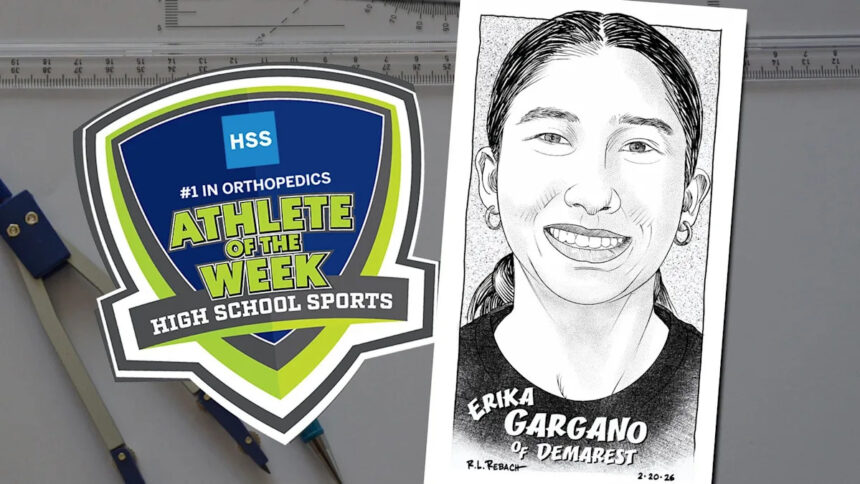
Earning the North Jersey Female Athlete of the Week honor, presented by HSS, for this performance is fitting. It rewards not just athletic excellence, but the quintessential intangibles of a champion: resilience, loyalty, and clutch performance.
So, what does this predict for Erika Gargano’s future?
- Collegiate Success: College coaches covet athletes with this specific DNA. The athlete who competes for the team on a bad day is the one you can build a program around. Her proven ability to perform under adverse conditions makes her a future captain and a reliable point-scorer at the next level.
- Leadership By Example: The legacy she leaves at Demarest is now cemented in lore. Younger teammates witnessed a defining lesson: championship effort isn’t about feeling perfect; it’s about committing fully, regardless of circumstance. This is a culture-defining performance that will resonate for seasons to come.
- Mental Fortitude: Having conquered this challenge, Gargano now possesses an internal reference point of incredible power. In future races, when fatigue or doubt sets in, she can recall the day she won while sick. This builds an unshakable confidence that physical limits are more malleable than they appear.
Her story also serves as a crucial reminder in an era of specialization and individual stats. The heart of high school sports often beats strongest in these moments of selfless contribution. Gargano didn’t set a personal record that day; she secured a team trophy. In the long run, that contribution will shine brighter in her memory and in the annals of her school.
Conclusion: The True Measure of an Athlete
Erika Gargano’s journey from a 3 a.m. sickbed to the sectional podium is more than a feel-good story. It is a case study in the essence of sport. Medals can tarnish and records can be broken, but the character displayed when no one is watching—and then validated when everyone is—is permanent.
She redefined the “athlete of the week” honor. It wasn’t for a staggering time or a record-breaking leap, though her performances were exceptional given the context. It was for demonstrating that the most important victories are often secured long before the race, in the decision to show up, to try, and to put the collective goal above personal comfort. In a single, sickness-riddled day, Erika Gargano didn’t just win points; she won respect, defined her legacy, and delivered a timeless lesson on the power of unyielding team spirit. That is the stuff of which true champions are made.
Source: Based on news from Yahoo Sports.