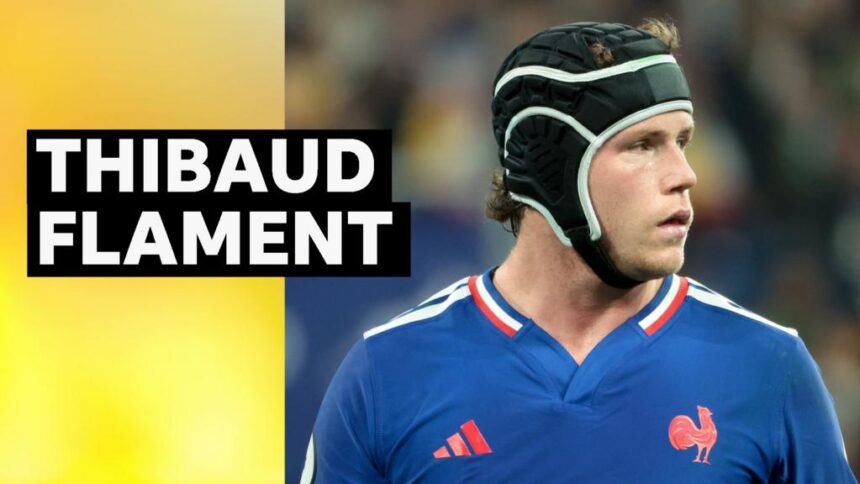
Thibaud Flament’s Personal Choice Sparks Global Conversation on Fertility and Sport
The world of elite sport is often a bubble of singular focus, where the next match, the next training session, the next trophy is all-consuming. Rarely does a player’s off-field life puncture that bubble with such profound and relatable force. But when France lock Thibaud Flament stepped away from a Six Nations match against Ireland to support his wife during a critical stage of fertility treatment, he did more than make a personal sacrifice. He opened a window into a private struggle shared by millions, and his subsequent reaction has become a catalyst for a wider, necessary discussion.
“I was surprised how many people go through it,” Flament admitted, a simple statement that resonates with staggering weight. In choosing family over fixture, the 6ft 9in second-row forward, a pillar of physical strength, showcased a different kind of courage—one that has connected with fans and fellow athletes on a deeply human level, transcending the sport itself.
A Decision That Redefines Priorities in Professional Sport
Flament’s choice was not made lightly. The Six Nations is the pinnacle of Northern Hemisphere rugby, a tournament steeped in history and national pride. Missing the opening game, especially against a titan like Ireland, meant relinquishing his role in a crucial team campaign. Yet, for Flament, the calculus was clear. Fertility treatments operate on immovable biological timelines; the window for certain procedures is precise and unforgiving. A rugby match, for all its glory, is schedulable. The journey to build a family, for many, is not.
This decision challenges the often-unspoken expectation in professional sports that the game must always come first. It reframes athlete welfare and personal life not as distractions, but as foundational elements of a person who also happens to be an athlete. Flament’s stance, supported unequivocally by France coach Fabien Galthié, signals a progressive shift in sporting culture. It acknowledges that the mental and emotional well-being of a player, intrinsically tied to their off-field life, directly impacts their performance and longevity in the sport.
The public response was overwhelmingly positive, flooding social media with messages of support from those within and far beyond the rugby community. This reaction underscores a growing public demand for athletes to be seen as multifaceted individuals.
The Hidden Journey: Why Flament’s Surprise Speaks Volumes
Flament’s candid surprise at the prevalence of fertility journeys is perhaps the most telling part of this story. It highlights the silent, often isolating nature of the struggle. Despite affecting an estimated 1 in 6 couples globally, according to the World Health Organization, fertility challenges are frequently endured in private, shrouded in a mix of hope, disappointment, and societal stigma.
His experience mirrors a common revelation: when one person speaks openly about fertility, countless others feel empowered to share their own stories. This “me too” moment in the fertility sphere is vital for breaking down barriers. For athletes, whose public personas are built on invincibility and peak physical condition, admitting to something perceived as a biological hurdle can feel particularly daunting. Flament’s openness helps normalize the conversation in a high-performance environment where vulnerability is seldom showcased.
Key factors contributing to the hidden nature of fertility treatment include:
- Emotional Vulnerability: The process is an emotional rollercoaster, making private coping a default for many.
- Medical Privacy: Fertility treatment is deeply personal medical care.
- Professional Stigma: Especially in male-dominated fields like sport, fears of perceived weakness or distraction persist.
- Lack of Public Discourse: Without prominent voices sharing experiences, many suffer in silence.
Expert Analysis: The Impact on Athletic Performance and Culture
From a sports science and management perspective, Flament’s situation is a critical case study. Sports psychologists emphasize that mental load and emotional stress are not separate from physical performance; they are integral to it. The anxiety and focus required during fertility treatment—the appointments, the hormonal impacts, the waiting—constitute a significant cognitive burden.
“An athlete under that kind of personal stress is carrying an invisible weight,” says Dr. Elisa Laurent, a sports psychologist specializing in athlete well-being. “By supporting Flament’s choice, the French Rugby Federation didn’t just do the ‘kind’ thing; they made a strategic performance decision. A player who feels supported holistically is more likely to be focused, resilient, and ultimately, perform better when they are on the pitch.”
This incident also pressures sporting institutions to formalize support. While many clubs have employee assistance programs, specific, compassionate policies regarding fertility treatment and family planning leave for athletes are not commonplace. Flament’s case builds a compelling argument for their inclusion in standard player contracts and welfare protocols, treating them with the same seriousness as injury rehabilitation.
Predictions: How This Moment Could Change the Game
Flament’s personal decision is likely to have ripple effects far beyond the Stade de France. We can anticipate several key shifts in the landscape of professional sport:
- Normalization of the Conversation: More athletes, male and female, may feel empowered to speak about their fertility journeys, reducing stigma. This could extend to discussions around family planning timing, adoption, and other paths to parenthood.
- Policy Evolution: Forward-thinking teams and leagues will develop clearer, more compassionate policies for players undergoing fertility treatments or similar family-focused medical needs, viewing them as a retention and welfare imperative.
- Sponsor and Brand Alignment: Brands that champion family and holistic well-being may seek partnerships with athletes like Flament, aligning with values that resonate deeply with broad audiences.
- Fan Connection 2.0: The era of the untouchable sports hero is fading. Fans increasingly connect with athletes who show authenticity and humanity. Stories like this forge a stronger, more loyal bond between players and the public.
A Legacy Beyond the Try Line
Thibaud Flament will be remembered for his towering presence in the French pack, his skillful offloads, and his role in France’s rugby renaissance. But his most enduring legacy may well be forged not in the heat of a scrum, but in the quiet of a clinic waiting room. By prioritizing his role as a partner over his role as a player for one pivotal weekend, he performed a public service of immense value.
He gave a human face to a statistics-heavy issue, offering solace to countless individuals and couples who saw their private struggle reflected in the story of a world-class athlete. His surprise at the scale of the experience is a powerful reminder that we never truly know the battles others are fighting. In breaking the silence, Flament has strengthened the conversation around work-life balance in high-pressure careers, modern masculinity, and the universal priority of family.
In the end, Thibaud Flament’s story is a triumphant one. It is a story where a personal choice becomes a public beacon, where vulnerability becomes strength, and where the definition of a sports hero expands to include the courage it takes to live a full, authentic life off the field. The try he didn’t score that weekend may have done more to advance the culture of his sport than any he ever will.
Source: Based on news from BBC Sport.