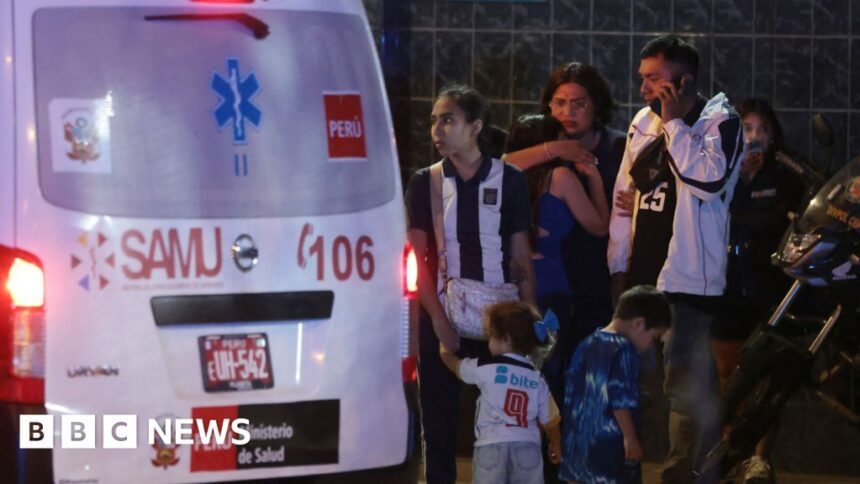
Tragedy Before Kickoff: Football Rally in Peru Leaves One Dead, Dozens Injured
The beautiful game, a source of immense passion and community identity across South America, turned to tragedy in Lima, Peru. In the charged hours before a historic local derby, a gathering of fervent supporters ended in catastrophe, leaving one fan dead, dozens injured, and a nation grappling with questions of safety, infrastructure, and the very culture of football fandom. The incident, unfolding outside the iconic Alejandro Villanueva Stadium, has cast a long shadow over Peruvian football and ignited urgent calls for accountability and reform.
A Day of Celebration Turns to Chaos
Hundreds of fans, clad in the iconic blue and white stripes of Club Alianza Lima, had converged on the streets surrounding their team’s fortress, the Matute stadium. The air was thick with anticipation for the “Clásico del Fútbol Peruano” against arch-rivals Universitario de Deportes. Flags waved, chants echoed, and the collective energy was a palpable force. This pre-match ritual, a vibrant display of loyalty, is a cornerstone of football culture in Peru and across the continent.
However, the celebration shattered into chaos and panic. Initial, confused reports from the scene suggested a partial collapse of a stadium wall or structure, a narrative that immediately evoked memories of past footballing disasters. This was swiftly disputed by officials on the ground. The precise trigger of the stampede or crush remains under formal investigation by Peruvian authorities. What is tragically clear are the consequences. Peruvian Health Minister Juan Carlos Velasco Guerrero confirmed the sobering toll: one fan lost his life, and 47 others were injured. Of those, three were reported to be in critical condition, fighting for their lives in local hospitals.
Beyond the Immediate Crisis: Systemic Issues in Focus
While the investigation will pinpoint the direct cause, experts in stadium safety and South American football history point to a confluence of systemic factors that create a tinderbox for such tragedies. This incident cannot be viewed in isolation.
- Crowd Management Protocols: The effectiveness of pre-match crowd control, barricade placement, and entry procedures for large, excited gatherings is immediately called into question. Were safety capacities respected?
- Infrastructure and Maintenance: Despite the disputed wall collapse claim, the age and condition of many South American stadiums, including those recently renovated, face scrutiny. Regular, rigorous safety certifications are paramount.
- The Culture of “Barras Bravas”: The intense, sometimes hyper-aggressive supporter group culture, while not uniquely Peruvian, adds a volatile layer to event management. Balancing fan passion with safety is a persistent challenge.
- Communication Breakdowns: In chaotic situations, clear communication from authorities and stadium officials to fans is critical. Panic often spreads faster than facts.
This tragedy also presents a stark, ironic juxtaposition. The Alejandro Villanueva Stadium sits adjacent to one of Peru’s largest solar energy complexes. Yet, as one local journalist poignantly framed it, the community lives “in the dark” regarding consistent, modern safety standards and infrastructure investment. The metaphor is powerful: technological progress in one field highlights the glaring neglect in another.
Predictions and Repercussions for Peruvian Football
The fallout from this disaster will reverberate through Peruvian football for seasons to come. We can anticipate several key developments:
Immediate Sporting Consequences: The match was, rightly, suspended. The Peruvian Football Federation (FPF) will face pressure to sanction clubs or mandate specific safety overhauls before fans are allowed back in similar numbers. Future high-risk derbies may be played behind closed doors or with severely restricted attendance in the short term.
Legal and Political Reckoning: A thorough judicial investigation is inevitable. Questions of liability—whether directed at club management, stadium operators, or local authorities overseeing the event—will lead to protracted legal proceedings. The political response, from the health minister’s immediate involvement to potential legislative action, will be swift.
Fan Culture at a Crossroads: This tragic event may serve as a catalyst for a difficult but necessary dialogue between clubs, authorities, and supporter groups. The goal will be to preserve the electric atmosphere that makes South American football unique while systematically eliminating the conditions that lead to loss of life. Initiatives could include:
- Mandatory, certified safety training for organized supporter group leaders.
- Digital ticketing and controlled entry time slots to prevent mass crushes at gates.
- Independent, third-party safety audits of all first-division stadiums.
A Call for Legacy, Not Just Mourning
The death of a fan on what should have been a day of communal joy is an unspeakable failure. As Lima and all of Peru mourns, the path forward must be paved with more than condolences. The memory of the life lost must forge a new legacy for Peruvian football—one where safety is not an afterthought but the foundational principle of matchday.
The passion of the fans is the sport’s greatest asset; protecting that passion, and the people who embody it, is the most important duty of every club, federation, and governing body. The world is watching to see if this tragedy will be a fleeting headline or the catalyst for genuine, lasting change. The beautiful game deserves a framework where its beauty is not forever marred by preventable tragedy. The work to ensure that begins now, in the shadow of the Matute.
Source: Based on news from BBC Sport.