Former Alabama Star Charles Bediako Sues NCAA in Landmark Eligibility Battle
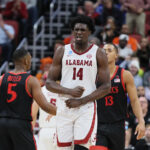
The simmering tension between the modern athlete’s career trajectory and the NCAA’s archaic rulebook has erupted into another high-stakes legal battle. This time, the plaintiff is not a household name from the transfer portal era, but a former defensive anchor for one of college basketball’s premier programs. Charles Bediako, the 7-foot center who helped propel the Alabama Crimson Tide to a No. 1 seed in the 2023 NCAA Tournament, has filed a lawsuit against the NCAA. His goal is audacious: to regain his collegiate eligibility after entering the NBA draft and playing professionally, a move that could reshape the boundaries of amateurism and player agency.
The Bediako Case: A Timeline of Ambition and Ambiguity
Charles Bediako’s journey to this lawsuit is a familiar tale of athletic promise, complicated by the murky “pre-draft process.” After two seasons in Tuscaloosa, where he established himself as a formidable rim protector, Bediako declared for the 2023 NBA Draft while maintaining his college eligibility. He participated in the NBA Combine, worked out for teams, but ultimately went undrafted. This is where the NCAA’s contentious rules come into play.
Under current NCAA bylaws, a player who declares for the draft can return to school, provided they do not hire an agent (or use an agent certified by the NCAA) and withdraw their name by a specified deadline. However, the rules surrounding the NBA G League are a different beast. After going undrafted, Bediako pursued his professional dream by playing for the NBA G League’s Ontario Clippers. This professional participation, the NCAA argues, permanently severed his ties to amateur status. Bediako’s lawsuit contends that the NCAA’s rules are arbitrary and capricious, unfairly restricting an athlete’s ability to test the professional waters and return to education if their initial foray doesn’t pan out as planned.
- 2023 Season: Bediako stars for Alabama, leading them to SEC Tournament championship and NCAA Tournament’s Sweet 16.
- April 2023: Declares for NBA Draft while maintaining college eligibility.
- June 2023: Goes undrafted, does not sign with an NBA team.
- 2023-24 Season: Plays professionally for the Ontario Clippers in the NBA G League.
- Present: Files lawsuit against NCAA seeking reinstatement of eligibility to play for Alabama.
Expert Analysis: The Legal Fault Lines and Precedent
This case is not unfolding in a vacuum. It lands on the docket amidst a seismic shift in the collegiate sports landscape. Legal experts point to several key arguments and precedents that will frame this battle.
“The NCAA is clinging to a version of amateurism that the courts have repeatedly rejected as a justification for restricting athlete compensation and mobility,” notes a seasoned sports law attorney. “The Alston v. NCAA Supreme Court decision in 2021 was a watershed moment, with Justice Kavanaugh’s concurring opinion explicitly questioning the legality of the NCAA’s remaining rules. Bediako’s legal team will likely argue that the rule prohibiting return after G League play is an unreasonable restraint of trade, preventing him from maximizing his value and educational opportunity.”
Furthermore, the lawsuit highlights the inconsistent application of rules. A player can enter the transfer portal multiple times, benefit from Name, Image, and Likeness (NIL) deals that often dwarf professional salaries in lower-tier leagues, yet is barred for taking a modest G League contract to pursue his dream. “The hypocrisy is glaring,” argues a college basketball analyst. “The system incentivizes players to enter the portal for financial gain via NIL but punishes them for pursuing the actual professional career path the sport is designed to feed. It’s a disconnect that the courts may find indefensible.”
Potential Ramifications: A Ripple Effect Across College Sports
The outcome of Charles Bediako v. NCAA could send shockwaves far beyond Tuscaloosa. A victory for Bediako would create a monumental precedent, effectively creating a “professional tryout” window without permanent consequence.
For athletes, it would provide a crucial safety net. A player could enter the draft, go undrafted, sign a short-term G League deal to further showcase their skills, and still have the option to return to school to develop, complete their degree, and re-enter the draft later. This reduces the immense risk currently associated with testing the professional waters.
For college programs, the implications are double-edged. On one hand, coaches could potentially regain a star player they thought was lost forever, bolstering their roster in a way previously unimaginable. Imagine a scenario where a key junior goes undrafted, plays a G League season, and returns as a more mature, physically developed senior leader. On the other hand, it adds another layer of roster uncertainty, complicating recruitment and scholarship planning.
Most critically, for the NCAA, a loss would be another chisel strike at the crumbling edifice of its control. It would further blur the line it desperately tries to maintain between “amateur” and “professional,” potentially opening the floodgates for more athletes to challenge restrictive eligibility rules. This case, coupled with ongoing antitrust lawsuits and the evolving NIL landscape, accelerates the march toward a fundamentally new model for collegiate athletics.
Predictions and the Road Ahead for Bediako and the Tide
Predicting court outcomes is perilous, but the legal and cultural winds are at Bediako’s back. The NCAA has suffered a string of defeats in antitrust cases, and the judicial skepticism toward its business model is palpable. The association may opt for a settlement, perhaps reinstating Bediako while attempting to preserve the rule for future cases—a band-aid solution on a gushing wound.
For Alabama and Coach Nate Oats, the potential upside is tantalizing. Bediako’s defensive prowess and familiarity with the system would instantly transform the Crimson Tide’s frontcourt for the upcoming season, making them a presumptive favorite in the SEC and a national title contender. His return would be a storybook subplot to the college basketball season.
However, the broader prediction is that regardless of this specific verdict, the trajectory is clear. The era of the NCAA wielding absolute power over eligibility is over. The transfer portal, immediate eligibility, and NIL have already created a de facto free-agency system. This lawsuit is the next logical step, challenging the last bastion of the old regime: the irreversible commitment to professional play.
Conclusion: More Than a Comeback, A Challenge to the System
Charles Bediako’s lawsuit is not merely a petition for a second chance at college glory. It is a direct challenge to a rule that punishes ambition and professional exploration. In an age where college athletes can be millionaires from endorsement deals but are forbidden from earning a salary in their sport’s developmental league, the NCAA’s stance appears increasingly anachronistic and unfair.
This case underscores the central conflict of modern college sports: it is a multi-billion dollar industry built on a foundation of amateurism that no longer exists in practice. Bediako’s fight is for the right to navigate his career without facing a permanent, punitive crossroads. Whether he dons the Crimson Tide jersey again or not, his legal action is another powerful push toward a future where the athlete’s choice—to be a student, a professional, or both—is finally respected. The courts are now, once again, the arena where the future of the game will be decided.
Source: Based on news from ESPN.
Image: CC licensed via www.pickpik.com