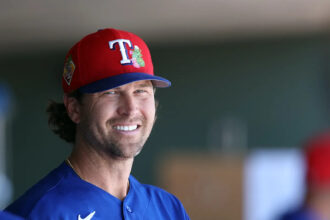
Tom Hicks, Visionary Texas Sports Magnate and Business Pioneer, Dies at 79
The landscape of Texas sports and American business lost a towering, complex figure this weekend. Thomas O. Hicks, the bold entrepreneur who simultaneously helmed franchises in the NHL, Major League Baseball, and English Premier League soccer, died peacefully surrounded by family in Dallas. He was 79. Hicks’s passing marks the end of an era defined by aggressive ambition, transformative private equity, and a dual legacy of championship glory and financial tumult that reshaped the teams he loved.
A Pioneer’s Playbook: From Private Equity to the Power Play
Long before he stepped into the owner’s box, Tom Hicks was revolutionizing boardrooms. A 2022 inductee into the Texas Business Hall of Fame, Hicks co-founded the investment firm Hicks & Haas in 1984, which later evolved into Hicks, Muse, Tate & Furst. In an era before private equity was a household term, Hicks was a trailblazer.
Hicks’s strategy was characterized by leveraged buyouts and a focus on undervalued assets in stable industries. He wasn’t just investing; he was architecting a new model for corporate ownership. “Tom Hicks was an innovative businessman and a pioneer in private equity,” said fellow Texas magnate Ross Perot Jr. “He combined his commitment to business and sports through his ownership of the Stars and the Rangers.” This fusion of financial acumen and sports passion would define his public legacy, for better and worse.
His success in business provided the fuel for a sports ownership spree unprecedented in its geographic and league diversity. At his peak, Hicks held controlling interests in clubs across three continents, a testament to both his vast ambition and his belief in the globalizing power of sports franchises as assets.
The Dallas Stars: Delivering Hockey’s Ultimate Prize to Texas
Hicks’s foray into sports began in 1995 when he purchased the NHL’s Minnesota North Stars and promptly moved them to Dallas. It was a gamble—hockey in the football-crazed Texas heat? But Hicks saw potential where others saw risk. He invested not just in the team, but in growing the sport at the grassroots level across the state.
The move paid off spectacularly and swiftly. Under his ownership, the Dallas Stars became a powerhouse:
- 1999 Stanley Cup Champions: The crowning achievement, defeating the Buffalo Sabres in a legendary six-game series.
- Back-to-Back Finals Appearances: Followed up the 1999 title with another trip to the Final in 2000.
- Consistent Contender: The Stars were a perennial playoff team throughout the late 1990s and early 2000s, boasting stars like Mike Modano, Brett Hull, and Ed Belfour.
Hicks’s tenure with the Stars is largely remembered as a golden age. He spent to win, built a loyal fanbase in a non-traditional market, and delivered the ultimate validation: a championship parade in downtown Dallas. It was the high-water mark of his sports empire.
The Texas Rangers and Liverpool FC: High-Stakes Bets and Mounting Debt
Emboldened by the Stars’ success, Hicks doubled down on sports. In 1998, he led a group to purchase the Texas Rangers from a group that included future President George W. Bush. His impact was immediate, signing superstar shortstop Alex Rodriguez to a then-earth-shattering 10-year, $252 million contract in 2001. The deal shocked baseball, signaling Hicks’s willingness to spend massively for success.
Yet, the A-Rod era failed to yield postseason success, and the contract became an albatross, eventually leading to Rodriguez’s trade to the New York Yankees. While Hicks later oversaw the development of a strong farm system that would form the core of the Rangers’ back-to-back American League pennant winners in 2010 and 2011, his financial grip on the team was slipping.
The most ambitious—and ultimately destabilizing—move came in 2007. Hicks, in partnership with George Gillett, acquired a 50% stake in the iconic Liverpool Football Club. The deal was financed heavily through debt, a hallmark of his private equity approach. While initial years saw investment in players like Fernando Torres, the global financial crisis of 2008 exposed the leveraged structure. The ownership became deeply unpopular with Liverpool’s passionate fanbase, leading to protests and a bitter, protracted sale process that ended in 2010.
The financial strain from Liverpool cascaded across his empire. Both the Rangers and Stars filed for bankruptcy in the wake of the crisis, leading to the forced sale of both franchises. The man who once ruled a sports kingdom saw it dismantled in a stunningly short period.
Legacy and Lasting Impact: A Complicated Texas Titan
Tom Hicks’s legacy is a study in contrasts, a narrative of peaks and valleys that reflects the very nature of the high-risk industries he inhabited.
The Positive Imprint: He brought a Stanley Cup to Dallas, forever changing the city’s sports identity. He made the Texas Rangers a relevant spending force and helped lay the groundwork for their future success. As a businessman, he pioneered private equity strategies that influenced a generation. His philanthropic efforts, particularly in Dallas civic and educational institutions, were substantial and lasting.
The Cautionary Tale: His story also serves as a master class in the dangers of over-leverage, especially in the volatile world of sports. The model of using debt to acquire trophy assets met its match in the perfect storm of economic downturn and fan revolt. His tenure at Liverpool is often cited in soccer circles as a prime example of how not to run a club.
Expert Analysis: “Hicks was a visionary in seeing sports franchises as the ultimate branded, content-generating assets long before media rights exploded,” notes a sports business analyst. “But he applied a 1980s private equity model—load it with debt, optimize for value—to institutions with emotional stakeholders: the fans. When the economy turned, that model collapsed under its own weight. Today’s owners, while still financiers, are far more sensitive to brand equity and fan perception because of lessons from that era.”
Predictions for His Franchises’ Futures: The teams he once owned have largely thrived since his departures. The Dallas Stars, under new ownership, returned to the Stanley Cup Final in 2020. The Texas Rangers, sold to a group led by Ray Davis and Bob Simpson, just won their first World Series in 2023. Liverpool FC, under the data-driven ownership of Fenway Sports Group, has reclaimed its place as a European elite. Their successes, in part built on foundations Hicks laid but stabilized by more sustainable models, continue to shape his legacy.
Final Tribute: The Man Behind the Deals
Beyond the headlines of billion-dollar deals and bankruptcies was a Texan who genuinely loved the thrill of the game—both on the field and in the deal room. The news release from Hicks Holdings LLC stated he died “peacefully surrounded by his family,” a reminder of the personal side often overshadowed by public drama.
Tom Hicks was a builder, a risk-taker, and a dreamer on a grand scale. He operated in a world of audacious goals, and for a time, he achieved them in spectacular fashion. His life reminds us that in the high-stakes arena of sports ownership, the line between visionary and overextended is perilously thin. He leaves behind a transformed Dallas sports scene, a influenced private equity world, and a complicated, unforgettable chapter in the history of modern sports business. His was a distinctly American story of ambition, triumph, and resilience in the face of reversal—a narrative as compelling as any game he ever watched from the owner’s suite.
Source: Based on news from Deadspin.
Image: CC licensed via commons.wikimedia.org