French Open Announces 9.5% Prize Money Boost, Prioritizing the Sport’s Rank and File
The clay courts of Roland Garros are hallowed ground, a place where legends are forged in the red dust. But beneath the gladiatorial spectacle of Grand Slam tennis lies a persistent economic debate: how is the sport’s staggering revenue distributed among its players? The French Tennis Federation (FFT) has fired a significant volley in that ongoing discussion, announcing a 9.5% overall increase in French Open prize money for the 2024 tournament. In a move being closely watched across the sport, the largest rises are strategically directed not at the champions’ podium, but towards the qualifying competition and the early rounds, signaling a potential shift in the Grand Slam economic philosophy.
A Targeted Investment: Reading the Numbers Behind the Raise
While the headline figures for the winners capture imaginations, the true story of this year’s increase is in the details. The singles champions will indeed pocket a handsome 2.8 million euros (£2.44m), a 9.8% bump from 2023. However, this rise is eclipsed by the substantial boosts further down the ladder. The FFT’s allocation tells a deliberate story:
- Qualifying Rounds Prize Money: +12.9%: The most significant percentage increase, acknowledging the brutal path hundreds of players endure just to reach the main draw.
- First-Round Losers Prize Money: 87,000 euros (£75,700) – an 11.5% increase: A crucial financial cushion for athletes who often incur significant costs for their coaching teams, travel, and lodging for a potentially single match.
- Overall Early Round Focus: Rounds two and three also see increases above the tournament’s average, ensuring more players benefit meaningfully from their Grand Slam participation.
“This structured increase reinforces the FFT’s commitment to supporting the entire player field,” a federation statement read. “It is essential that professional players who compete at the highest level can live from their profession, from the first round of the qualifying tournament to the finals.” This approach directly addresses the long-standing grievance from lower-ranked players that the sport’s financial model is top-heavy, leaving those outside the elite to struggle with the tour’s substantial expenses.
The Wider Context: Player Campaigns and the Grand Slam Economy
This announcement does not occur in a vacuum. For years, player bodies, most vocally the Professional Tennis Players Association (PTPA) co-founded by Novak Djokovic, have been campaigning for greater prize money at the Grand Slams. Their demands extend beyond pure prize money, including a contribution to player welfare benefits like pension plans and healthcare—a standard in major North American sports leagues but absent in tennis’s fragmented structure.
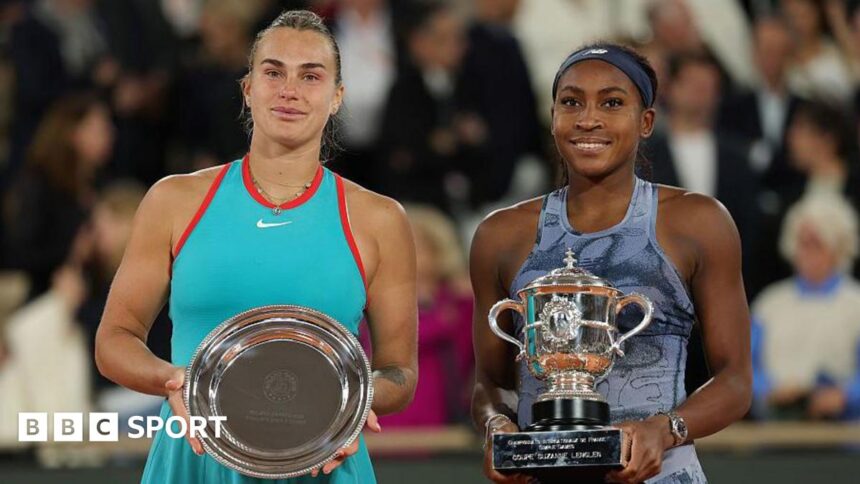
The Grand Slams, as the sport’s most profitable events, are perpetually under the microscope. Players argue they are the central attraction, the reason for billions in broadcast and sponsorship revenue, and deserve a larger share. The French Open’s targeted increase, particularly the near-13% jump for qualifiers, can be seen as a direct, albeit partial, response to this pressure. It’s a recognition that the health of the professional ecosystem depends on the viability of the journeyman player, not just the marketability of the superstars like Coco Gauff, who beat Aryna Sabalenka to become women’s champion at last year’s French Open.
This model contrasts with simply inflating the winner’s cheque. It invests in the foundation of the sport, ensuring more players can afford to continue competing at the highest level, which in turn maintains the depth and quality of the Grand Slam fields themselves.
Analysis: A Strategic Move with Ripple Effects
As a tennis analyst, this prize money distribution feels like a strategically astute, if incremental, step. The FFT is making a statement about values. By bolstering the qualifying and early rounds, they are:
- Improving Career Sustainability: For a player ranked around 150th in the world, a guaranteed ~€87,000 for a first-round appearance can fund a season of travel, coaching, and physiotherapy. This reduces financial desperation and may improve the quality of tennis.
- Validating the Qualifying Gauntlet: The qualifying tournament is a Grand Slam event in its own right, featuring 128 players per gender battling for 16 spots. Awarding it greater respect and remuneration is overdue.
- Preempting Collective Action: With player union talk growing, proactively addressing a key grievance helps maintain a cooperative, rather than adversarial, relationship with the playing corps.
However, the question of welfare benefits contributions remains notably unaddressed. The increase is welcome cash, but it does not create the long-term security structures players are advocating for. It is a raise, not a reform of the underlying model.
Predictions: Will Other Slams Follow Suit?
The French Open has often been a trendsetter in prize money allocation, particularly in its focus on early rounds. This latest move puts subtle pressure on the other Grand Slams—Wimbledon, the Australian Open, and the US Open—to examine their own distribution models. We predict:
- Wimbledon and the US Open will likely announce similar targeted increases for their 2024 events, ensuring they are not seen as lagging on player support. The Australian Open, as the first Slam of the year, will be watched closely in January 2025.
- The debate will now intensify around welfare benefits. Player associations will use this concession on prize money as a stepping stone to push harder for pension and health care contributions, framing it as the next frontier in equitable treatment.
- We may see a more unified player voice on economic issues. Success in one area can galvanize collective action to tackle the next. The increased financial transparency and player advocacy are irreversible trends in the sport.
Conclusion: More Than Just a Paycheck
The 9.5% prize money increase at Roland Garros is more than an annual inflation adjustment. It is a deliberate statement on the value of the collective. While the champions will still earn their place in history and a life-changing sum, the federation has chosen to strengthen the sport’s base. This acknowledges a fundamental truth: the drama of the early-round upset, the heartbreak of the qualifier, and the journey of the hundredth-ranked player are all integral to the narrative of a Grand Slam. By ensuring more participants share meaningfully in the tournament’s commercial success, the FFT is investing in the depth and future of tennis itself. The ball is now in the other Slams’ courts. As the clay season heats up, this financial decision off the court may prove to be one of the most impactful aces of the 2024 French Open.
Source: Based on news from BBC Sport.