From Adoration to Agitation: Messi’s India Tour Erupts in Chaos at Kolkata Stadium
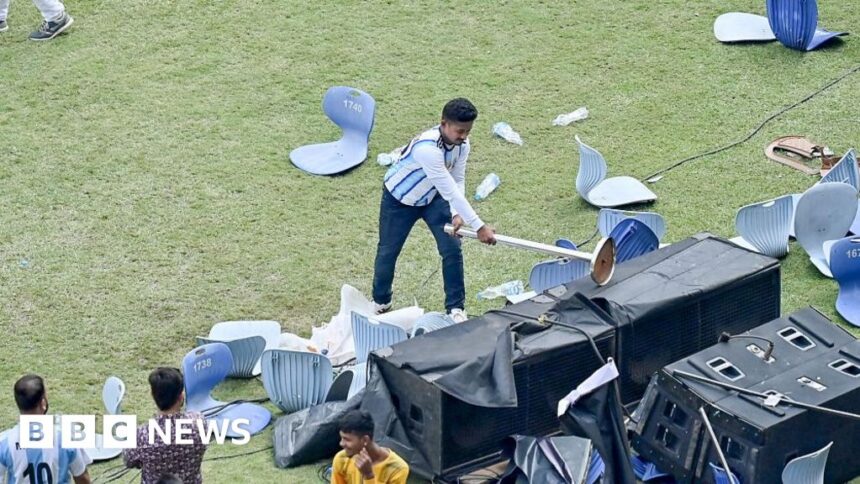
The image of Lionel Messi, the serene maestro of world football, is one of graceful control. The scene at Kolkata’s colossal Salt Lake Stadium this week was anything but. What was billed as a celebratory “GOAT Tour” event for thousands of adoring Indian fans descended into alarming chaos, as frustration boiled over into acts of vandalism and violence, casting a long shadow over the commercial spectacle of global sporting iconography.
A Recipe for Disappointment: The Powder Keg in Salt Lake Stadium
The incident was not a spontaneous outburst but the inevitable result of a profound mismatch between sky-high expectations and a painfully underwhelming reality. Fans, some having traveled great distances and paid a premium—ticket prices soared to 12,000 rupees—for a chance to witness their hero, were presented with a deeply flawed experience. Messi’s appearance was brief, lasting around 20 minutes, and critically, lacked substantive engagement. He was ushered onto the pitch, obscured by a phalanx of officials and local celebrities, for what amounted to a ceremonial walk. The promised “interaction” was nonexistent. For fans who had invested financially and emotionally, this was not an audience with the GOAT; it was a distant, mediated glimpse.
When security then whisked Messi away prematurely, the symbolic rupture was complete. The object of their devotion was removed, and with him, the value of their costly ticket seemed to evaporate. The transition from collective anticipation to collective letdown was swift and potent.
- Premium Pricing for a Peripheral View: Top-tier tickets cost a significant sum for the average Indian fan, creating an immediate expectation of a commensurate experience.
- The Celebrity Buffer Zone: The entourage surrounding Messi physically and metaphorically placed a barrier between the star and his supporters, turning a personal moment into an impersonal spectacle.
- The Abrupt Exit: The early departure was the final catalyst, signaling to the crowd that their presence was merely a backdrop, not the purpose of the event.
Expert Analysis: Beyond Fan Fury, A Systemic Failure
To dismiss this as mere hooliganism is to miss the broader, more troubling narrative. This incident is a case study in the perils of modern sports marketing and event management. The “GOAT Tour” brand itself, while a clever commercial hook, may have inadvertently set a dangerous precedent. It commodifies Messi’s presence into a series of transactional appearances, where fan access is the product being sold. When the product is perceived as defective, the consumer reaction—though unacceptable in its form—is rooted in a sense of betrayal.
West Bengal Chief Minister Mamata Banerjee’s statement of being “deeply disturbed and shocked” underscores the event’s political and social resonance. Stadium events in India are not just sporting occasions; they are massive logistical undertakings with significant security implications. The failure to manage crowd psychology—to accurately set and then meet expectations—is a fundamental operational error.
Furthermore, this exposes a recurring tension in global football’s outreach. These tours are often designed as promotional cash grabs for sponsors and organizers, with the fan experience a secondary concern. The assumption that passionate fans in developing markets will be satisfied with mere proximity is not just arrogant but increasingly volatile. The Indian football fan is sophisticated, digitally connected, and aware of the standards of engagement players offer in other markets.
Predictions: Repercussions and a Reckoning for Celebrity Tours
The fallout from Kolkata will ripple far beyond the stadium’s broken seats. We can anticipate several concrete consequences:
1. Heightened Scrutiny and Security Costs: Future events of this nature in India and similar markets will face stricter regulatory hurdles. Local governments, stung by the embarrassment and potential liability, will demand exhaustive security plans and likely insist on clearer fan experience protocols. This will drive up operational costs for organizers.
2. The “Messi Premium” Faces Devaluation: While Messi’s global appeal is undiminished, the commercial blueprint for his non-playing appearances is now tarnished. Sponsors and event partners for the remaining legs of the India tour and future endeavors will be nervous. They may insist on more contractual guarantees regarding the star’s level of participation and crowd management strategies.
3. A Shift in Fan Power: This event is a stark lesson in collective agency. It demonstrates that fans, even in a context of intense adoration, will not passively accept a substandard product. Organizers worldwide will now have to factor in the potential for reputational and financial damage from poorly executed fan engagement, moving beyond a simple “build it and they will come” mentality.
4. Potential for a Model Reinvention: The era of the quick, low-engagement “fly-in, wave, fly-out” celebrity tour may be closing. To justify high ticket prices and maintain brand safety, future events may need to incorporate more substantive elements: perhaps a short training demonstration, a moderated Q&A, or genuine interactive segments. The value proposition must be transparent and delivered upon.
Conclusion: A Pivotal Moment for Sports Fandom in the Commercial Age
The chairs and bottles hurled in Kolkata’s Salt Lake Stadium were aimed at a void—the space where Lionel Messi had briefly been. But their true target was a broken promise. This incident transcends a single event; it is a powerful symptom of the growing disconnect between the commercial engines of global sport and the beating heart of its support.
For the fans, it was a painful lesson in the economics of modern idolatry. For organizers and sports marketers worldwide, it must serve as a deafening alarm. The unbridled passion of fans in emerging football markets like India is not an inexhaustible resource to be mined without care. It comes with the expectation of respect and reciprocity. The GOAT Tour’s chaotic turn proves that when fans are treated as mere revenue units rather than the lifeblood of the sport, the atmosphere can curdle from adoration to agitation in a heartbeat. The path forward requires a more honest, respectful, and carefully managed compact between the icons of the game and the millions who crown them.
Source: Based on news from BBC Sport.