George Kittle Injury Update: Latest News, Analysis, and Impact After 49ers TE Exits vs. Colts
The San Francisco 49ers’ thrilling “Monday Night Football” victory over the Indianapolis Colts was tempered by a moment of palpable concern that swept through Levi’s Stadium and the 49ers faithful worldwide. Star tight end George Kittle, in the midst of a dominant, season-best performance, exited the game in the third quarter with an apparent injury. The sight of Kittle, visibly frustrated on the sidelines before being ruled out, immediately shifted the focus from a crucial win to the long-term health of the team’s emotional and offensive engine. This article provides the latest updates, expert analysis on the potential impact, and what lies ahead for the 49ers as they navigate this uncertain situation.
The Injury Incident: A Promising Night Cut Short
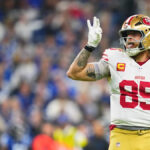
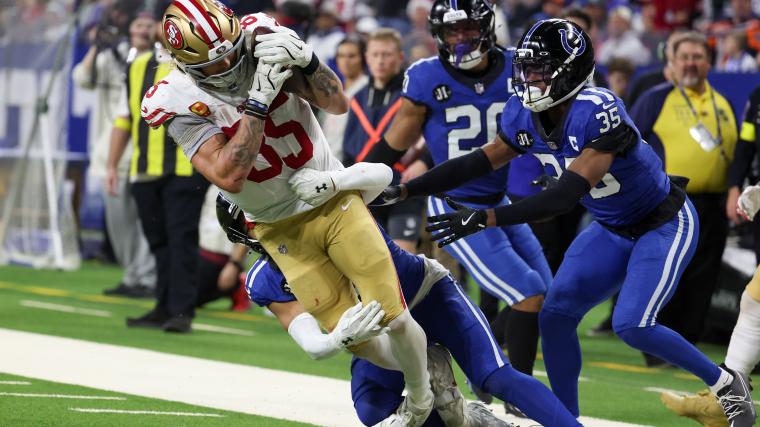
Before the injury, George Kittle was unequivocally the offensive force for the 49ers. He had already amassed over 100 receiving yards and a spectacular touchdown, showcasing the unique blend of power, athleticism, and passion that makes him one of the NFL’s most valuable players. However, on the team’s final drive of the third quarter, Kittle came up limping after a play. While the broadcast did not show a specific, traumatic moment, the aftermath was clear. Kittle was examined by medical staff on the sidelines, expressed clear frustration—slamming his helmet—and was quickly ushered to the blue medical tent before heading to the locker room ahead of his teammates.
The team officially labeled him questionable to return with an ankle injury. He did not see the field again for the remainder of the contest. The timing, with the 49ers clinging to a lead in a must-win game, added to the severity of the moment. Post-game, head coach Kyle Shanahan provided the initial update, stating that Kittle had suffered an ankle sprain and would undergo further imaging on Tuesday to determine the severity.
Breaking Down the Diagnosis and Potential Timelines
The term “ankle sprain” encompasses a wide spectrum of injuries, from minor ligament stretches that sideline a player for a week or two, to high-ankle sprains that can require a multi-week recovery. The immediate reaction from Kittle and the team’s decision to hold him out suggests this was more than a simple tweak.
Key factors that will determine Kittle’s recovery timeline include:
- Grade of the Sprain: MRI results will classify the injury as Grade I (mild), Grade II (moderate with partial tearing), or Grade III (severe, complete tear).
- Specific Ligaments Involved: High-ankle sprains, which affect the ligaments connecting the tibia and fibula, are notoriously slower to heal than common lateral ankle sprains.
- Kittle’s History and Physiology: Known for his relentless work ethic and durability, Kittle’s recovery may be aggressive, but the 49ers have a history of being cautious with star players during the regular season.
Based on historical NFL data for tight ends with ankle sprains, a potential range of absence could be anywhere from 1-2 weeks for a mild issue to 4-6 weeks or more for a significant high-ankle sprain. The coming 48 hours of evaluation will be critical for mapping out his path back to the field.
The Immense Void: What Kittle’s Absence Means for the 49ers Offense
George Kittle is not merely a tight end; he is the identity of the 49ers’ offense. His potential absence creates a multifaceted void that is difficult to fill. Expert analysis points to three primary areas of impact:
1. The Passing Game’s Security Blanket: For quarterback Jimmy Garoppolo, and potentially Trey Lance upon his return, Kittle is the ultimate safety valve. His ability to win in the middle of the field, especially on critical third downs, is irreplaceable. His 100-yard performance against the Colts was a reminder of his game-breaking ability after the catch.
2. The Run Game Engine: Perhaps Kittle’s most underrated contribution is as arguably the best blocking tight end in football. The 49ers’ outside zone running scheme leans heavily on his ability to seal edges and climb to the second level. His absence could directly affect the production of running backs like Christian McCaffrey and Elijah Mitchell.
3. Leadership and Energy: Kittle’s fiery demeanor sets the tone for the entire team. His emotional leadership is a tangible asset, often providing the spark the 49ers need in close games. That intangible element will be missed in the huddle and on the sidelines.
The onus will fall on tight ends Charlie Woerner and Tyler Kroft to step up. Woerner is a capable blocker but offers less in the passing game, while Kroft is a veteran receiver. The scheme may also see increased usage of fullback Kyle Juszczyk and wide receiver Deebo Samuel in hybrid roles to compensate for the lost versatility.
Predictions and Looking Ahead for the 49ers
The immediate future for the 49ers hinges on the MRI results. Given the team’s current position in the NFC playoff race and their upcoming schedule, the approach will be calculated.
- Short-Term Prediction (Next 1-2 Games): It is likely Kittle misses at least the upcoming Week 8 contest. The 49ers will employ a “next man up” committee approach at tight end and likely increase the offensive load on McCaffrey and Samuel. The offensive playbook may be slightly condensed.
- Mid-Term Outlook (Rest of Regular Season): If the injury is a Grade II or higher sprain, the 49ers may consider placing Kittle on Injured Reserve, which would mandate a four-game absence. This would be a strategic move to ensure he is fully healthy for a potential playoff push. The team’s record over that stretch would dictate the urgency of his return.
- Long-Term Forecast (Playoffs): Barring a major surprise, all indications are that George Kittle will be back on the field for any postseason action. The 49ers’ goal will be to manage the season so that their key stars, including Kittle, are peaking in January. This injury, while concerning, may ultimately lead the coaching staff to manage his in-season workload more carefully upon his return.
The silver lining is that the injury occurred before the NFL trade deadline. The 49ers front office, led by John Lynch, now has a clear and pressing need to evaluate the tight end market. While a star of Kittle’s caliber is unavailable, acquiring a reliable veteran pass-catcher or blocker could become a priority to bolster depth.
Conclusion: A Test of Resilience for the 49ers
The injury to George Kittle is a sobering reminder of the fragility of an NFL season. Just as the 49ers appeared to be finding their offensive rhythm, they face the prospect of navigating a critical stretch without their heart and soul. The latest update points to an ankle sprain, with severity yet to be determined. The coming days will reveal the true challenge ahead for Kyle Shanahan and his staff.
However, if there is a team built to withstand such a blow, it is the San Francisco 49ers. Their roster is constructed with depth and versatility in mind. This moment represents an opportunity for other players to rise and for the coaching staff to demonstrate its ingenuity. The path to the playoffs just became more arduous, but Kittle’s spirit of relentless effort will be the standard as the team pushes forward. His health remains the single biggest variable in the 49ers’ quest to return to the Super Bowl, and all eyes will be on the next update from the team’s facility.
Source: Based on news from Yahoo Sports.