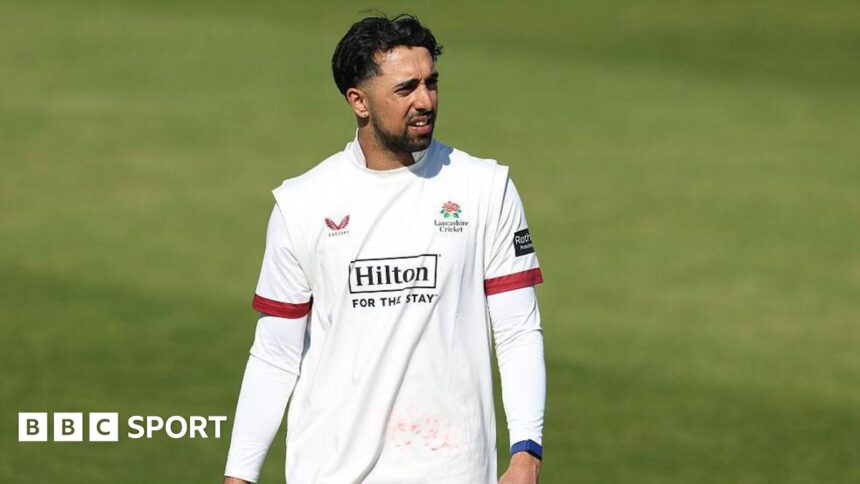
Lancashire Left Baffled by ‘Bizarre’ County Championship Injury Ruling
The County Championship, steeped in over 130 years of tradition, is no stranger to complex regulations. Yet, a single incident at the Seat Unique Stadium in Bristol has thrust one of its most contentious rules back into the spotlight, leaving Lancashire’s coaching staff bewildered and reigniting a fierce debate about competitive fairness and common sense. The crux of the issue? A seemingly straightforward request to replace an injured player that was denied on grounds that have been labelled “confusing” and “bizarre.”
The drama unfolded on the field against Gloucestershire. Ajeet Singh Dale, the seamer who had just joined Lancashire on a three-year deal from his former club, was bowling only his second over of the day when he pulled up with a hamstring injury. Faced with a depleted attack, Lancashire’s management looked to their bench, where experienced right-arm fast bowler Tom Bailey was present in the matchday squad. Logic dictated he would be the like-for-like replacement. The ECB’s regulations, however, had a different interpretation, leading to a decision that could have significant ramifications for the Red Rose’s season.
The Rulebook vs. The Obvious Choice: A Clash of Logic
At the heart of the controversy lies the ECB’s injury replacement protocol for the County Championship. The rule is designed to prevent teams from gaining an unfair advantage by swapping out a novice for a seasoned pro under the guise of injury. To be approved, a replacement must be deemed a “like-for-like” cricketer in terms of role, style, and, crucially, first-class experience.
Lancashire’s request was simple: replace the injured right-arm fast-medium bowler (Singh Dale) with the available right-arm fast-medium bowler (Tom Bailey). On paper, a perfect match. However, the ECB’s cricket department rejected the submission. Their reasoning? Tom Bailey’s vastly superior record and experience made him not a like-for-like replacement, but an upgrade.
Steven Croft, Lancashire’s head coach, did not hide his frustration. “We asked for Tom Bailey, who was with us, but that was turned down on experience,” he stated. “The ruling is that it’s not a like-for-like replacement, which we find bizarre because they’re both right-arm seam bowlers. It’s a confusing rule.”
Instead, the ECB approved the call-up of Ollie Sutton, a 20-year-old all-rounder who bowls left-arm seam, from the Second XI. While a promising talent, Sutton’s first-class experience is minimal, and his bowling style is fundamentally different. The ruling, therefore, created an ironic situation: Lancashire was forced to field a bowler who was less “like-for-like” in style because he was deemed more “like-for-like” in experience.
Historical Context: A Recurring Championship Headache
This is not an isolated incident. The County Championship replacement rules have been a point of friction for several seasons, creating headaches for coaches and administrators alike. The subjective nature of the “like-for-like” assessment often leads to inconsistencies and perceived injustices.
- The Precedent: Similar cases have arisen where teams have seen logical replacements blocked, often hinging on nuanced comparisons of bowling actions, batting positions, or career statistics.
- The Competitive Balance Argument: The ECB’s intent is noble—to preserve the sport’s integrity by ensuring the team that starts the match is largely the one that finishes it. It aims to stop tactical “injuries” to freshen up a bowling attack.
- The Practical Reality: As Croft’s reaction highlights, the practical application can undermine a team’s strategy and penalize them for an authentic, unfortunate injury. It raises a critical question: should a team be weakened twice—first by the injury, and second by the replacement ruling?
The incident exposes the difficulty in legislating for every scenario in a sport with so many variables. Where does one draw the line on experience? Is a 50-match veteran really an unfair swap for a 30-match player? The lack of clear, quantifiable thresholds leaves the rule open to interpretation and dispute.
Immediate Fallout and Strategic Implications for Lancashire
The immediate impact on Lancashire’s match against Gloucestershire was tangible. Losing Singh Dale was a blow; being denied Bailey, a proven wicket-taker and workhorse, was a double setback. Ollie Sutton, thrust into a high-pressure situation, faced the challenge of containing a batting side that had not planned for his left-arm angle.
Beyond this match, the ruling forces Lancashire and other counties to reconsider their squad selection strategy.
- Bench Composition: Do teams now need to carry a “like-for-like” backup for every key player in terms of experience profile? This is a practical and financial improbability.
- Risk Management: It places a higher premium on durability and may discourage selecting players with minor fitness concerns, even if they are the best option.
- Youth Development: While it gives a chance to youngsters like Sutton, it does so in a pressured, reactive context rather than a planned, supportive one.
For Steven Croft and Director of Cricket Mark Chilton, the task is to navigate these regulations while maintaining a competitive squad. The confusion sows uncertainty, an unwelcome distraction in the gruelling Championship campaign.
Expert Analysis: Time for a Rule Rethink?
From a strategic and fairness perspective, the current rule appears flawed. Its well-intentioned rigidity fails the test of real-world application. The goal should be to minimize the distortion caused by an injury, not exacerbate it. Denying a team the most logical replacement from its existing squad actively alters the competitive balance the rule seeks to protect.
A potential solution could involve a more flexible approval system. For instance:
- Tiered Experience Brackets: Defining clear experience brackets (e.g., 0-15 matches, 16-50 matches, 50+) could remove subjectivity.
- Match Squad Exemption: A player already named in the 11 or 12-man matchday squad could be automatically eligible as a replacement, as they were already considered part of the match.
- Independent Panel Review: Implementing a faster, match-day panel with former players and coaches could make more nuanced, credible decisions.
Ultimately, the spirit of the game is about contest between the best available players. When a genuine injury occurs, the rules should facilitate a fair contest, not hinder it. The Lancashire case demonstrates that the current process can do the opposite.
Conclusion: A Bizarre Decision with Lasting Repercussions
The image of Ajeet Singh Dale walking off injured, followed by the bureaucratic denial of Tom Bailey, will linger long in the memory at Emirates Old Trafford. It is a stark illustration of when regulations conflict with rationality. Lancashire’s confusion is entirely justified; they followed the logical path only to be told the rulebook had a different destination in mind.
This incident is more than a minor administrative hiccup. It is a catalyst for change. As the 2024 season progresses, the pressure will mount on the ECB to review and clarify its injury replacement protocol. The aim must be to create a system that safeguards integrity without punishing misfortune, that is clear to all and fair to the team struck by injury. Until then, counties will continue to play not just against the opposition, but against the fear of a “bizarre” ruling that could undermine their campaign in the blink of a hamstring strain. The Championship deserves a rule that supports its unparalleled drama, not one that unintentionally becomes the headline.
Source: Based on news from BBC Sport.