Glasgow Warriors Seize Control of 1872 Cup with Commanding Hampden Victory
Under the iconic Hampden Park arch, the Glasgow Warriors delivered a statement of intent that reverberated far beyond the famous old ground. In a fiercely contested first leg of the 1872 Cup, Franco Smith’s side not only secured a precious 26-12 victory over arch-rivals Edinburgh but did so with a crucial bonus point, placing one hand firmly on the historic trophy for a fourth consecutive season. This was more than a derby win; it was a tactical masterclass in pressure, patience, and ultimately, precision, setting up a tantalising return fixture at Murrayfield.
Hampden Hosts a Tale of Two Halves
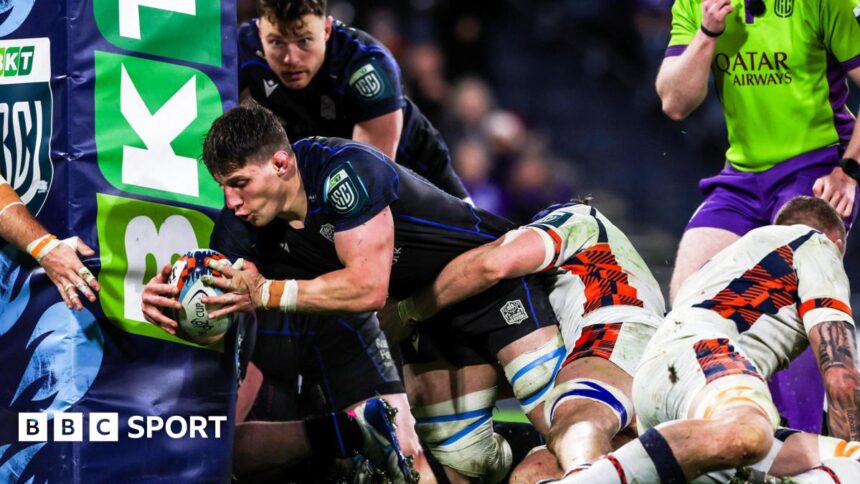
The unique setting of Scottish football’s national stadium provided a grand stage for this inter-city clash, and the opening 40 minutes were a tense, brutal arm-wrestle. Glasgow’s territorial dominance was evident from the outset, with their powerful pack laying a formidable platform. The pressure told early as number eight Matt Fagerson burrowed over from close range, a just reward for the Warriors’ early ascendancy. However, Edinburgh, showcasing the resilience that has defined their season, struck back against the run of play. A well-executed lineout drive was finished by flanker Dylan Richardson, silencing the home crowd and ensuring the visitors stayed firmly in the contest at 7-5 as the half-time whistle blew.
Despite the narrow lead, the narrative was clear. Glasgow had the lion’s share of possession and territory but were being met with ferocious Edinburgh defence. The question was whether the Warriors could convert their control into a more commanding scoreline, or if Edinburgh’s streetwise pragmatism would steal the initiative.
Warriors’ Second-Hour Surge Seals the Deal
Any doubts about Glasgow’s ability to finish were emphatically dispelled in a blistering second-half performance. The floodgates opened, and the tries flowed as the Warriors’ multi-phase attacking structure finally broke Edinburgh’s resistance. The turning point came from captain Rory Darge, whose relentless work-rate was rewarded with a try, showcasing the leadership and dynamism that makes him so pivotal. From there, Glasgow shifted through the gears.
The introduction of impact players from the bench proved decisive. Young hooker Gregor Hiddleston announced himself on the derby stage with a powerful finish, before centre Seb Stephen put the gloss on the performance, slicing through for the all-important bonus-point try. While Edinburgh captain Grant Gilchrist crashed over for a late consolation, it did little to dampen the home celebrations. The clinical nature of Glasgow’s second-half display was the defining difference.
- Key Turning Point: Rory Darge’s try shortly after half-time, extending the lead to two scores and shifting momentum irrevocably.
- Impact Substitutes: Glasgow’s bench, particularly Hiddleston, provided fresh impetus that a tiring Edinburgh defence could not contain.
- Set-Piece Foundation: A dominant scrum and reliable lineout gave Glasgow the platform to launch their attacking waves.
Expert Analysis: Where the Battle Was Won and Lost
Tactically, this was a victory forged at the breakdown and through relentless phase play. Glasgow’s ability to recycle quick ball, spearheaded by the outstanding Darge and Fagerson, stretched Edinburgh’s defensive line to breaking point. The Warriors’ defensive line speed, orchestrated by coach Smith, consistently forced Edinburgh into errors and turnovers, starving their dangerous back three of meaningful possession.
For Edinburgh, the struggle at the gain-line was telling. Their usually robust defence was asked to make an extraordinary number of tackles, and the dam eventually burst. While Richardson and Gilchrist provided moments of fight, the team lacked the sustained attacking fluency to truly trouble a well-organised Glasgow. The absence of a consistent territorial kicking game also meant they spent large portions of the match camped in their own half, a draining proposition against a side of Glasgow’s calibre.
Player of the Match honours rightly went to Rory Darge. His performance was a textbook example of modern openside play: a menace at the breakdown, a tireless tackler, and a crucial link man in attack, capped with a vital try.
The Road to Murrayfield: Predictions for the Second Leg
This result sets up a monumental second leg at Murrayfield. Glasgow now carry a 14-point advantage, meaning Edinburgh face a Herculean task. Sean Everitt’s men must not only win, but win by 15 points or more while also denying Glasgow a losing bonus point to reclaim the Cup. This forces Edinburgh into a high-risk, high-tempo approach from the first minute.
Expect Edinburgh to come out with fire and fury, leveraging a passionate home crowd. They will need to be vastly improved at the set-piece and find a way to unleash their strike runners like Duhan van der Merwe early and often. For Glasgow, the strategy is clearer. Their game management will be paramount. They possess the luxury of playing the scoreboard, focusing on defensive solidity, tactical kicking, and capitalising on any Edinburgh frustration with counter-attacks. The psychological edge is firmly with the Warriors.
Conclusion: A Statement Made, A Trophy Within Reach
Glasgow Warriors’ bonus-point victory at Hampden was a comprehensive and intelligent derby performance. They weathered a first-half storm of their own making, then accelerated away with a display of power and potency that Edinburgh simply could not match. The 1872 Cup is now Glasgow’s to lose. While the fierce rivalry guarantees a ferocious battle at Murrayfield, the Warriors have placed themselves in an immensely powerful position. They have shown the maturity of champions, turning dominance into points, and in doing so, have taken a potentially decisive stride towards cementing their recent supremacy in this historic Scottish rivalry. The final chapter awaits, but the pen is firmly in Glasgow’s hand.
Source: Based on news from BBC Sport.