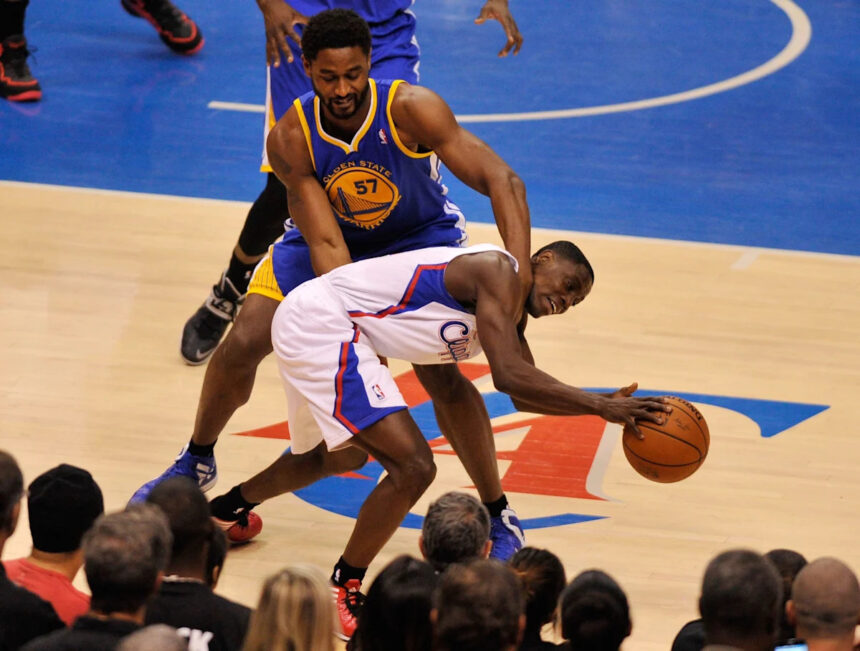
The Unlikely Legacy of No. 57: Hilton Armstrong’s Brief Stint with the Golden State Warriors
In the vast, star-studded tapestry of the Golden State Warriors franchise, a history spanning over 75 years and more than 600 players, certain jersey numbers resonate with deafening legacy. Others whisper. The number 57, a digit rarely seen on an NBA hardwood, falls firmly into the latter category. It belongs not to a dynasty architect or a Hall-of-Fame scorer, but to a journeyman whose tenure in the Bay Area was a brief, final footnote in a professional career. This is the story of Hilton Armstrong, the only Warrior to ever wear No. 57, and how his single season in 2013-14 encapsulates the often-overlooked human journeys that exist in the shadows of a dynasty’s dawn.
A Number Unworn: The Rarity of 57 in Warriors Lore
Before Hilton Armstrong arrived, the number 57 was a blank slate in Warriors history. Unlike iconic digits like 13, 30, or 00, it carried no baggage, no previous hero or villain to define it. In the context of the Warriors jersey history, it was an outlier. High numbers in the 50s are uncommon in the NBA, often reserved for training camp invites, late-season signings, or players seeking a unique identity. For Armstrong, joining the Warriors in September 2013 after stints with six other NBA teams and overseas play, it may have simply been an available number. Yet, its selection inadvertently positioned him in a unique niche: the sole occupant of a numerical island in one of the league’s most historic franchises. This rarity, against the backdrop of the team’s rich and storied history from Philadelphia to San Francisco, makes his story a fascinating deep cut for any true historian of the game.
From UConn Champion to NBA Journeyman: The Path to the Bay
Hilton Armstrong’s journey to the Bay was not that of a can’t-miss prospect finding a home, but of a basketball survivor adapting to the league’s relentless churn. A key part of the 2004 UConn Huskies national championship team, Armstrong developed into a defensive force by his senior year, leading to his selection 12th overall by the New Orleans/Oklahoma City Hornets in the 2006 NBA Draft. Standing 6-foot-11 with a 7-foot-4 wingspan, he possessed the prototypical frame of an NBA big man. His early years in New Orleans showed flashes—a capable shot-blocker and finisher around the rim. However, as the game evolved and his role failed to solidify, Armstrong began a nomadic trek across the league. Stops in Sacramento, Houston, Washington, and Atlanta were often brief. He played in France and the Dominican Republic, fighting to extend his career. When the Warriors called in 2013, it was an opportunity to latch on with a promising, young team on the rise, a chance to contribute veteran depth behind a burgeoning frontcourt.
The 2013-14 Season: A Glimpse of a Dynasty’s Infancy
Armstrong’s lone season with the Warriors, the 2013-14 NBA season, is a fascinating historical pivot point. This was the year before the championship explosion. Stephen Curry and Klay Thompson were ascending stars, and Draymond Green was a energetic second-year player. Mark Jackson was the head coach. The team won 51 games, a sign of coming glory, but fell in a thrilling seven-game first-round playoff series to the Los Angeles Clippers. Armstrong’s on-court role was minimal. He appeared in just 15 games for the Warriors, averaging 1.0 points and 1.5 rebounds in limited minutes. He was a practice player, a veteran voice, and an insurance policy. His most notable statistical contribution might be that he committed 10 personal fouls across those 15 games—a rate that humorously underscored his “enforcer” role in mop-up duty. In March, he was waived to open a roster spot. While his individual statistics fade into obscurity, his presence is a timestamp. He was there in the final season before Steve Kerr, before the championships, a part of the bridge from a promising team to a legendary one.
Expert Analysis: The Value of the “Last Man”
From a roster construction and historical perspective, players like Hilton Armstrong are essential, if unsung. Every dynasty has them—the end-of-bench veterans who fill out practice, provide maturity, and accept limited roles without friction. In 2013-14, the Warriors’ identity was crystallizing around pace, space, and shooting. Armstrong, a traditional, defensive-minded center, was a stylistic remnant of a bygone era. His signing represented a pragmatic approach by the front office: add low-cost, experienced size. While he did not play a pivotal on-court role, his professional career and journey likely held value in a young locker room. He embodied the fragility and privilege of an NBA life, a lesson for players fighting for their own longevity. In the grand narrative, Armstrong’s No. 57 is a testament to the complete ecosystem of an NBA team, where not every number is destined for the rafters, but every wearer contributes to the culture in some small, often invisible way.
- Unique Distinction: Hilton Armstrong remains the only player in Golden State Warriors history to wear jersey number 57.
- Career Bookend: His time with the Warriors constituted the final season of his seven-year NBA career.
- Historical Snapshot: He was on the roster during the pivotal 2013-14 season, the last campaign before the franchise’s championship era began.
- Journeyman Path: Armstrong played for 7 NBA teams, including the Hornets, Kings, Rockets, Wizards, Hawks, and Warriors, after being a lottery pick in 2006.
Prediction: The Permanent Legacy of No. 57
What does the future hold for the number 57 with the Warriors? It is likely to remain one of the franchise’s most enduring curiosities. In an era where players occasionally choose high numbers for personal significance, it could be worn again. However, its association—or lack thereof—with a single, fleeting season from a decade ago makes it an unlikely target. It will probably continue to be a rare jersey number, a piece of trivia for the most dedicated fans. Should it ever be issued again, it will instantly invoke the question: “Who wore that before?” And the answer will be a snapshot of a specific time and place: Hilton Armstrong, 2013-14, the calm before a historic storm. In that way, Armstrong and his number are forever linked to a moment of transition, making them a permanent, if small, part of the Warriors’ architectural blueprint.
The Golden State Warriors jersey history is a narrative told in numbers. Some, like 30 and 11, tell epic tales of revolution and triumph. Others, like 57, tell a quieter, human story. Hilton Armstrong’s path from UConn champion to NBA journeyman, culminating in his final stop in Oakland, is a reminder that a franchise’s legacy is built not only by its superstars but by every individual who passes through. His No. 57 jersey, hanging in the numerical closet of Warriors lore, is a symbol of perseverance, the end of one man’s dream, and the unassuming prelude to a dynasty’s beginning. It is a number that whispers, and in that whisper, you can hear the full, complex, and deeply human story of the NBA.
Source: Based on news from Yahoo Sports.