Tiger Woods Arrested on DUI Charge: A Stunning Turn in a Legend’s Comeback Saga
The narrative of Tiger Woods has always been one of soaring triumph and devastating setback, a modern epic written on the fairways of the world. Yet, the latest chapter unfolded not on the back nine of a major, but on a quiet Florida road. On March 27, the golfing icon was arrested on a charge of driving under the influence after a single-vehicle crash near his Jupiter Island home, sending shockwaves through the sports world and casting a long shadow over his arduous physical and professional comeback.
The Incident: A Harrowing Crash and a Sobering Arrest
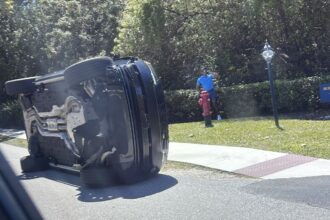
According to the Martin County Sheriff’s Office, the incident occurred on Friday afternoon. Tiger Woods, driving his Land Rover, was overtaking a work truck pulling a trailer at high speed when he clipped the back of it. The impact caused his vehicle to roll onto its driver’s side on the two-lane road.
In a testament to both fortune and resilience, the 15-time major champion managed to crawl out of the passenger door before deputies arrived. Sheriff John Budensiek detailed the sequence at a press conference, noting the remarkable absence of serious injury to Woods or the other driver. However, the situation escalated upon interaction with law enforcement.
Key details from the arrest report paint a complex picture:
- No Alcohol Detected: A breathalyzer test administered at Martin County Jail showed no trace of alcohol.
- Suspected Chemical Impairment: Investigators concluded his impairment was likely related to prescription medication or other drugs.
- Refusal of Urine Test: Woods refused to submit to a urine test, an act that carries its own separate charge under Florida law.
- Standard Release: He was released later that Friday after fulfilling Florida’s mandatory eight-hour hold following a DUI booking.
This combination of factors—a serious crash, evidence of impairment without alcohol, and the refusal of further testing—transforms this from a simple traffic accident into a significant legal and personal predicament for Woods.
Expert Analysis: The Legal Labyrinth and Legacy Implications
To understand the gravity, we must separate the golf legend Tiger Woods from the individual facing DUI charges. Legally, this presents a multifaceted challenge. Florida’s DUI statutes are broad, encompassing impairment by any chemical substance, not just alcohol. The absence of a breathalyzer reading for alcohol is legally irrelevant if other evidence of impairment exists.
“The refusal of the urine test is a critical element,” notes a legal analyst specializing in Florida DUI cases. “While it invokes the driver’s right to not self-incriminate, it also triggers an automatic administrative suspension of his driver’s license and allows the prosecution to argue consciousness of guilt. The officers’ observations at the scene will be paramount.”
For Woods’ legacy, the analysis is more nuanced. This incident is starkly different from his 2017 DUI arrest, which involved a found-asleep-at-the-wheel scenario and a publicly released dashcam video showing profound disorientation. That event was a catalyst for his subsequent back surgery and a public acknowledgment of his dependency on pain medication.
This time, the context is a man in the midst of a physically grueling return to competition following a catastrophic 2021 car accident that nearly cost him his leg. The public sympathy reservoir for Woods is deep, but not bottomless. The central question becomes: is this a tragic relapse in pain management, a terrible misjudgment while on prescribed medication, or something else? The prescription medication dilemma for athletes with chronic pain is a pervasive and poorly understood issue, and Woods is now its most famous current case study.
The Road Ahead: Predictions for Career, Endorsements, and Recovery
Predicting the fallout requires examining three distinct lanes: his golf career, his commercial empire, and his personal recovery.
For his playing future, the immediate impact is likely minimal in a practical sense. His tournament schedule is already severely limited by his physical capabilities. The greater threat is to his focus and the narrative of his comeback. Every press conference will now carry this weight. However, if his physical rehab continues apace, the golf world has shown a profound capacity to welcome him back. The sport, and its fans, have a vested interest in the redemption arc.
Regarding endorsements, the landscape has permanently shifted since his earlier scandals. His portfolio is now leaner and built around long-term partners like Nike and Monster Energy, who have weathered previous storms. “Modern endorsement deals have robust morality clauses, but they also have crisis management playbooks,” states a sports marketing executive. “Partners will take a ‘wait-and-see’ approach, gauging the legal outcome and the public’s reaction. His core brand is now about unyielding resilience and comeback, not infallibility. This tests that narrative, but doesn’t necessarily break it.”
The most critical prediction involves his personal health and legal strategy. We can expect a carefully managed response, likely channeled through his team. A potential path could involve:
- Seeking a plea deal to a lesser charge like reckless driving.
- Voluntarily entering a program for substance management or education.
- A public statement framing the incident within his ongoing battle with pain and the challenges of medication.
Conclusion: Another Crossroad for the Ultimate Competitor
The image of Tiger Woods, crawling from the wreckage of a rolled vehicle, is a metaphor that writes itself. He has spent the last two years performing the superhuman task of rebuilding his body to walk a golf course again. Now, he faces the equally daunting task of navigating a legal and reputational crisis that threatens to undermine that very effort.
This arrest is more than a tabloid headline; it is a stark reminder of the human being behind the legend. It highlights the brutal, lingering aftermath of injuries that the public sees only as a slight limp on TV. The Florida DUI charge introduces a dangerous variable into the already precarious equation of his future.
Tiger Woods’ story was already one of the greatest comebacks in sports history. Now, it has taken another tortuous turn. His ability to compete on golf’s biggest stages has always been a question of physical capability. His ability to navigate this latest trial will be a test of a different kind of strength—one that will define the next chapter of his legacy, not as a golfer, but as a man fighting his way back, once again, from the brink.
Source: Based on news from Yahoo Sports.