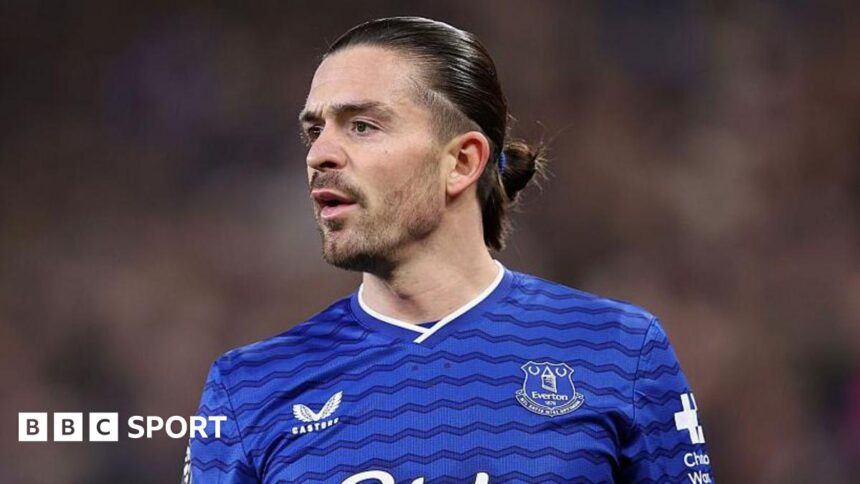
Grealish’s Everton Loan Spell Ends in Agony: Season Over, World Cup Dream in Doubt
In a devastating blow to player, club, and country, Everton manager David Moyes has confirmed that Jack Grealish is expected to miss the remainder of the season and faces surgery on a persistent foot injury. The diagnosis, a stress fracture, not only curtails the 30-year-old’s impactful loan spell at Goodison Park but also casts a long, dark shadow over his fading hopes of representing England at this summer’s World Cup. This cruel twist of fate marks a dramatic and painful downturn in Grealish’s quest to revive his career on Merseyside, leaving a complex web of repercussions in its wake.
A Loan Rebirth Cut Short: Grealish’s Everton Impact
When Jack Grealish swapped the treble-winning heights of Manchester City for the blue-collar grit of Everton last August, it was a move framed as a footballing resurrection. After a period of stagnation at the Etihad, the mercurial winger needed minutes, a central role, and the adoration of a fanbase. For a time, under David Moyes, he found it.
Grealish’s 22 appearances for the Toffees were a reminder of the unique talent that once made him the Premier League’s most expensive British player. His direct running, ball-carrying ability, and knack for winning fouls in dangerous areas brought a different dimension to Everton’s attack. The statistics—two goals and six assists—only tell part of the story; his presence often lifted the entire team and galvanized the Goodison Park crowd.
His season, however, has been punctuated by fitness issues. This latest setback, a stress fracture in his foot, is understood to be an injury he has been managing for some time. The decision to now opt for surgery indicates the problem has reached a point where conservative treatment is no longer viable. “He probably needs an operation,” Moyes stated, his tone resigned. “It looks like he’ll be out for the season, which is a big blow to us.”
Domino Effect: The Crushing Consequences for Club and Country
The ramifications of this news extend far beyond the treatment room at Finch Farm. For all parties involved, the timing could scarcely be worse.
For Everton: Losing their creative talisman for the final, crucial months of the season is a severe handicap. In a campaign where they have flirted with both European qualification and relegation worry, Grealish was their game-changer. His absence forces a tactical reshuffle and places immense creative burden on others in a squad not overflowing with his specific flair.
For England: This is the most poignant blow. The 2026 World Cup squad selection looms this summer, and Grealish, a favorite of Gareth Southgate in past tournaments, now faces a desperate race against time. Even with a successful operation, the recovery and rehabilitation period for a stress fracture is measured in months, not weeks. Regaining match fitness and sharpness in time to convince Southgate seems a near-impossible task.
Key impacts include:
- World Cup Dream in Jeopardy: England’s wide attacking positions are fiercely competitive. Months on the sidelines effectively cedes ground to rivals like Marcus Rashford, Phil Foden, Bukayo Saka, and Cole Palmer.
- Manchester City’s Planning: Grealish’s parent club now faces an uncertain summer. A player returning from major surgery is not an attractive proposition in the transfer market, potentially complicating any plans to sell.
- Everton’s Future Ambitions: The loan was a proving ground. A successful spell could have led to a permanent deal. Now, his Everton future, and indeed his next career move, is shrouded in medical uncertainty.
Expert Analysis: The Anatomy of a Setback
From a medical and sporting perspective, Grealish’s situation is a classic and tragic case of a player caught between immediate competitive demands and long-term physical welfare. Stress fractures are overuse injuries, often the result of cumulative strain. The fact Grealish was playing through discomfort suggests a calculated risk was taken by both player and club—a risk that has now backfired catastrophically.
“The management of these injuries is a tightrope,” explains a leading sports physiotherapist we consulted. “You can often manage the load and play through with intensive care, but there’s a tipping point. The need for surgery indicates the bone has reached a stage where it cannot heal adequately without intervention. The timeline for return to elite sport is significant, typically a minimum of 3-4 months post-op before even considering contact.”
Tactically, David Moyes must now find a solution. He may look to the industrious Dwight McNeil to provide width, or shift to a more central-based system utilizing the likes of James Garner and Abdoulaye Doucouré. What he cannot replace is Grealish’s unique ability to draw multiple defenders and create chaos—a weapon now holstered for the season.
Looking Ahead: Predictions for Grealish and Everton’s Final Act
As the dust settles on this grim news, the path forward is fraught with challenge and uncertainty.
For Jack Grealish: The immediate focus is surgery and a dedicated rehabilitation. At 30, this is the most significant injury of his career. His mentality during this period will be crucial. The World Cup, while not officially ruled out, appears a distant dream. A more realistic target will be a full pre-season, whether that be at Manchester City, Everton, or elsewhere. This injury sadly places a question mark over the peak years of a player defined by his athleticism and dribbling.
For Everton: The final months of the season become a tougher proposition. The “Grealish effect”—both in points earned and morale boosted—is gone. Moyes’s managerial acumen will be tested to its fullest to secure a respectable league finish. In the summer, the club’s recruitment strategy must now account for the high probability that they will not be able to retain their star loanee, at least not in a condition to start the new campaign.
The broader prediction is one of a crossroads. This injury feels like a pivotal moment that could define the twilight of Grealish’s career. Will he return with the same explosive, fearless style? Or will he be forced to adapt his game, relying more on guile than gait?
Conclusion: A Story of What Might Have Been
Jack Grealish’s loan to Everton was a narrative rich with potential: the prodigal talent seeking solace, the historic club providing a stage, and a symbiotic relationship that promised fireworks. For stretches, it delivered. But football, in its relentless cruelty, has rewritten the final chapters with a surgeon’s scalpel and a prolonged spell on the sidelines.
The image of Grealish, sleeves rolled up, driving at Premier League defenses in the famous blue shirt, is now frozen in time. His season is over, his World Cup hopes are hanging by a thread, and his future is clouded. For Everton, the dream of a full season guided by his magic is shattered, forcing a recalculation of their ambitions. This is more than an injury update; it is a stark reminder of the fragility of a footballer’s career and the dreams that rest on the strength of a single bone. The comeback, when it comes, will be one of the most closely watched in the game.
Source: Based on news from BBC Sport.