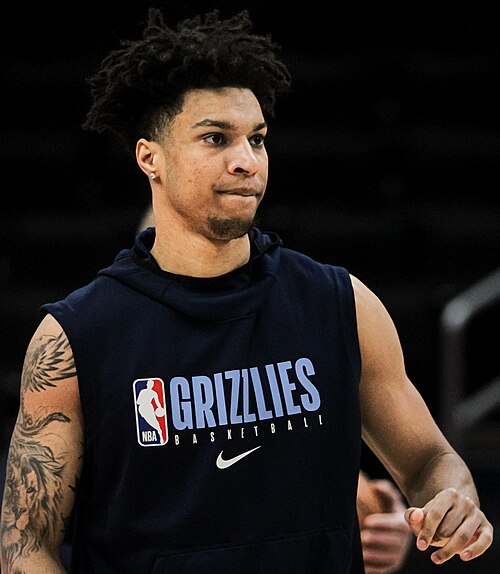
Memphis Grizzlies’ Brandon Clarke Faces Legal Crossroads After Arkansas Arrest
The Memphis Grizzlies’ arduous offseason took another unexpected and troubling turn this week. Forward Brandon Clarke, a key rotational piece for the perennial Western Conference contenders, was arrested Wednesday in Arkansas on multiple charges, including possession of a controlled substance and speeding. This incident casts a shadow over both the player’s personal standing and the franchise’s delicate rebuilding phase, raising immediate questions about discipline, team culture, and on-court ramifications for the upcoming NBA season.
The Incident: Unpacking the Arkansas Charges
According to official records from the Washington County Sheriff’s Office, Clarke was pulled over for a traffic violation. The routine stop escalated when the arresting officer allegedly discovered more than just a lead foot. The specific charges filed against the 27-year-old NBA professional are:
- Speeding – A common traffic infraction that served as the catalyst for the stop.
- Possession of a Controlled Substance – A more serious allegation that shifts the incident from a simple citation to a criminal matter.
- Additional minor charges related to the stop.
While the exact nature and quantity of the controlled substance have not been publicly disclosed by authorities, the charge itself carries significant weight. Clarke was processed and later released on bond, but the legal process is only just beginning. His court date and the potential for further legal repercussions, including possible suspension under the NBA’s collective bargaining agreement, are now central to the story.
Team and League Response: Navigating the Fallout
The Memphis Grizzlies organization issued a brief, standard statement acknowledging they are “aware of the situation involving Brandon Clarke” and that they are “gathering more information.” This cautious, no-comment approach is typical in the immediate aftermath of a player’s legal issue, as teams must balance public relations, legal advice, and the requirements of the league.
More definitive action will come from the NBA league office. Commissioner Adam Silver has historically taken a firm stance on substance abuse issues, though the league’s focus in recent years has shifted toward treatment and support for players struggling with mental health and addiction. However, the NBA’s Collective Bargaining Agreement (CBA) has clear stipulations. Players convicted of or pleading guilty to drug-related offenses face mandatory suspensions, typically without pay. The length is often at the commissioner’s discretion, considering the specifics of the case and the substance involved.
For the Grizzlies, this is a destabilizing blow. The franchise has meticulously built a core around All-Star guard Ja Morant, who himself served a 25-game suspension last season for conduct detrimental to the league related to firearm displays on social media. The team’s “Grit and Grind” identity is being tested by off-court decisions, challenging the culture Head Coach Taylor Jenkins and the front office have worked to establish.
Brandon Clarke’s Career at a Critical Juncture
Analyzing Clarke’s career trajectory makes this incident particularly untimely. The 6’8″ forward, known for his explosive athleticism and efficient finishing around the rim, was coming off a lost season. He missed virtually the entire 2023-24 campaign recovering from a devastating Achilles tendon tear suffered in March 2023. His rehabilitation was reportedly on track, and he was a projected vital piece for a Grizzlies team expecting to reintegrate Ja Morant and compete for a top playoff seed.
Clarke’s value is undeniable. He is a career 59% shooter from the field, a relentless offensive rebounder, and a versatile defender. Before his injury, he was a frontrunner for the Sixth Man of the Year award. Now, his return to the court is clouded not by physical rehabilitation, but by legal and professional uncertainty. This arrest introduces a new variable that could delay his basketball return, disrupt his conditioning and rhythm, and damage the trust he has built with the organization that awarded him a 4-year, $52 million extension in 2022.
From a team construction perspective, Clarke’s absence—whether due to suspension or distracted preparation—creates a rotation hole. The Grizzlies rely on his energy off the bench. His potential unavailability puts more pressure on players like Xavier Tillman Sr., Santi Aldama, and rookie Zach Edey to fill the void, altering the team’s frontcourt dynamics before a single preseason game is played.
Predictions and Potential Outcomes for Clarke and the Grizzlies
The path forward is fraught with “what-ifs,” but several likely scenarios are emerging based on precedent and the known facts.
Legal Resolution: Clarke’s legal team will likely seek a swift resolution, potentially through a plea deal to lesser charges. The outcome here directly dictates the NBA’s response. A dismissal or reduction of the drug charge would significantly lessen the league’s disciplinary action.
NBA Suspension: A suspension at the start of the 2024-25 season seems probable if the controlled substance charge is upheld. Historical precedent suggests a suspension in the range of 5-25 games, heavily dependent on the substance classification and circumstances. This punishment would be separate from any team-imposed fines or benchmarks.
Organizational Impact: Internally, the Grizzlies are likely to mandate Clarke into league-approved counseling or educational programs. The franchise cannot afford another protracted distraction. They will handle this with a mix of support for the individual and stern, clear expectations for professional conduct. The patience of a fanbase weary of off-court drama is not infinite.
Long-term Career Effect: For Clarke, this is a pivotal moment. A one-time incident, properly addressed, can be overcome. Players like Michael Beasley and J.R. Smith had legal missteps but continued long careers. However, it becomes a defining part of his narrative if it leads to further issues or a decline in on-court performance. His next steps—taking accountability, demonstrating growth, and returning to peak physical form—will determine whether this is a footnote or a turning point.
Conclusion: A Test of Resilience for Player and Franchise
Brandon Clarke’s arrest is more than a tabloid headline; it is a multifaceted crisis with personal, legal, and professional layers. For Clarke, it represents a critical test of his judgment and maturity at a time when his athletic career is already in a fragile state post-injury. For the Memphis Grizzlies, it is another challenge to their organizational stability and competitive aspirations, forcing them to manage yet another unplanned adversity.
The true measure of this episode will not be found in the initial police report but in the response. Clarke’s willingness to accept responsibility, engage with any required programs, and recommit himself to his craft will be scrutinized. The Grizzlies’ ability to enforce standards while supporting a player in need will reveal the strength of their culture. In a league where momentum is everything, the Memphis Grizzlies and Brandon Clarke must now work to convert this negative energy into a catalyst for positive, lasting change. The court of public opinion is in session, but the most important verdict—on Clarke’s future and his team’s season—will be delivered through actions, not words, in the months to come.
Source: Based on news from ESPN.
Image: CC licensed via commons.wikimedia.org