Hawks’ Kristaps Porziņģis Sidelined by Illness: Inside the POTS Diagnosis and Atlanta’s Path Forward
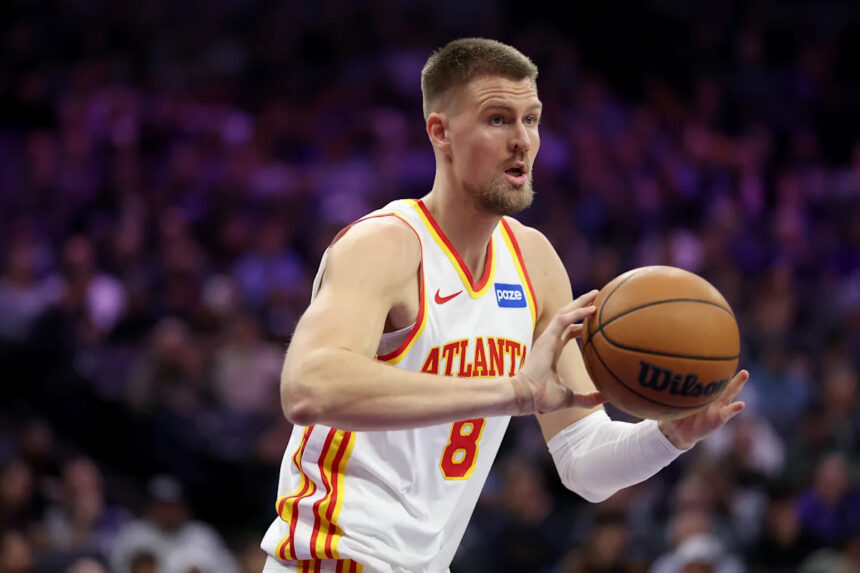
The Atlanta Hawks’ promising start to the season has hit a significant snag, one that extends far beyond a typical ankle sprain or sore knee. Veteran center Kristaps Porziņģis, a pivotal offseason acquisition, will be sidelined for at least two more weeks due to an ongoing illness, as reported by ESPN’s Shams Charania. This news marks a concerning and familiar chapter for the 7-foot-3 Latvian, whose health has become a central narrative in his career resurgence. The absence isn’t just a short-term roster hole; it’s a reminder of the complex medical condition—Postural Orthostatic Tachycardia Syndrome (POTS)—that sidelined him during last season’s playoffs and now casts a shadow over Atlanta’s immediate ambitions.
A Recurring Challenge: The POTS Diagnosis Explained
While the Hawks have not confirmed the specifics of this latest illness, the specter of POTS looms large. Last season, while with the Boston Celtics, Porziņģis was diagnosed with this condition after experiencing severe symptoms, including an incident where he left a playoff game early because he “couldn’t breathe.” POTS is a disorder of the autonomic nervous system, which controls involuntary functions like heart rate and blood pressure.
According to the Cleveland Clinic, POTS causes a cascade of symptoms—such as a rapid heart rate, dizziness, fatigue, and fainting—when moving from lying down to standing up. For a professional athlete whose livelihood depends on explosive movement, endurance, and recovery, managing POTS is a unique and daunting challenge. There is no cure, only management strategies that can include increased fluid and salt intake, specialized exercise regimens, and medication.
Porziņģis entered this season in stellar shape, seemingly having managed the condition effectively. His early play was dominant, averaging 19.2 points and 5.6 rebounds while providing the Hawks with a floor-spacing, rim-protecting presence they’ve long coveted. His current setback, which has already caused him to miss seven of the last eight games, underscores the unpredictable and non-linear nature of managing a chronic condition, even for a world-class athlete.
Immediate Impact on the Hawks’ Season
The timing of Porziņģis’ absence is a severe blow to a Hawks team looking to solidify its identity in a crowded Eastern Conference. His unique skill set created a dynamic offensive system around stars Trae Young and Dejounte Murray. Without him, the team’s structure fundamentally changes.
- Offensive Spacing Collapse: Porziņģis’ ability to shoot from three pulls opposing centers away from the paint, creating driving lanes for Young and Murray. His absence clogs the floor.
- Defensive Anchor Removed: As the team’s best rim protector, his shot-altering presence covered for defensive liabilities on the perimeter. Opponents will now attack the basket with more frequency and confidence.
- Secondary Scoring Void: His efficient 19-point nightly output must be redistributed, putting more shot-creation pressure on a supporting cast that has struggled with consistency.
Head Coach Quin Snyder will likely turn to a committee approach, featuring Onyeka Okongwu and Clint Capela in more traditional center roles. While both are capable defenders and rebounders, neither can replicate the offensive gravity of Porziņģis. This forces the Hawks into a more conventional, and perhaps less potent, style of play during a critical stretch of the schedule.
Expert Analysis: Navigating a Chronic Condition in the NBA
From a medical and team management perspective, Porziņģis’ situation requires a delicate, long-view approach. Sports medicine specialists emphasize that POTS management is highly individualized. “The flare-up he’s experiencing shows that management is about control, not eradication,” notes a veteran NBA physical therapist consulted for this article. “Stress, travel, dehydration, even a common cold can trigger symptoms. The two-week timeline suggests the Hawks’ medical staff is prioritizing systemic recovery over rushing him back, which is the only prudent path.”
This is where the Hawks’ investment in Porziņģis, who is signed long-term, will be tested. The franchise didn’t acquire him merely for a December game against the Pistons; they envisioned him as a cornerstone for a multi-year playoff push. Therefore, long-term health management is paramount. Rushing his return risks a more severe or prolonged setback, potentially endangering his availability for the crucial second half of the season and the playoffs—the exact scenario that unfolded in Boston last spring.
The team must also consider the human element. Dealing with a condition that causes dizziness and fatigue is mentally taxing, especially when your performance is scrutinized by millions. Porziņģis’ resilience has been remarkable, but the Hawks’ support system—from coaches to teammates to the front office—must publicly and privately reinforce a patient, supportive stance.
Predictions and the Road Ahead for Atlanta
If Porziņģis is indeed out for just the reported two weeks, a return around the end of the calendar year is feasible. The key benchmark for his comeback will not be a pain threshold, but a return to baseline autonomic stability. Can he complete a full practice without symptomatic flare-ups? Can his body withstand the physiological stress of an NBA game? These are the questions the medical staff will be answering.
In the interim, expect the Hawks to tread water, but likely with a sub-.500 record during this stretch. Games they might have won with Porziņģis could slip away, potentially impacting playoff seeding. The onus falls squarely on Trae Young to elevate his game to an MVP level and on role players like Bogdan Bogdanović and Jalen Johnson to increase their offensive production.
Looking at the bigger picture, this episode forces a broader evaluation. The Hawks must build a roster with more redundancy for Porziņģis’ potential absences. This could mean exploring the trade market for another stretch big or empowering Okongwu to develop a more reliable perimeter shot. His health, while manageable, is now a permanent variable in the team’s championship calculus.
Conclusion: A Test of Patience and Perspective
The news of Kristaps Porziņģis’ extended absence is a sobering reminder that athletes contend with challenges far beyond the hardwood. His battle with POTS adds a layer of complexity to the Hawks’ season, transforming a simple injury report into a story about chronic health management in a high-stakes environment. For Atlanta, the coming weeks are a test of roster depth, coaching adaptability, and organizational patience. For Porziņģis, it’s another chapter in an ongoing personal journey. His triumphant play to start the season proved his elite ceiling when healthy; the Hawks’ success now depends on a carefully charted path to get him back to that place, not just for two weeks, but for the long haul. The ultimate victory won’t be a December win, but a healthy Porziņģis taking the floor in May and June.
Source: Based on news from Yahoo Sports.