Hearn ‘Expects’ Joshua to Fight Again, But Admits There Are No Guarantees After Tragic Loss
The world of heavyweight boxing waits, not with its usual clamorous impatience, but with a hushed and respectful concern. Anthony Joshua, the two-time unified world champion and Britain’s most recognizable fighter, stands at a crossroads unlike any he has faced in the ring. Following the tragic road traffic accident in Nigeria that claimed the lives of two close friends and left him with minor injuries, the future of his storied career is shrouded in uncertainty. While promoter Eddie Hearn “expects” a return, he pointedly offers no “guarantees.” The path forward for AJ is no longer just about belts and opponents; it is a journey of grief, mental fortitude, and a profound reassessment of purpose.
A Tragedy That Transcends Sport
On December 29th, in Nigeria, a routine journey turned into a nightmare. The accident resulted in the deaths of Sina Ghami and Latif ‘Latz’ Ayodele, individuals described as pillars of Joshua’s inner circle, far removed from the glare of the boxing spotlight. Joshua sustained minor physical injuries, but the emotional and psychological wounds run immeasurably deeper. This wasn’t a training setback or a promotional dispute; this was a life-altering trauma that instantly reframes all priorities.
For a man whose professional identity is built on controlled aggression, physical dominance, and a relentless pursuit of victory—26 of his 29 wins coming by devastating knockout—this experience introduces a vulnerability that the ring can never simulate. The brotherhood of a fighter’s camp is sacred, and the loss of such integral members creates a void that no future training session can fill.
The “Mental Strength Therapy” of the Gym
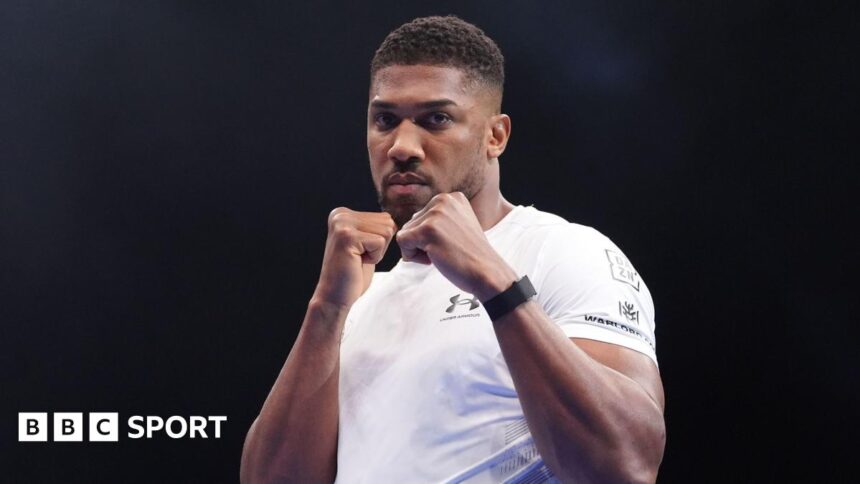
In January, a signal emerged. Joshua posted a video on social media from the gym, captioned simply: “mental strength therapy.” This phrase is the most significant clue to his current state and potential path back. For elite athletes, especially in a solitary combat sport, the gym is often a sanctuary. The rhythmic pounding of the heavy bag, the strict focus on technique, the physical exhaustion—these can be mechanisms for processing pain that words cannot reach.
Eddie Hearn, who has guided Joshua’s career since its professional inception after his 2012 Olympic gold, acknowledged this. His statement that he “expects” Joshua to fight again is rooted in this understanding of the fighter’s psyche. The gym is Joshua’s familiar territory, a place where he can exert control in a world that recently proved horrifically uncontrollable.
- The gym as a refuge: A structured environment for processing grief.
- Familiar routine: Training offers a semblance of normality amidst chaos.
- Physical outlet: Channeling emotional turmoil into physical exertion.
However, training for self-therapy is a world away from training for a high-stakes, multi-million dollar fight against another elite heavyweight seeking to take your head off. Bridging that gap is the monumental challenge.
Hearn’s Realistic Stance: Expectation vs. Guarantee
Eddie Hearn’s careful choice of words is telling. As a promoter, his business revolves around certainty—dates, venues, contracts. Yet here, he deliberately trades certainty for empathy. To say he “expects” a return is a statement of faith in Joshua’s character and his love for the sport. To immediately follow it by admitting there are no “guarantees” is a rare and respectful acknowledgment of the human being behind the brand.
This tragedy forces a fundamental question: What now motivates Anthony Joshua? At 36, with his legacy secure as a two-time world champion who has fought the best of his era, the traditional drivers may pale in significance. The hunger for another title, while likely still present, may be filtered through a new lens of mortality and perspective. Hearn’s job is no longer just to secure the biggest fight; it is to support his fighter’s well-being and await a genuine signal of readiness.
The promoter’s role has fundamentally shifted from matchmaker to confidant. Pushing for a timeline or an opponent would be tone-deaf. The marketable “AJ” persona is temporarily sidelined, allowing the private Anthony to grieve and heal.
What a Return Could Look Like: Predictions and Scenarios
If and when Joshua decides to return, the landscape will look different. The conversation will be heavier, the narrative more nuanced. The boxing world will welcome back not just a contender, but a man who has endured a profound personal trial. This context will shape every aspect of the comeback.
We can anticipate several potential scenarios:
- A Tune-Up Fight: A return against a respected but less-dangerous opponent, perhaps in the UK, to rediscover rhythm and passion in a competitive setting without the extreme pressure of a world title eliminator.
- A Direct Path to Legacy: Conversely, the event could galvanize a desire for definitive closure. This might mean targeting one final, blockbuster fight—a long-awaited showdown with Tyson Fury or a third act against Deontay Wilder—to cement his legacy on his own terms before riding into the sunset.
- The “Why” Will Be Everything: The most critical factor won’t be the “who” or “when,” but the “why.” Fans and analysts will be listening intently. If his motivation sounds authentic, rooted in a love for competition and honoring his friends, the public support will be immense. If it feels forced or purely financial, the connection may be lost.
His style may also evolve. The seek-and-destroy knockout artist might incorporate more of the measured, boxer-puncher approach he has developed in recent fights. Every action in the ring will now carry the weight of his experience.
A Champion Forged in a Different Fire
Anthony Joshua’s legacy was already assured. The Olympic gold, the thrilling victories, the two-time championship reclaiming, and his global appeal are indelible parts of boxing history. However, the chapters now being written speak to a different kind of strength. The world has watched him display physical courage for over a decade. Now, it witnesses a more private, profound form of courage.
Eddie Hearn is correct to manage expectations. There are no guarantees in boxing, and even fewer in life after tragedy. The decision to fight again is Anthony Joshua’s alone, and it must come from a place of personal peace and renewed purpose, not external pressure. Whether his “mental strength therapy” ultimately leads him back through the ropes or towards a new chapter entirely, his journey commands respect far beyond the sport. The heavyweight division awaits its king, but first, the man must heal.
Source: Based on news from BBC Sport.