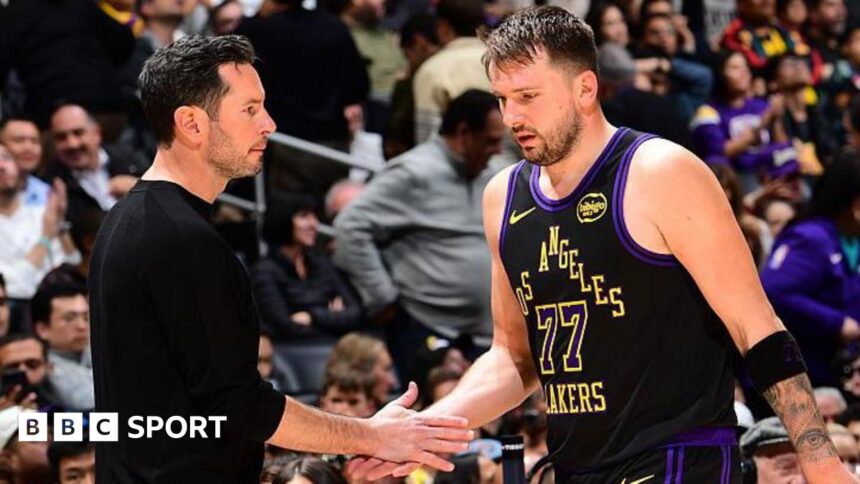
Heated Doncic-Redick Sideline Exchange: Tempest in a Teapot or Glimpse of Tension?
A single, unscripted moment on an NBA sideline can ignite the sports news cycle faster than a Steph Curry heat check. This week, that moment belonged to Los Angeles Lakers coach JJ Redick and Dallas Mavericks superstar Luka Doncic. A brief, heated interaction during a January matchup, recently resurfaced, showed Doncic seemingly avoiding a fist bump from Redick, followed by a tense verbal exchange. In the era of viral clips and instant analysis, it was fuel for the fire. But according to Redick himself, the story is much simpler: it was “very normal.” We dive beyond the 15-second clip to unpack the context, the personalities, and what it truly reveals about modern player-coach dynamics.
Deconstructing the Viral Moment: Context is King
To understand the incident, we must first set the scene. The clip is from a January 27th game where Redick’s Lakers hosted Doncic’s Mavericks. While the viral snippet focuses solely on the sideline, the game context is critical. The Lakers, mired in a three-game losing streak, were surprisingly dominating the Mavericks early. Doncic, the engine of Dallas’s offense, was subbed out late in the first quarter with his team trailing. For a competitor of his caliber, frustration at the early deficit and his own removal was palpable.
As Doncic walked to the bench, Redick extended a fist. Doncic looked away, brushing past. Redick then followed him down the sideline, leading to a brief but animated conversation before the coach returned to his post. The internet erupted: Was this proof of a rift? A sign of disrespect? Redick’s recent clarification paints a different picture. He framed it as a routine, in-game disagreement about a defensive coverage, emphasizing the normalcy of such exchanges in the heat of competition. “Luka and I have a great relationship,” Redick stated, effectively dismissing the narrative of lingering animosity.
Personality Clash or Competitive Fire?
This incident fascinates because of the specific personalities involved. Luka Doncic is a generational talent known for his fiery, emotionally transparent demeanor on the court. His frustrations with officials, teammates, and even himself are well-documented and part of his competitive fabric. He plays with a palpable passion that can sometimes boil over.
On the other side is JJ Redick, the rookie head coach but veteran basketball intellectual. As a former player, Redick was known for his intense preparation and cerebral approach. Now, as a coach, he is attempting to instill a new system and culture in Los Angeles, one heavily predicated on accountability and tactical precision. The collision of Doncic’s raw, in-the-moment emotion and Redick’s detailed, analytical approach was inevitable.
This is not a story of a player tuning out a coach. It is a snapshot of two highly competitive individuals engaged in the real-time stress test of an NBA game. Redick’s assertion that it was “very normal” rings true from a basketball lifer’s perspective. These micro-conflicts are the currency of the league, often signifying engagement rather than disengagement.
- Emotional Transparency vs. Analytical Coaching: Doncic’s visible frustration is part of his process, while Redick seeks immediate, corrective dialogue.
- The Veteran Rookie: Redick’s lack of prior coaching experience puts every interaction under a microscope, but his playing career gives him credibility in these tense moments.
- Competitive Context: A struggling star being pulled early in a blowout is a classic recipe for sideline tension, regardless of relationship.
The Bigger Picture: Player-Coach Dynamics in the Modern NBA
The over-analysis of the Doncic-Redick moment speaks to a larger evolution in NBA player-coach relationships. The days of the autocratic, unchallenged coach are largely over. Today’s dynamics are partnerships, often requiring negotiation, communication, and mutual respect. Superstars like Doncic wield significant influence, and successful coaches must manage egos while implementing strategy.
What the viral clip misses is everything that happens before and after. The private film sessions, the one-on-one conversations, the shared goal of winning. A single heated exchange is a data point, not the full dataset. In many ways, a coach who *doesn’t* occasionally have tense words with his best player might be a coach who isn’t pushing hard enough. The key, as Redick highlighted, is the foundation of the relationship. “Great relationship” doesn’t mean always agreeing; it means being able to disagree, address it, and move forward collectively.
This incident also highlights the immense, often distorting, power of the viral clip. Stripped of audio and broader context, a 15-second video can manufacture a crisis. Teams and personalities now operate with the understanding that every sideline moment is a potential headline, adding another layer to in-game management.
Looking Ahead: Impact on Lakers and Mavericks Futures
So, what are the real future implications of this “very normal” interaction? For the parties involved, likely very little. Doncic and Redick will face each other as competitors twice a year, their relationship defined by mutual respect and the fleeting conflicts of competition. The incident is a footnote.
The more significant predictions lie in the trajectories of their respective teams:
- For JJ Redick and the Lakers: This serves as an early test of his coaching demeanor. How he handles public scrutiny of his interactions, especially with opposing stars, sets a tone. His calm, dismissive response was a savvy move, projecting control and normalcy. The bigger challenge is fostering a culture within his own locker room where passionate discourse is channeled productively.
- For Luka Doncic and the Mavericks: Doncic’s fire is a feature, not a bug, for Dallas. The Mavericks’ focus is on managing that intensity over a long playoff run. His exchange with Redick is less concerning than ensuring his on-court frustrations don’t metastasize into longer-term issues with his own coaches and teammates—a maturation process every superstar navigates.
Ultimately, the league should expect more of these moments, not fewer. As the game gets faster and stakes get higher, the sideline remains a pressure cooker. The most successful teams will be those who, like Redick suggests, normalize the heat and use it to forge stronger bonds.
Conclusion: Normalizing the Heat of Competition
The heated interaction between Luka Doncic and JJ Redick was a classic case of the spotlight magnifying a common occurrence. In the relentless 82-game grind of the NBA, emotions are not a bug in the system; they are part of the operating software. Redick’s “very normal” assessment is a refreshing dose of reality from inside the league, pushing back against the narrative-churning machine.
The true takeaway isn’t about a personal rift, but a professional reality. The modern NBA sideline is a place of intense, immediate, and sometimes messy communication. What looks like conflict to the outside world is often just the process of refinement in real-time. For fans and pundits, the lesson is to watch the games that follow the viral moment more closely than the moment itself. The proof of the relationship won’t be in a missed fist bump, but in the preparation, adjustment, and performance the next time these two brilliant basketball minds cross paths. The fire is normal; it’s what you build from it that counts.
Source: Based on news from BBC Sport.