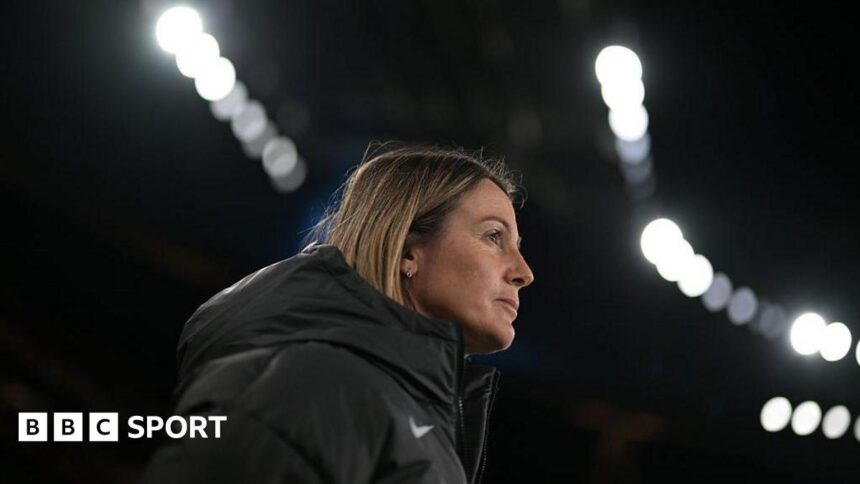
From Invincibles to Also-Rans: The Blueprint for Chelsea’s WSL Rebuild
Just twelve months ago, Sonia Bompastor’s Chelsea were the unstoppable force of English football. An unbeaten domestic treble. A stranglehold on the Women’s Super League that felt permanent. The “Invincibles” of the WSL. Fast forward to the present, and the picture could not be more different. With one game left in the season, the Blues have no silverware on the line. No trophy parade. No title decider. It is the first time since the 2018-19 campaign that Chelsea will end a season empty-handed in the WSL, ending a six-year dynasty that defined the modern era of the league.
The fall has been swift and brutal. A devastating FA Cup semi-final loss to a Manchester City side that has just been crowned champions. A Champions League exit at the hands of Arsenal. A domestic league campaign that saw them lose their grip on the title before the final whistle. The question now is not whether Chelsea can bounce back—they are Chelsea—but how they rebuild. What does the blueprint look like for a squad that went from invincible to also-ran in the space of one season?
Diagnosing the Demise: Why the Invincibles Crumbled
Before you fix a problem, you have to understand it. Chelsea’s collapse is not a single-event failure; it is a systemic one. Last season, Bompastor’s side were a perfect machine. They pressed with unity, scored from every angle, and defended with a steeliness that suffocated opponents. This season, that machine has developed cracks.
Fatigue and squad depth have been the primary culprits. The relentless schedule of the WSL, Champions League, and FA Cup exposed a squad that, on paper, looked deep but in reality, relied heavily on a core of players who had already played a full international summer. Key injuries to Sam Kerr and Millie Bright at critical junctures left Bompastor scrambling for solutions. The loss of Jessie Fleming to Portland Thorns also removed a crucial midfield engine.
But the deeper issue is tactical stagnation. Opponents have figured out Chelsea’s patterns. Teams now sit deep, deny space in behind, and force Chelsea to play through narrow, congested midfield corridors. Without a dynamic, creative number ten to unlock low blocks, the Blues have often looked predictable. The loss of Fran Kirby’s genius in the final third has never been adequately replaced.
- Injury Crisis: A lack of depth in key positions (center-back, attacking midfield) proved fatal.
- Tactical Predictability: Opponents have neutralized Chelsea’s high press and direct transitions.
- Transitional Frailty: The defense, once a fortress, has been exposed on the counter-attack, particularly against pace.
- Mental Edge Lost: The aura of invincibility that made teams fear Stamford Bridge has evaporated.
The result is a team that now finds itself in unfamiliar territory: rebuilding from a position of weakness, not strength. The next move from Bompastor and the Chelsea hierarchy will define the next era of the club.
The Transfer Window: Where Chelsea Must Spend Smart
The summer transfer window is Chelsea’s biggest opportunity to correct course. But this is not a simple case of throwing money at the problem. The club must be surgical. The squad needs a refresh, but it also needs a reset in terms of profile and mentality.
Priority One: A world-class number ten. This is the most glaring gap. Chelsea need a player who can operate between the lines, dribble in tight spaces, and deliver a killer pass. Look for a profile similar to Aitana Bonmatí or Caroline Graham Hansen—a creative hub who can break down stubborn defenses. Names like Pernille Harder (if Bayern Munich can be pried) or a younger, dynamic talent from the European market should be at the top of the list.
Priority Two: A left-back with pace and attacking output. The current options have been solid but not spectacular. Chelsea need a full-back who can overlap and deliver dangerous crosses, providing width that stretches defenses. This would also free up Niamh Charles to play higher up the pitch, where she is most effective.
Priority Three: A reliable center-back partner for Millie Bright. Bright is still elite, but she needs a consistent, younger partner who can cover ground and read the game. The departure of Magdalena Eriksson left a leadership void that has not been filled. A defender with pace and composure on the ball is non-negotiable.
Priority Four: A goal-scoring midfielder. Chelsea’s goals from midfield have dried up. Erin Cuthbert is a warrior, but she is not a consistent scorer. Adding a box-to-box midfielder who can arrive late and finish would transform the attack.
The market is competitive, but Chelsea still have the financial muscle and the allure of a project. The key is to avoid panic buys and focus on profiles that fit Bompastor’s system: high energy, technical security, and tactical intelligence.
Tactical Evolution: Bompastor Must Adapt Her System
Sonia Bompastor arrived with a reputation for fluid, attacking football. Last season, that system was a masterpiece. This season, it has been exposed as one-dimensional. The coach must now evolve her tactics to stay ahead of the curve in the WSL.
Embrace a double pivot. Chelsea’s midfield has been overrun in big games. A double pivot of a defensive anchor and a deep-lying playmaker would provide stability and allow the full-backs to push higher. This would also protect a defense that has looked vulnerable on the break.
Vary the attacking patterns. The reliance on wide crosses and cut-backs has become too predictable. Chelsea need to introduce more through balls, more central combinations, and more movement off the ball. This requires a number ten who can execute those passes, but it also requires the forwards to run different lines.
Press with intelligence, not just intensity. Last season’s press was relentless. This season, it has been disconnected. Bompastor must implement a more selective pressing system that conserves energy and forces turnovers in specific zones. A high press that is easily broken leads to dangerous counter-attacks, which has been Chelsea’s Achilles’ heel.
Develop a plan B for low blocks. When opponents sit deep, Chelsea have looked lost. The solution is not just a new player; it is a tactical framework. This means more shots from distance, more set-piece routines, and more rotation of positions in the final third. The team needs to be comfortable playing with a false nine or a target striker depending on the opposition.
Bompastor is a top-class coach, but she must show she can adapt. The WSL is no longer a league where one system dominates. Manchester City and Arsenal have evolved. Chelsea must do the same.
Predictions for Next Season: A Return to Contention
So, what can we expect from Chelsea next season? The rebuild is not a demolition job; it is a renovation. The core of the squad is still strong. Lauren James is a generational talent. Millie Bright remains a commanding leader. Sam Kerr, when fit, is the best striker in the world. But the supporting cast needs an upgrade.
Prediction 1: A top-two finish, but not the title. The WSL is too competitive now. Manchester City have built a dynasty of their own, and Arsenal are spending aggressively. Chelsea will be back in the title race, but it will be a three-horse race. Expect them to push City all the way but fall short by a few points.
Prediction 2: Champions League semi-finals. Chelsea are desperate for European success. With a refreshed squad and a more pragmatic tactical approach, they will reach the semi-finals but struggle against the elite European sides like Lyon and Barcelona.
Prediction 3: A domestic cup win. The FA Cup or the League Cup will be a realistic target. Chelsea’s mentality for knockout football is still strong, and a trophy would be a crucial stepping stone for the rebuild.
Prediction 4: One major signing will define the season. The arrival of a world-class number ten will be the difference between a good season and a great one. If Chelsea land that player, they could challenge for the title. If not, they will be competing for second place.
The rebuild is not about panic. It is about precision. Chelsea have the resources, the coach, and the talent to return to the top. But the era of invincibility is over. The new era must be built on a foundation of tactical flexibility, squad depth, and a hunger that comes from knowing what it feels like to lose.
Conclusion: The End of an Era, The Start of a New One
This season has been a painful lesson for Chelsea. The unbeaten treble of last season now feels like a distant memory, a golden era that has passed. But in football, dynasties do not die; they evolve. The Blues have been here before. In 2018-19, they finished third. They responded by winning four of the next five WSL titles.
The blueprint for the rebuild is clear: invest in creativity, add pace to the defense, and give Bompastor the tactical tools to adapt. The competition is fiercer than ever. Manchester City are not going away. Arsenal are rising. But Chelsea are still Chelsea. They have the history, the money, and the ambition.
Next season will not be about reclaiming the crown overnight. It will be about re-establishing the standards, rebuilding the mentality, and proving that this season was an anomaly, not a new normal. The invincibles are gone. But a new Chelsea—meaner, smarter, and more adaptable—is waiting to be born. The question is not if they will return. It is how quickly.
Source: Based on news from BBC Sport.