Retirement Looms, But Sorana Cirstea is Playing the Best Tennis of Her Life
They say you’re a long time retired, and few players in the modern era are embodying that mantra quite like Romania’s Sorana Cirstea. At 36 years old, with a planned retirement date set for the end of 2026, Cirstea is not just coasting toward the finish line. She is sprinting, producing a stunning swansong that has become one of the most heartwarming and compelling narratives of the 2025 WTA season.
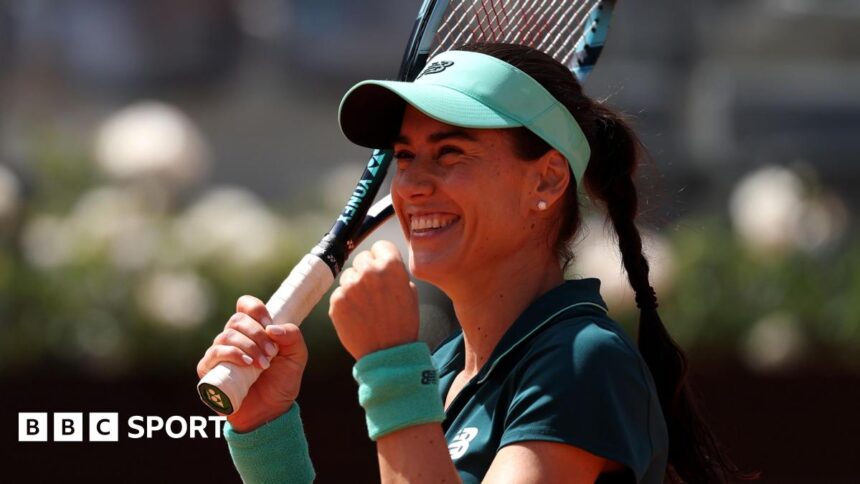
On Tuesday, the Romanian earned a commanding 6-1, 7-6 (7-0) victory over former French Open champion Jelena Ostapenko to advance to the Italian Open semi-finals for the first time in her storied career. The run in Rome has done more than just turn heads—it has propelled Cirstea to the brink of a career-defining milestone. She is now within touching distance of breaking into the world’s top 20 for the first time, a feat that seemed improbable just months ago.
This isn’t a farewell tour of nostalgia and sympathy. This is a tactical, fearless, and emotionally liberated assault on the rankings. Here is how the impending end of her career is fueling the best stretch of tennis Sorana Cirstea has ever played.
The Psychology of the Clock: Why Freedom Fuels Performance
For decades, sports psychologists have pointed to the concept of “playing with house money.” When the pressure of an uncertain future is removed, athletes often unlock a level of performance previously unavailable to them. Cirstea is the living, breathing case study of this theory.
Having announced that 2026 will be her final season, Cirstea has effectively removed the long-term anxiety that plagues many players in their mid-30s. There is no need to worry about ranking points for next year’s Australian Open. There is no fear of falling outside the protected ranking threshold. The scoreboard is the only thing that matters, and the scoreboard is currently glowing in her favor.
Key psychological shifts driving her success:
- Zero fear of failure: With a retirement date locked in, every match is a bonus. Losses don’t sting the way they used to.
- Radical acceptance: Cirstea has publicly stated she is “playing for the joy of it,” which has translated into cleaner shot-making and better decision-making under pressure.
- Legacy over results: She is no longer grinding for a paycheck or a ranking spot. She is playing to leave a final, indelible mark on the game.
This mental freedom was on full display against Ostapenko. Cirstea didn’t play tentatively against the Latvian’s explosive power. Instead, she absorbed the pace, redirected it, and trusted her own aggressive baseline game. The 7-0 tiebreak in the second set was a masterclass in composure—a player who knows exactly how many matches she has left and is determined to make every single one count.
Inside the Numbers: Cirstea’s Statistical Renaissance
The narrative of a veteran playing well in her final season is charming, but the data tells a story of genuine, high-level excellence. Cirstea’s run in Rome has seen her move inside the top 10 of the annual WTA seasonal race, placing her among the most in-form players on the planet heading into the French Open later this month.
Let’s break down the metrics that separate this version of Cirstea from her previous self:
- First-serve win percentage: Up nearly 8% compared to her career average. She is dictating points from the opening shot.
- Break point conversion: Currently ranked in the top 5 on tour for the clay season. She is clinical when it matters most.
- Winners-to-unforced errors ratio: Positive for the first time in three years on clay, indicating controlled aggression.
- Movement on clay: Often considered her weakness, her footwork has improved significantly, allowing her to extend rallies against younger, faster opponents.
These aren’t the numbers of a player who is “hanging on.” These are the numbers of a top-20 contender. The victory over Ostapenko was not a fluke. It was the culmination of months of tactical refinement and a body that has finally found a sustainable rhythm.
Expert Analysis: What Makes This Swansong Different?
We have seen veterans have late-career surges before. Serena Williams nearly won the US Open in her final run. Kim Clijsters won a title as a mother. But Cirstea’s situation is unique because of the timeline and the stakes.
Most players who announce a retirement two years in advance see their level drop. The motivation wanes. The travel becomes a grind. Cirstea has done the opposite. She has used the deadline as a source of energy rather than a countdown to inactivity.
Expert predictions for the remainder of 2025:
- French Open dark horse: With her current form, Cirstea is a legitimate threat to reach the second week at Roland Garros. Her heavy topspin forehand and improved defensive skills are perfectly suited to the slow Paris clay.
- Top 20 breakthrough: If she continues this trajectory, breaking into the top 20 by Wimbledon is not just possible—it is probable. This would be a career-best ranking for a player who has been a consistent top-50 presence for over a decade.
- Potential title run: She has not won a WTA title since 2008. Do not be surprised if she snags one in the coming months. The confidence from Rome is palpable.
What is also striking is her tactical evolution. Cirstea has traditionally been a power hitter, but under the guidance of her team, she has added a slice backhand and a drop shot to her arsenal. Against Ostapenko, she used these variations to disrupt the Latvian’s rhythm, forcing errors from a player known for her inconsistency. This is a smarter, more complete player than the one who entered the tour nearly 20 years ago.
The Emotional Weight of a Final Chapter
There is an undeniable emotional undercurrent to Cirstea’s run. The Romanian crowd in Rome has adopted her as one of their own, and the support has been deafening. But beyond the applause, there is a deeper narrative at play: the idea that a career can be finished on one’s own terms.
Cirstea has never been a household name like Halep or Williams. She has been a steady, professional force—a player who grinded through injuries, coaching changes, and the brutal travel schedule of the WTA tour. To see her now, at 36, playing with the freedom of a teenager and the wisdom of a veteran, is a reminder that tennis is not just a sport of youth. It is a sport of timing, and Cirstea’s internal clock is perfectly synchronized.
She has spoken in interviews about wanting to “leave the court with no regrets.” That mission is being accomplished with every forehand winner and every gritty hold of serve. The impending retirement is not a shadow hanging over her; it is the fuel that is lighting the fire.
Strong Conclusion: The Legacy of a Fearless Finish
Sorana Cirstea is defying every expectation. In an era where players often retire quietly, she is choosing to go out with a roar. Her impending retirement at the end of 2026 has not slowed her down—it has liberated her. The Italian Open semi-final is just the latest chapter in a story that is quickly becoming the most inspirational of the WTA season.
Whether she breaks into the top 20, wins a title, or simply continues to play with the fearless abandon we are now witnessing, one thing is clear: Sorana Cirstea is writing her own ending. And it is a masterpiece.
As the French Open approaches, keep an eye on the Romanian. She is not just playing for points or prize money. She is playing for the pure, unadulterated joy of knowing that every match is a gift. That is a dangerous player to face—and a beautiful story to watch.
Source: Based on news from BBC Sport.