The Hubert Davis Era Ends in Chapel Hill: A Promising Start, A Painful Finish
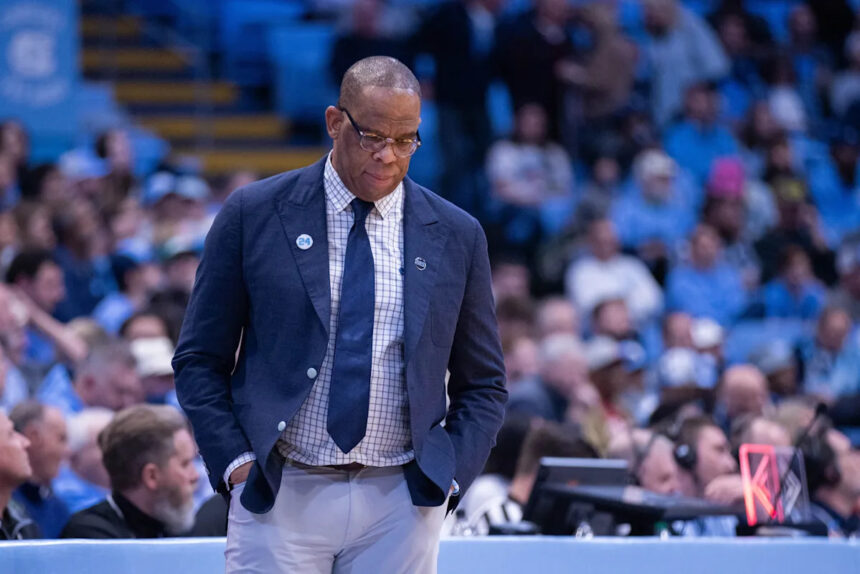
The winds of change are blowing through the Smith Center. The University of North Carolina has parted ways with head men’s basketball coach Hubert Davis, ending a three-year tenure that began with a storybook run to the national championship game but ultimately unraveled under the weight of unmet expectations and persistent, painful flaws. The decision, confirmed after days of intense speculation, follows UNC’s catastrophic collapse in the NCAA Tournament, where they surrendered a 19-point lead to VCU in the Round of 64. For a program synonymous with perennial contention, the repeated failure to advance on March’s biggest stage proved a deficit too large to overcome.
From Fairy Tale to Frustration: The Arc of the Davis Tenure
Hubert Davis’s appointment in 2021 was a celebration of the “Carolina Family.” A beloved former player and longtime assistant under Roy Williams, Davis was heralded as the keeper of the flame. His first season defied all logic, transforming a bubble team into a national contender. He etched his name into Tar Heel lore with two epochal victories over Duke: spoiling Mike Krzyzewski’s final home game at Cameron Indoor Stadium, then, weeks later, ending the legend’s career in the Final Four. The magical run, however, contained a harbinger of doom. In the national championship game against Kansas, UNC frittered away a 15-point halftime lead. At the time, it was viewed as a heartbreaking loss for a plucky underdog. In retrospect, it was a blueprint for future failures.
The seasons that followed were defined by volatility and underachievement. The very next year, a preseason No. 1 ranked Carolina squad, returning nearly its entire core, famously failed to even make the NCAA Tournament. While Davis righted the ship with an ACC Regular Season championship this past season, the ultimate measure—March success—remained elusive. A sobering review of his three-year record reveals a pattern incompatible with Carolina’s standards:
- NCAA Tournament Performance: One magical run (2022) followed by two first-round exits (2023, 2024).
- ACC Tournament Record: Zero championships, with early exits becoming commonplace.
- Defensive Identity: A recurring struggle to establish consistent defensive intensity, glaringly evident in late-game collapses.
- Roster Construction: Heavy reliance on the transfer portal, with sometimes uneven results and questions about player development.
The VCU loss was not an anomaly; it was the culmination of a trend. For a program built on toughness and execution, the repeated inability to hold leads and close games became an insurmountable indictment.
Anatomy of a Collapse: Why the Change Was Made
The decision to move on from Davis, while difficult given his deep ties to the university, was driven by a confluence of factors beyond a single game. The blown lead against VCU was merely the final, public symptom of issues that had concerned the administration and powerful boosters for some time. Sources indicate that following the loss, internal meetings grew urgent, with a consensus forming that the program’s trajectory was not aligning with its championship aspirations.
The central critique revolves around program stability and March readiness. Under Davis, the Tar Heels were a rollercoaster—capable of beating anyone, but equally vulnerable to anyone. The 2023 NIT season, sandwiched between two NCAA bids, created a “boom-or-bust” perception that unnerved a fanbase accustomed to sustained excellence. Furthermore, in an era where roster management is as crucial as Xs and Os, the program seemed perpetually in flux, scrambling in the transfer portal each offseason to patch glaring holes. The impending opening of the transfer portal on April 7th added immense urgency to the decision. UNC’s current players now face a critical choice: wait for a new coach or seek a new home. The administration could not afford a prolonged period of uncertainty without leadership.
Ultimately, the standard at North Carolina is not ACC Regular Season titles alone; it is competing for national championships. With three of his five seasons ending without an NCAA win, the evidence suggested Davis, for all his passion and pedigree, could not consistently meet that standard.
The Carolina Coaching Search: A Critical Crossroads
For the first time in over two decades, North Carolina must conduct a true national coaching search. The seamless transitions from Dean Smith to Bill Guthridge to Roy Williams to Hubert Davis were all internal, preserving the “Carolina Family” lineage. That path is now closed. With no obvious former-player successor ready to step in, Athletic Director Bubba Cunningham and the search committee are tasked with a monumental hire that will likely come from outside the program’s direct tree.
This is both a challenge and an opportunity. It is a challenge because it requires navigating the often-competing interests of a passionate fanbase, influential alumni, and a Board of Trustees that has not been shy about involving itself in athletic matters. The hope is that Cunningham and Chancellor Kevin Guskiewicz can conduct a search “on the merits,” free from undue interference, to secure the best candidate, not just the most familiar one.
Yet, it is a tremendous opportunity. The UNC job remains one of the five best in the sport—a blue-blood program with unparalleled resources, tradition, and recruiting appeal. The candidate pool will be deep and talented. Expect immediate speculation to focus on established winners who can restore stability and a clear identity.
Predictions and Implications for the Tar Heels’ Future
The coming weeks will be the most pivotal for Carolina Basketball since the hiring of Roy Williams in 2003. The direction of the program for the next decade hangs in the balance. Here is what to expect:
The Search Will Be Wide-Ranging but Targeted: Look for Cunningham to pursue sitting head coaches with proven records of NCAA Tournament success and strong program-building skills. Names like Scott Drew (Baylor), Nate Oats (Alabama), and even a bold swing for a Jay Wright (though unlikely) will dominate the rumor mill. The criteria will be clear: demonstrated player development, roster management acumen, and postseason competence.
Roster Exodus is Inevitable: With the portal opening, several key players from last year’s squad are likely to explore their options. The new coach’s first task will be frantic retention and recruitment to build a competitive roster for next season. This transition year may require patience from the fanbase.
A Return to Defensive Identity: The next coach will almost certainly be one who preaches defensive accountability as a non-negotiable. The days of Carolina outscoring opponents in shootouts must give way to a return of the tough, disciplined defense that defined the program’s greatest teams.
The Hubert Davis era ends not with malice, but with the sober acknowledgment that the fit was not right for the long term. He led his alma mater to the brink of a title and loved the school deeply. But at North Carolina, nostalgia cannot override results. The search now begins for a leader who can rebuild not just a roster, but the unwavering expectation that Carolina Basketball is built for April, not just November through February. The standards in Chapel Hill remain, even if the coach who embodied them as a player could not sustain them as a head coach. The Carolina family has turned the page; a new chapter, with an unfamiliar author, is about to begin.
Source: Based on news from Yahoo Sports.