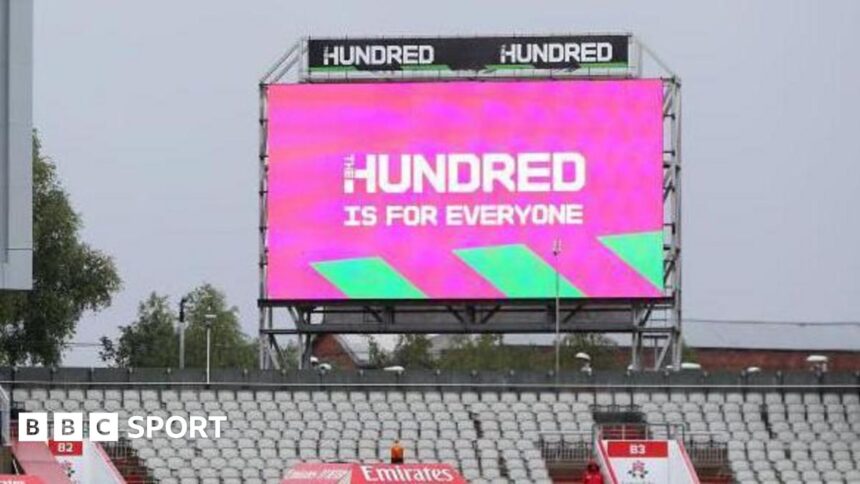
The Hundred’s Crossroads: Can Cricket’s Boldest League Uphold Its Sporting Principles?
The Hundred, English cricket’s vibrant and disruptive franchise tournament, stands at a critical juncture. As it gears up for its most significant season yet—bolstered by private investment, a landmark player auction, and soaring salaries—a shadow from the global game threatens to undermine its foundational ethos. The revelation that Pakistan’s cricketers may be sidelined by Indian-owned franchises has ignited a fierce debate, forcing the England and Wales Cricket Board (ECB) and the eight teams into a rare, unified declaration: selection must be based solely on performance. This is more than an administrative footnote; it is a direct challenge to the creeping influence of geopolitical tensions on a sport striving for global appeal. The integrity of The Hundred, and its claim to be a truly world-class league, now hangs in the balance.
- The Auction Tension: Investment, Ownership, and Alleged Exclusion
- Performance vs. Politics: The Core Conflict in Modern Franchise Cricket
- Expert Analysis: Navigating the Minefield of Ownership and Autonomy
- Predictions and Ramifications for The Hundred’s Future
- Conclusion: A Test of Cricket’s New World Order
The Auction Tension: Investment, Ownership, and Alleged Exclusion
This year’s edition of The Hundred was meant to be a celebration of its arrival as a major financial player. The influx of private capital from a consortium including IPL team owners was a game-changer, promising to elevate player pay and attract even more elite global talent. The shift to an auction model was designed to inject fresh drama and competitive parity. However, this very progress has precipitated the current crisis. Reports that Pakistan cricketers are not being considered by the Indian-owned franchises (Manchester Originals, London Spirit, and Oval Invincibles) for the upcoming auction sent shockwaves through the sport.
This practice, while tragically familiar in the context of the Indian Premier League (IPL), where no Pakistani player has featured since 2009 due to diplomatic tensions, represents an alien concept in English cricket. The ECB’s swift joint statement with all eight franchises was a clear damage-limitation exercise, but also a firm line in the sand. It stated unequivocally that players must not be excluded on the grounds of their nationality, reaffirming a commitment to tackling discrimination in all forms. The question is whether this principled stand can withstand the commercial and political realities of its new investors.
Performance vs. Politics: The Core Conflict in Modern Franchise Cricket
At its heart, this controversy pits the pure sporting ideal against complex external pressures. Franchise leagues market themselves on assembling the best possible talent, regardless of origin. The Hundred’s own success has been built on its eclectic mix: England’s stars sharing dressing rooms with icons from Australia, the West Indies, South Africa, and beyond. Excluding an entire cricket nation—one renowned for its prodigious fast-bowling talent and explosive batters—on non-sporting grounds strikes at the competition’s credibility.
The key arguments in this conflict are stark:
- The Sporting Principle: Selecting teams based solely on performance is non-negotiable for a serious sports league. It ensures quality, fairness, and legitimacy in the eyes of fans and players.
- The Commercial Reality: IPL team owners, understandably, operate within a complex geopolitical landscape. Their primary market and sensitivities in India cannot be ignored, creating a potential conflict of interest when operating in a different national context.
- The Precedent: Allowing nationality-based exclusion in The Hundred sets a dangerous precedent. It opens the door for other biases to influence selection, damaging the league’s reputation as an inclusive, meritocratic showcase.
- The Player Impact: For Pakistani stars, especially emerging talents, The Hundred represents a crucial platform and income source. Their exclusion would be a significant professional and financial setback.
The ECB’s statement is a powerful reaffirmation of the first principle, but enforcing it will require immense diplomatic and contractual fortitude.
Expert Analysis: Navigating the Minefield of Ownership and Autonomy
From a governance perspective, the ECB faces its toughest test since The Hundred’s inception. The league’s hybrid model—partly owned by the ECB, partly by private franchises—has created a tension of authority. While the ECB sets the overall rules, the franchises, especially those with deep-pocketed external owners, expect autonomy in team-building. This is the classic club-versus-country tension, familiar in football, now arriving in cricket.
The central dilemma is this: can the ECB compel an owner to bid for a player they do not want, for any reason? Legally, perhaps not. But culturally and ethically, the board must use its leverage to ensure the auction process is not corrupted by factors outside of cricket. The joint statement from the ECB and all eight franchises is significant because it represents a public contract. If any franchise now blatantly disregards this pledge, the ECB must be prepared to act with sanctions or rule changes to protect the competition’s integrity. Their commitment to tackling discrimination will be measured not by words, but by their willingness to make difficult, potentially costly, enforcement decisions.
Predictions and Ramifications for The Hundred’s Future
The coming weeks, culminating in the player auction, will be defining. Here is what to expect:
- A Cautious Auction: It is unlikely we will see a dramatic, headline-grabbing bid for a Pakistani star by an Indian-owned franchise. The “exclusion” may be more subtle, manifested as a lack of interest or undervaluation, rather than an overt ban.
- Opportunity for Other Franchises: Non-Indian-owned teams (like Birmingham Phoenix, Northern Superchargers, etc.) have a chance to make a powerful statement by aggressively targeting top Pakistani talent, strengthening their squads and winning the moral high ground with fans.
- Long-Term Structural Change: This incident will likely force the ECB to review ownership rules and auction regulations. We may see clearer, stronger anti-discrimination clauses written into franchise agreements, or even a “right to match” or draft system that prevents entire national cohorts from being overlooked.
- Brand Damage vs. Growth: If perceived as a league where politics trumps performance, The Hundred’s global brand as a forward-thinking, inclusive competition suffers. However, if it navigates this successfully, its reputation for principled governance could be enhanced.
The ultimate prediction is one of messy compromise in the short term, leading to firmer governance in the long term. The genie of private investment is out of the bottle, and with it comes complex new challenges.
Conclusion: A Test of Cricket’s New World Order
The Hundred’s nationality dilemma is a microcosm of modern cricket’s struggle. As the sport’s economy becomes increasingly dominated by private franchise leagues, the centrifugal forces of geopolitics and commerce threaten to pull it apart from its sporting core. The ECB’s firm stance that players must not be excluded on nationality grounds is a vital stand for the soul of the game. It is a declaration that in England, at least, cricket’s values of fair play and meritocracy must transcend borders and tensions.
This season, The Hundred is playing for more than a trophy. It is playing for its identity. Will it become a truly global league where the world’s best compete, judged only by their skill? Or will it allow invisible lines on a map to dictate the composition of its teams? The answer will resonate far beyond the boundary ropes, defining what cricket chooses to be in the 21st century. The auction is not just about buying players; it’s about what the league decides to sell. Its integrity, or a compromised version of the sport we love.
Source: Based on news from BBC Sport.