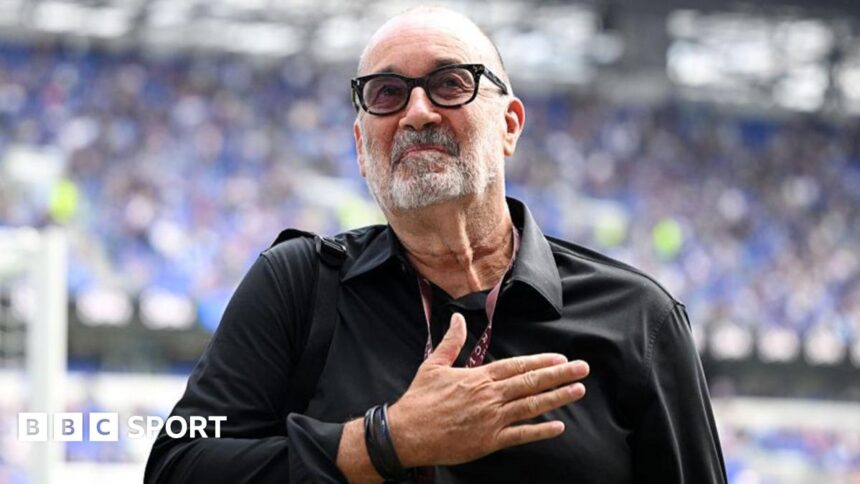
From Blueprint to Skin: The Architect Who Got Everton’s New Stadium Tattooed on Him
In the world of stadium architecture, projects are measured in steel, concrete, and seating capacity. For Dan Meis, the architect behind Everton’s new home, the final measure was in ink. The Los Angeles-based designer, whose portfolio includes iconic venues across the globe, recently revealed a permanent tribute to the project: the number 1878—Everton’s founding year—tattooed on his body. It’s a startling act of personal dedication that speaks to a journey far more profound than any ordinary commission. This is the story of how designing a football stadium became a life-altering saga of resilience, community, and unexpected bombshells.
A Project Like No Other: The Perfect Storm on the Mersey
Dan Meis is no stranger to high-pressure environments. Having worked on stadiums for the likes of AS Roma and the Cincinnati Bengals, he understands the complexities of large-scale sports architecture. Yet, from the moment he embarked on the mission to transpose Everton from the hallowed, creaking stands of Goodison Park to a modern arena on the banks of the River Mersey, he knew this was different. “Just about everything that could happen did,” Meis reflects, a master of understatement summarizing a near-decade of unprecedented challenges.
The initial vision was grand: a state-of-the-art, 52,888-seat stadium at Bramley-Moore Dock that would honor the club’s history while propelling it into the future. What followed was a relentless series of obstacles that would test the resolve of everyone involved:
- Two Relegation Battles: The club’s on-pitch fight for survival mirrored the project’s own precarious moments, creating a backdrop of intense emotional strain.
- A Global Pandemic: COVID-19 shut down sites and supply chains globally, causing major delays and logistical nightmares.
- A Change of Club Ownership: The shift from Farhad Moshiri to 777 Partners and eventually to the current owners introduced new dynamics and decision-making processes.
- Unexploded WWII Ordnance: Perhaps the most surreal delay: the discovery of a 1,000kg German parachute mine on the dockland site, a literal remnant of history halting progress for weeks.
Meis admits, “I was used to pressure, but nothing prepared me for Everton.” This was not merely about constructing a building; it was about stewarding the soul of a community through a period of immense transition and turmoil.
More Than Bricks and Mortar: Transposing a 133-Year Soul
The technical and logistical hurdles, while immense, were arguably secondary to the core architectural and emotional challenge: transposing the intangible essence of Goodison Park. For 133 years, Everton’s identity was forged in the tight confines of the Old Lady. The roar in the Gwladys Street End, the proximity of the stands to the pitch, the palpable sense of history—these were the elements Meis needed to bottle and recreate on a new, larger scale.
His design focused on preserving intensity. The steep, single-tier stands, particularly the massive 13,000-seat home end, are engineered to concentrate noise and create a “wall of sound.” The use of brick and the stadium’s integration into the historic dock walls pay direct homage to the club’s industrial roots. The goal was to avoid a sterile, bowl-like arena, instead crafting a fortress that felt uniquely and unmistakably Everton. The challenge of fan transition was ever-present; this wasn’t just a new home, it was a migration. Every design choice was weighed against the legacy of Goodison, making the architect part-urban planner, part-psychologist.
The 1878 Tattoo: When a Client Becomes a Part of You
The ultimate testament to this deep connection is now etched on Meis’s skin. The 1878 tattoo is not a corporate logo or a stadium silhouette; it’s the club’s birth year, a symbol of its enduring spirit. This act transcends professional pride. It signifies an architect who didn’t just deliver a project for a client, but who was fundamentally shaped by the experience.
In the high-stakes, often transactional world of sports franchise development, such a personal gesture is almost unheard of. It speaks to the unique relationship that developed between the American architect and the fiercely loyal, passionate Merseyside community. He didn’t just build for them; he listened, debated, and ultimately, felt the weight of their history and hopes. The tattoo is a permanent acknowledgment of that bond—a mark of having survived a shared trial by fire, water, and unexploded bombs. It symbolizes that the stadium’s completion was more than a professional milestone; it was a personal passage.
Expert Analysis: The Legacy of the Hill Dickinson Stadium
The Hill Dickinson Stadium, now standing proudly on Liverpool’s waterfront, is more than Everton’s new ground. It is a case study in resilient urban regeneration and fan-centric design. Experts point to its success in several key areas:
- Catalyst for Regeneration: The stadium is the anchor for a £5bn transformation of North Liverpool’s docks, proving the power of sport as a driver for economic and social renewal.
- Atmospheric Engineering: Early match reviews confirm Meis’s primary goal: the retention of intimidating, close-knit atmosphere, debunking the myth that modern grounds must lack soul.
- Architectural Hybrid: It successfully blends historic maritime aesthetics with cutting-edge functionality, setting a new benchmark for contextual stadium design in historic settings.
The project also underscores a critical lesson for global sports: the most successful modern venues are those that are authentically rooted in their community’s identity, not imported templates. Meis’s journey—with all its chaos—forced a level of immersion that became the project’s greatest strength.
The Future: A Fortress Forged in Adversity
As Everton looks to the future, its new home stands as a metaphor for the club itself: resilient, forward-looking, yet deeply connected to its past. The stadium, forged through a period of extraordinary adversity, is built on a foundation of more than concrete piles. It’s built on shared struggle.
Predictions for its impact are bold. It should provide the financial engine through increased matchday and commercial revenue to help the club compete more sustainably at the highest level. More importantly, it provides a psychological fresh start—a symbol of ambition after years of uncertainty. The intensity of its design promises to make it a formidable away trip for any opponent, potentially turning results on the pitch.
Dan Meis’s 1878 tattoo is the perfect epilogue to this epic chapter. It is a permanent reminder that the most meaningful structures are not just designed and built; they are lived, fought for, and ultimately, become part of one’s story. The Hill Dickinson Stadium is now part of Everton’s future, and remarkably, Everton is now a permanent part of Dan Meis. In the end, the architect didn’t just give Everton a stadium. Everton gave him a piece of its soul, and he, in the most personal way possible, gave a piece of his back.
Source: Based on news from BBC Sport.