Ellie Kildunne’s Solitary Struggle: The Unseen Crash After the World Cup High
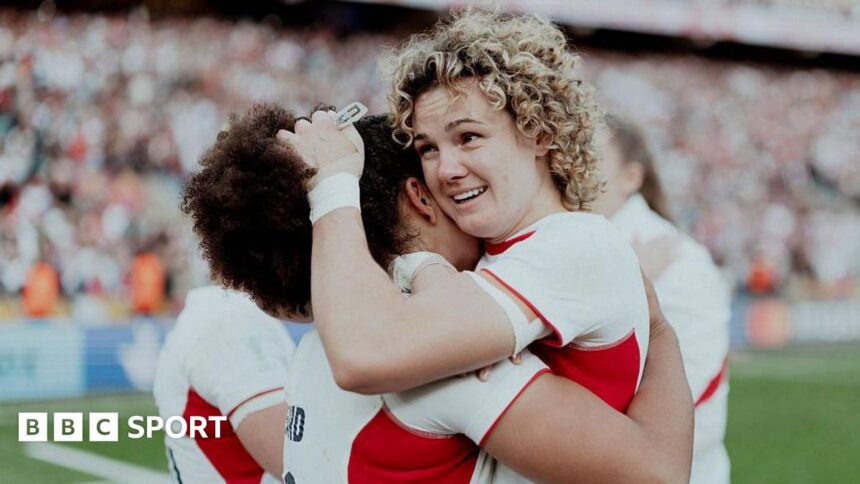
The image is etched into rugby history: Ellie Kildunne, a blur of white and red, slicing through the Canadian defense at a heaving Allianz Stadium. Her brilliant solo try was the exclamation point on England’s long-awaited Rugby World Cup triumph. In that moment, surrounded by 82,000 roaring fans and her victorious teammates, she was at the pinnacle of her sport. Yet, just weeks later, the star full-back found herself in a profoundly different reality, confronting a silence that felt deafening. In a raw and revealing admission, Kildunne has opened up about the intense loneliness that followed the ultimate team achievement, pulling back the curtain on the athlete’s often-hidden emotional journey.
The Stark Contrast: From World Cup Glory to Club Routine
For Kildunne, the comedown was as much about physical environment as it was emotional state. The transition from the sport’s grandest stage to the domestic grind was jarringly abrupt. Four weeks after lifting the World Cup, she was back in Harlequins colors, running out at the Twickenham Stoop for an Allianz Premier 15s match against Loughborough Lightning. The crowd? 2,929 spectators.
“You are playing in front of a sold-out crowd at Allianz, you have just won a World Cup, and the next minute you are back playing over the road in front of a slither of the amount of people,” Kildunne told BBC Sport. This stark numerical contrast – 82,000 to 2,929 – symbolizes a deeper psychological shift. The relentless, singular focus of a World Cup campaign, with its intense pressure and unparalleled camaraderie, vanishes overnight, leaving a vacuum. The adrenaline that fuels a tournament final has nowhere to go, and the daily purpose that structured life for months evaporates.
This phenomenon, while acutely felt by Kildunne, is not unique in elite sport. It highlights a critical, often overlooked, phase in an athlete’s career: post-success transition. The very structures designed to propel athletes to the peak – hyper-focused training camps, media blackouts, tactical deep-dives – disappear the moment the final whistle blows. What remains is a return to “normalcy” that can feel anything but normal.
Expert Analysis: Understanding the Post-Peak Trough
Sports psychologists recognize Kildunne’s experience as a common, though rarely discussed, challenge. “Winning a major championship is a monumental emotional and physiological expenditure,” explains a performance mindset consultant. “Athletes operate for years with a clear, towering goal. When that goal is achieved, there is an inevitable neurochemical and psychological crash. The dopamine-driven pursuit ends, and the brain must recalibrate. Without a new immediate target, feelings of emptiness, loneliness, and even mild depression can surface, even amidst the joy of victory.”
For Kildunne, several factors likely intensified this dip:
- The Sudden Shift in Atmosphere: Moving from a global event with national attention to a domestic league still building its profile creates a disorienting sense of whiplash.
- Identity Recalibration: After being “Ellie Kildunne, World Cup winner,” the return to being “Ellie Kildunne, Harlequins player” requires a mental adjustment.
- Physical and Mental Depletion: The World Cup campaign is a marathon of physical punishment and mental stress. The body and mind finally get a chance to rest, and in that stillness, accumulated fatigue can manifest emotionally.
- The “What Next?” Question: A lifelong dream achieved by age 26 naturally prompts questions about future motivation and purpose.
Kildunne’s willingness to voice this struggle is a significant act of leadership. It moves the conversation beyond the glossy trophy lifts and into the authentic human experience of elite athletes, helping to normalize these feelings for her peers and the next generation.
Navigating the Comeback: Kildunne’s Path Forward and Broader Implications
So, how does an athlete climb out of this post-peak valley? The path involves both personal and systemic solutions. For Kildunne, the return to club rugby, while initially a shock, ultimately provides a new framework. The Harlequins environment offers familiar faces, a different set of team objectives, and the simple, grounding rhythm of training and playing. Finding joy in the fundamentals of the sport, divorced from the weight of a World Cup, is a crucial healing step.
On a systemic level, Kildunne’s experience is a powerful call to action for sporting bodies and player associations. It underscores the urgent need for:
- Structured Post-Tournament Decompression Programs: Mandatory mental health support and career guidance sessions in the weeks following major tournaments.
- Continuous Performance Lifestyle Education: Preparing athletes for the emotional cycle of peak performance, not just the physical one.
- Elevating the Domestic Game: Bridging the staggering visibility gap between international and club rugby is essential for player sustainability and fan engagement.
Kildunne’s honesty also reframes what we perceive as athletic strength. True resilience isn’t just about battling to win on the field; it’s about navigating the complex emotional landscape that follows. Her ability to identify and articulate her loneliness is a testament to a different kind of toughness.
Predictions: A Stronger Kildunne and a Changing Conversation
Looking ahead, Ellie Kildunne’s journey through this period will likely forge a more resilient, self-aware athlete. By confronting this challenge head-on, she is building mental tools that will serve her far beyond her playing days. We can predict several outcomes:
1. Enhanced On-Field Leadership: Her vulnerability will deepen her connection with teammates, making her a more empathetic and influential leader within both the Red Roses and Harlequins squads.
2. A Voice for Player Welfare: Kildunne is poised to become a key advocate for better post-tournament support systems, using her platform to ensure future stars have a softer landing.
3. Renewed Appreciation for the Club Game: Her public reflection on the contrast may galvanize fans to better support the Allianz Premier 15s, understanding that the club stage is where international stars are both made and sustained.
For the sport itself, this moment is a catalyst. The conversation around athlete welfare is expanding to include the peaks, not just the valleys of injury or loss. It acknowledges that success, too, requires management and support.
Conclusion: The Victory Beyond the Try Line
Ellie Kildunne’s story is now a two-part triumph. The first was visible to the world: a dazzling try and a World Cup winner’s medal. The second is quieter but no less significant: the courage to speak openly about the solitude that followed. In doing so, she has scored a different kind of try—one against stigma and for greater awareness. Her experience reminds us that athletes are not just performers but complex individuals navigating extraordinary life events. The roar of 82,000 fades, but the journey of self-discovery continues. By sharing her truth, Kildunne has not only helped herself but has also thrown a lifeline to countless other athletes who have felt alone at the summit, ensuring that future champions know they are not alone in the silence that follows the storm.
Source: Based on news from BBC Sport.