If These Were the Tuchel Trials, Phil Foden’s World Cup Dream Stumbled
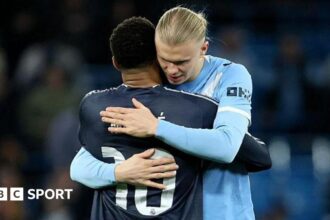
The image was poignant, a snapshot of a moment fraught with personal and professional anguish. As Phil Foden limped away from the Wembley turf, the consoling arm of England manager Thomas Tuchel draped around his shoulders, the Manchester City star’s face contorted in a mix of physical pain and profound disappointment. This was meant to be his night, his grand audition. Instead, in a tense 1-1 draw against a rugged Uruguay, Foden’s World Cup audition ended not with a flourish, but with a whimper and a wince. If this international window was indeed a series of trials by Tuchel, then Foden—handed the golden ticket to state his case—failed to convince.
A Crowded Stage and a Missed Opportunity
With the midfield maestro Jude Bellingham rested, Tuchel presented Foden with the ultimate opportunity: the coveted number 10 role, the creative heartbeat of the England side, with the dazzling Cole Palmer waiting in the wings. This was Foden’s chance to translate his sublime club form onto the international stage in his preferred central position. The stage was set for him to strike first in what is arguably the most fiercely competitive battle in the England squad.
Yet, from the outset, Foden struggled to imprint himself on the game. He found himself suffocated in an over-crowded central area, marshalled by Uruguay’s gifted and uncompromising midfield and defense, led by the formidable Ronald Araujo. The fluidity and spatial intelligence he exhibits at City were absent, replaced by a player often forced to drop deeper and deeper in search of the ball, only to find his influence diminishing with each retreat. The connection with Harry Kane was sporadic, the incisive through-balls non-existent. In a match where he needed to be the solution, Foden became a peripheral question mark.
The Physical Blow and the Psychological Weight
The painful conclusion was a metaphor for the entire evening. A dreadful, late challenge from Araujo left Foden clutching his ankle, the physical hurt undoubtedly acute. But the hurt etched on his face spoke of something deeper—the recognition of a big chance gone begging. This was more than a friendly knock; it was the potential derailment of a dream at a critical juncture.
Tuchel’s consoling arm was a gesture of empathy, but the German is a pragmatist of the highest order. His squad selection philosophy is built on form, tactical fit, and decisive moments. This England setup is not a charity; it is a machine being fine-tuned for global success. In this system, opportunities are finite. The worst-case scenario for Foden is not the ankle knock, but the stark reality that this may have been his last, best chance to force his way to the forefront of Tuchel’s final World Cup plans before the manager pares down his squad.
Where Foden’s Audition Fell Short:
- Tactical Rigidity: Failed to adapt to the congested midfield, unable to find pockets of space against a disciplined low block.
- Lack of Decisive Action: In a game of fine margins, produced no key passes, no shots on target, and failed to dictate the tempo.
- Positional Dilemma: His retreat into deep areas negated his primary threat, highlighting the ongoing club vs. country debate about his best role.
- Contrast in Impact: The energy and directness of substitutes later in the game only served to underline his quiet influence.
The Rising Tide of Competition: Palmer, Eze, and the Pack
While Foden faltered, the specter of his competition looms larger than ever. Cole Palmer, though not starting, carries the fearlessness and goal-scoring form of a stellar season at Chelsea. Eberechi Eze of Crystal Palace offers a different, more direct dribbling threat from the left that can unbolt stubborn defenses. Even in his preferred wide role, Foden faces an immense challenge from the established Bukayo Saka and the returning Jarrod Bowen.
Tuchel’s final World Cup plans are crystallizing. He needs players who can define games in a moment, who can execute a specific tactical brief under pressure, and who are in peak form and confidence. The evidence of this audition suggests Foden, for all his generational talent, is slipping down that pecking order when it comes to the central creative mantle. His versatility, once seen as an asset, now risks casting him as a jack-of-all-trades in a squad filling up with masters of one.
The Verdict and the Path to Redemption
So, is Foden’s World Cup dream over? It would be foolish to write off a player of his caliber entirely. His quality is undeniable. However, his pathway to Germany has become significantly more treacherous. He is no longer a shoo-in for the starting eleven, and perhaps not even a guaranteed lock for a specific role in the 23-man squad. He now finds himself in a fiercely competitive number 10 position battle where he is no longer the frontrunner.
His redemption arc is clear but demanding. He must return to Manchester City and finish the season with a blistering run of form. He may need to hope for injuries to others—a thought no player relishes. Most importantly, he must use this personal setback as fuel. The memory of Tuchel’s consoling arm must transform from one of pity to a reminder of what was almost lost.
The Tuchel trials are merciless. They offer a spotlight, but they also expose shortcomings without sentiment. For Phil Foden, the spotlight at Wembley revealed a player out of sync with his international demands. The coming months are no longer about potential; they are about a relentless, undeniable response. The ball, as they say, is now at his famously gifted feet. But time, and the manager’s patience, is fast running out.
Source: Based on news from BBC Sport.