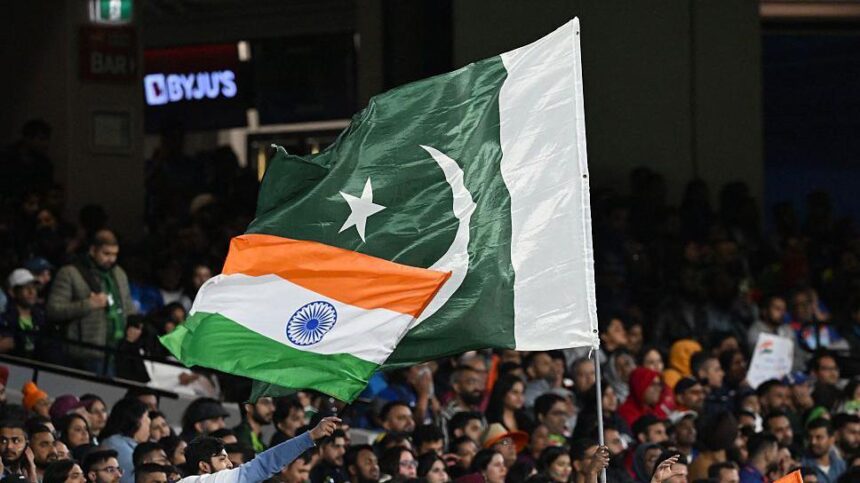
India-Pakistan T20 World Cup Clash Saved as Pakistan Government Lifts Boycott Request
The most electrifying fixture in world cricket has been pulled back from the brink. In a dramatic reversal, the Pakistan government has rescinded its order for the national team to boycott its marquee T20 World Cup match against arch-rivals India, clearing the path for the colossal encounter to proceed as scheduled this Sunday in Sri Lanka. This decision ends a tense, week-long standoff that threatened to deprive the global sporting audience of its crown jewel and sent shockwaves through the cricketing establishment. The eleventh-hour intervention underscores the immense political and commercial weight the India-Pakistan match carries, a weight that ultimately proved heavier than the diplomatic protest that sought to derail it.
A Week of High-Stakes Brinkmanship
The crisis began last week when the Pakistan Cricket Board (PCB), acting on directives from Islamabad, advised the International Cricket Council (ICC) that its team would not take the field against India. This move was framed as an act of solidarity with Bangladesh. The Bangladesh Cricket Board (BCB) had requested its World Cup matches be moved out of India due to logistical and security concerns, a request the ICC rejected. Bangladesh subsequently withdrew from the tournament entirely.
Prime Minister Shehbaz Sharif stated the initial boycott call was to “support” Bangladesh. However, this gesture of solidarity risked triggering a catastrophic chain reaction. The ICC, along with broadcasters and hosts Sri Lanka, faced the prospect of a gaping hole in the tournament schedule and the loss of hundreds of millions of dollars in advertising and viewership revenue. The ICC and BCB issued clarifying statements, emphasizing the logistical, not political, nature of the decision regarding Bangladesh’s matches. This created a crucial off-ramp for Pakistan.
On Monday evening, the Pakistani government released a new statement, performing a complete U-turn. It directed the team to play, citing the “spirit of cricket” and the need to support the sport’s continuity globally. The carefully worded statement allowed Pakistan to claim the moral high ground while stepping back from a confrontation that had isolated it within the cricket community.
Expert Analysis: The Unparalleled Gravity of India-Pakistan Cricket
To understand why this reversal was almost inevitable, one must grasp the unique ecosystem of an India-Pakistan match. It transcends sport, becoming a geopolitical spectacle, a cultural event, and a financial behemoth all at once.
- Commercial Juggernaut: The match is arguably the most lucrative single day in cricket. Broadcast rights, sponsorship deals, and advertising slots for this one game command premiums that dwarf those of any other fixture, including the World Cup final itself. A boycott would have triggered contractual nightmares and financial losses running into the hundreds of millions.
- Viewership Phenomenon: The 2021 T20 World Cup encounter between the two nations drew a peak concurrent television audience of over 167 million in India alone, with global digital streams adding tens of millions more. It is a shared cultural moment for over a billion people.
- Diplomatic Thaw Indicator: On-field encounters are often seen as a barometer for the state of diplomatic relations. While bilateral series remain frozen, their meetings in ICC events are rare windows of “cricket diplomacy,” offering a temporary bridge in a landscape of persistent tension.
“The economic and popular pressure to play this game is simply insurmountable,” says veteran sports analyst Rajesh Singh. “Governments can posture, but the infrastructure of modern cricket—broadcasters, sponsors, the ICC—is built around this fixture. To cancel it would be to destabilize the entire financial model of the international game. Pakistan’s decision, while framed in principle, was ultimately a pragmatic recognition of reality.”
Match Preview: On-Field Strategies and Key Battles
With the political drama subsiding, focus now shifts to the pitch in Colombo. Both teams enter with contrasting narratives. India, led by the returning Rohit Sharma, is a settled unit brimming with power-hitters like Suryakumar Yadav and a versatile bowling attack. Pakistan, under Babar Azam, possesses a fearsome pace battery but has been plagued by inconsistent batting.
The key individual battles will define the contest:
- Babar Azam & Mohammad Rizwan vs. Jasprit Bumrah: The mastery of Pakistan’s iconic opening pair against the searing yorkers and cunning variations of India’s pace spearhead in the powerplay.
- Virat Kohli vs. Shaheen Afridi: A legendary rivalry rekindled. Kohli’s quest for dominance against Afridi’s left-arm angle and blistering pace, a duel that has decided matches before.
- India’s Spin Trio vs. Pakistan’s Middle Order: How Pakistan’s often-fragile middle order handles the guile of Kuldeep Yadav, Yuzvendra Chahal, and Ravindra Jadeja on a Sri Lankan pitch expected to offer turn will be critical.
The psychological edge is fascinating. Has the week of uncertainty disrupted Pakistan’s preparation? Or will it galvanize them as a group united against external pressure? Conversely, India will aim to exploit any lingering distraction and assert their recent dominance in World Cup meetings.
Predictions and Lasting Implications
On paper, India starts as the favorite due to their deeper batting and more balanced attack. However, Pakistan’s pace attack is capable of blowing any team away, making them perpetually dangerous. The prediction is for a high-pressure, closely contested match, likely decided by a moment of individual brilliance or a critical collapse under the immense weight of expectation.
The broader implications of this episode are significant:
- ICC Authority Tested: The ICC faced a direct challenge from a member nation’s government. While the body stood firm, the event highlights the growing vulnerability of global sports to geopolitical disputes.
- A Precarious Precedent: While crisis was averted, the precedent of governments using team boycotts in ICC events as diplomatic tools has been set, potentially encouraging similar brinkmanship in the future.
- Focus on Cricket’s Spirit: Pakistan’s final statement invoking the “spirit of cricket” is poignant. It serves as a reminder that for all the politics and money, the game’s survival depends on the simple act of playing it.
Conclusion: Cricket Emerges Victorious, For Now
The relief in the cricketing world is palpable. The India-Pakistan match, a celebration of skill and nerve that momentarily suspends deeper animosities, will go ahead. The Pakistani government’s reversal, while dressed in the language of sporting solidarity, was a necessary concession to the immense economic and cultural forces that make this clash the undisputed superbowl of cricket.
When the first ball is bowled in Colombo on Sunday, the noise will drown out the echoes of the week’s political maneuvering. For those few hours, the narrative will be written by cover drives, searing yorkers, and breathtaking catches. Yet, this episode serves as a stark warning: the intersection of sport and geopolitics remains a volatile arena. This time, cricket won. But the game’s custodians must now navigate an increasingly complex world where the stumps are not the only thing at risk of being uprooted by forces beyond the boundary.
Source: Based on news from Yahoo Sports.